
Villa d’Este 2026: When the Future Needed Heritage
Concorso d’Eleganza Villa d’Este 2026
The Concorso d’Eleganza Villa d’Este remains one of the most refined events in the classic car world. Every year, Lake Como becomes a stage for rare machines, careful restoration and quiet luxury. The 2026 edition continued that tradition with a strong field and a clear theme: “Future needs Heritage.”
Held from 15 to 17 May 2026, the event brought together 54 cars from 13 countries. They competed across eight classes, each built around a specific story. Some celebrated pre-war elegance. Others focused on Ferrari endurance legends, preservation cars, grand tourers and early supercars.
As usual, Villa d’Este did not reward size or noise alone. The best cars needed presence, history and detail. That balance made the 2026 edition especially interesting. It mixed famous icons with quieter masterpieces, and it placed future concepts beside historic metal.
A Best of Show with Quiet Authority
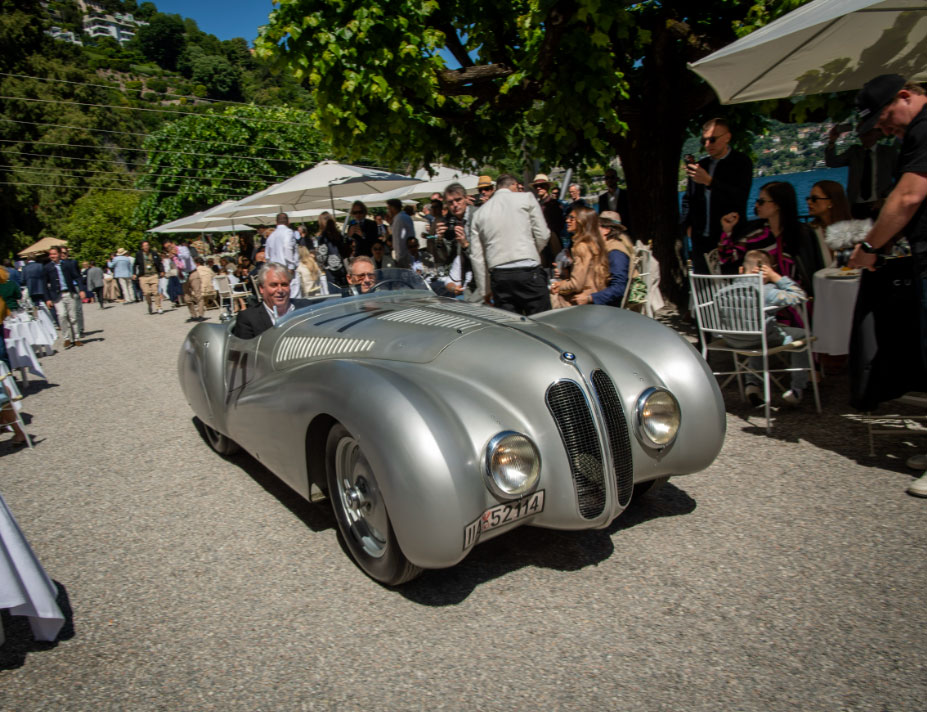
The main prize, the Trofeo BMW Group for Best of Show, went to a 1937 BMW 328 “Bügelfalte.” Stefano Martinoli owns the car, which stood out for its balance and rare body details. It did not need dramatic proportions to win attention. Instead, it relied on purity, craftsmanship and historical importance.
The nickname “Bügelfalte” refers to the distinctive crease-like edging along the front wings. That detail gives the car a sharp visual identity. It also separates this BMW from more familiar 328 examples. In a field full of glamour, the jury chose discipline and purpose.
The result also carried strong timing. BMW celebrated the 90th anniversary of the 328 in 2026. The model first appeared in the 1930s and became one of the great sports cars of its time. Its reputation came from lightness, balance and competition success, not raw power alone.
That made the winning car a fitting symbol for Villa d’Este. The event often rewards cars that combine engineering with elegance. The BMW 328 “Bügelfalte” did exactly that. It looked compact, athletic and precise, yet still felt special enough for the lawn at Lake Como.
The Public Chose a Mercedes-Benz Dream Car
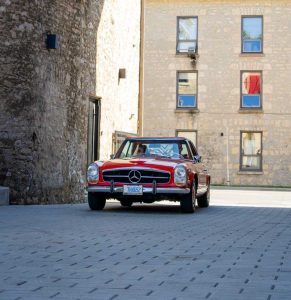
The Coppa d’Oro Villa d’Este followed a different emotion. This prize comes from the public vote, and the crowd chose a 1963 Mercedes-Benz 300 SL Roadster. Eric Blumencranz from the United States owns the car.
Few classic cars speak to the public as clearly as the 300 SL. The Gullwing coupe may be the more famous shape, but the Roadster has its own charm. It feels elegant, usable and cinematic. At Villa d’Este, that combination proved irresistible.
This particular Roadster also carried end-of-era appeal. It was one of the last examples produced. Period-style skis mounted at the rear added another layer of romance. Suddenly, the car suggested Alpine roads, grand hotels and long-distance European travel.
The split between the jury’s choice and the public’s choice felt right. The BMW 328 won through restraint and historical depth. The Mercedes-Benz 300 SL Roadster won through emotion. Together, they showed the two sides of Villa d’Este: scholarly and cinematic.
Ferrari Brought Noise, Value and Mythology
Ferrari also played a major role in the 2026 edition. The programme included a class called “They Earned Their Names: Enzo’s Endurance Legends.” That title suited the cars perfectly. These were not display objects alone. They came from a world of racing, risk and reputation.
Among the standout names, the Ferrari 375 MM brought the sound and spirit of early Maranello endurance racing. The Ferrari 250 GTO represented one of the most celebrated chapters in GT history. A Ferrari F40 added a very different kind of drama, with turbocharged aggression and 1980s minimalism.
That mix showed how wide Ferrari’s heritage has become. The brand can dominate a concours through very different machines. A 1950s racer, a 1960s GT and a late-1980s supercar all tell separate stories. Yet each one carries the same core idea: performance with theatre.
At many events, cars like the 250 GTO or F40 would dominate every conversation. At Villa d’Este, they became part of a broader landscape. That is one of the event’s strengths. Even famous cars must share the stage with less obvious jewels.
Preservation Had Its Own Beauty
One of the most important trends in the classic car world is the growing respect for preservation. Villa d’Este reflected that shift with the class “Every Scratch Tells A Story: Ageing Gracefully Without Restoration.” The title explained the idea clearly.
A perfectly restored car can show skill and money. An unrestored car can show time. Its paint, leather and small marks become part of its history. They reveal how people used the car, stored it and cared for it across decades.
This approach feels especially relevant today. For many years, concours culture favored flawless restoration. Cars often looked better than they did when they left the factory. That standard still has value, but it can also erase evidence.
Preserved cars bring a different kind of truth. They remind us that classic automobiles are not only design objects. They are survivors. At Villa d’Este, that message sat comfortably beside polished chrome and coachbuilt perfection.
American Luxury and European Design Shared the Lawn
The 2026 field also showed the wide geography of classic car culture. A Cadillac Eldorado brought American confidence to Lake Como. Its scale and style offered a strong contrast to the lighter European sports cars nearby.
That contrast matters. Villa d’Este works best when it avoids a narrow definition of elegance. Italian coachwork, German engineering, British grand touring and American luxury all belong in the conversation. Each tradition expresses beauty in a different way.
The BMW M1 added another sharp note. Its wedge shape, motorsport roots and late-1970s confidence made it stand apart. It also showed how younger classics now fit naturally into elite concours settings.
Not long ago, a car from the late 1970s or 1980s could feel too modern for a traditional concours. That has changed. Collectors now see cars like the M1 and F40 as historic design statements. Their era has become old enough for serious reflection.
BMW Looked Forward with ALPINA
Villa d’Este 2026 also looked beyond the past. BMW presented the Vision BMW ALPINA, a one-off design study with a long coupe profile and a V8 powertrain. The car marked a new phase for ALPINA within the BMW Group.
The setting gave the concept extra meaning. A future ALPINA did not appear under harsh motor-show lights. It appeared beside cars that helped define grand touring. That was a smart choice. ALPINA has always depended on speed, discretion and long-distance comfort.
The Vision BMW ALPINA suggested a more formal kind of performance luxury. It aimed to sit above regular BMW models, while staying more driver-focused than Rolls-Royce. That position suits the ALPINA name. The brand has always appealed to people who prefer quiet authority over obvious display.
For a classic car audience, the concept raised an important question. Can modern luxury cars keep emotional depth in a digital age? Villa d’Este offered the right place to ask it. Heritage becomes useful when it guides the future, not when it traps design in nostalgia.
A Motorcycle with Aviation Drama
BMW Motorrad also joined the futuristic side of the event with the Vision K18. This motorcycle study used an 1,800 cc inline six-cylinder engine and took inspiration from high-speed aircraft. Its design referenced the Concorde and other aviation forms.
The result looked theatrical, but not careless. Six intakes, six exhaust outlets and six LED headlights gave it a clear visual rhythm. Hand-formed bodywork, aluminium and forged carbon added craftsmanship to the drama.
That machine may not speak to every concours traditionalist. Still, it suited the theme of the weekend. Villa d’Este is not only about old cars. It is about design memory. The Vision K18 used history as a source of imagination, rather than as a fixed rulebook.
Villa Erba Opened the Mood
The main concours at Villa d’Este remains exclusive, but the wider weekend now reaches a broader audience. Villa Erba, Public Days and the Amici & Automobili gathering added a more social dimension. These areas helped connect the formal concours with enthusiast culture.
BMW also celebrated 40 years of the M3 and 50 years of the BMW Art Car collection. The Robert Rauschenberg BMW 635 CSi from 1986 and the John Baldessari BMW M6 GTLM from 2016 helped link cars with contemporary art.
That mix matters because it keeps the event alive. A concours can become too static when it only looks backward. Villa d’Este avoids that risk by including racing history, modern concepts, art cars and club enthusiasm.
The Market Was Never Far Away
The auction world also had a strong presence. Broad Arrow returned as the official auction partner. Around 70 cars crossed the stage, and bidder numbers grew compared with 2025.
Important consignments included a Pagani Zonda Unica, a Ferrari Daytona SP3 and a Ferrari F40. These cars show how the collector market now stretches across eras. Modern limited-production hypercars can sit beside older classics in the same investment conversation.
That reality is part of Villa d’Este today. The event celebrates culture, but serious money surrounds it. Collectors admire cars on the lawn, then study values at auction. Beauty, rarity and market demand often move together.
Why the 2026 Edition Worked
The 2026 Concorso d’Eleganza Villa d’Este succeeded because it found balance. The Best of Show BMW 328 “Bügelfalte” brought pre-war purity. The Mercedes-Benz 300 SL Roadster gave the public a dream car. Ferrari added racing mythology. Preservation cars added honesty.
At the same time, BMW and ALPINA looked toward the next chapter. That contrast gave the weekend its energy. The event did not become a museum. It became a conversation between past and future.
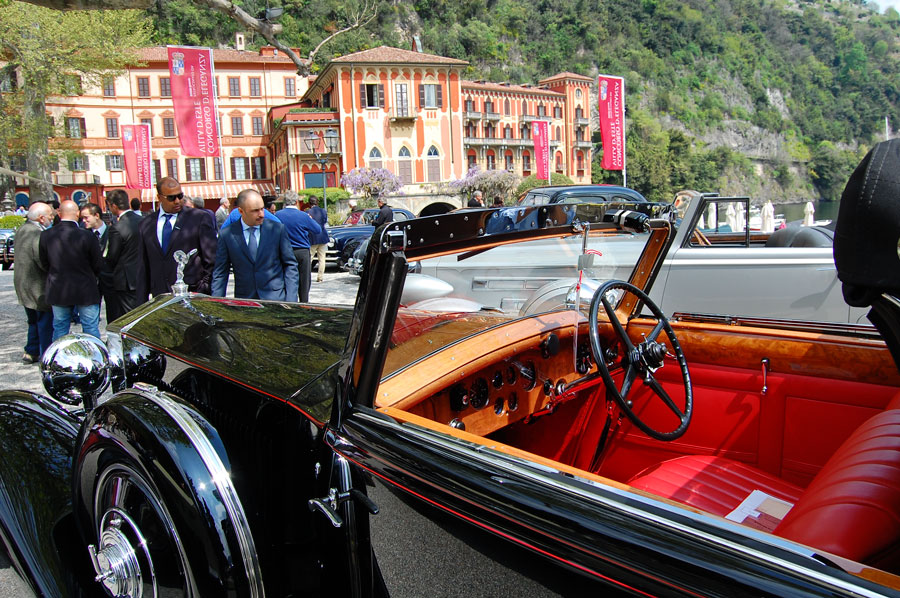
Lake Como also played its usual role. The setting changes how people see these cars. Chrome looks softer by the water. Long hoods feel more dramatic against the villas. Even familiar icons gain atmosphere in that landscape.
For collectors, the message was clear. Provenance still matters. Condition still matters. Yet story, originality and context matter just as much. A great car needs more than rarity. It needs a reason to hold attention.
The BMW 328 “Bügelfalte” proved that point. It was not the loudest car at Villa d’Este. It was not the most famous to the general public. Yet it had balance, rarity and purpose. On that particular weekend, those qualities were enough.
Villa d’Este 2026 reminded us why the concours still matters. It allows the automobile to exist as art, engineering, memory and desire. Few events can do that with such calm confidence. On the shore of Lake Como, the past did not feel distant. It felt alive, useful and ready to shape what comes next.