
Vespa at 80 A Journey of Style and Freedom
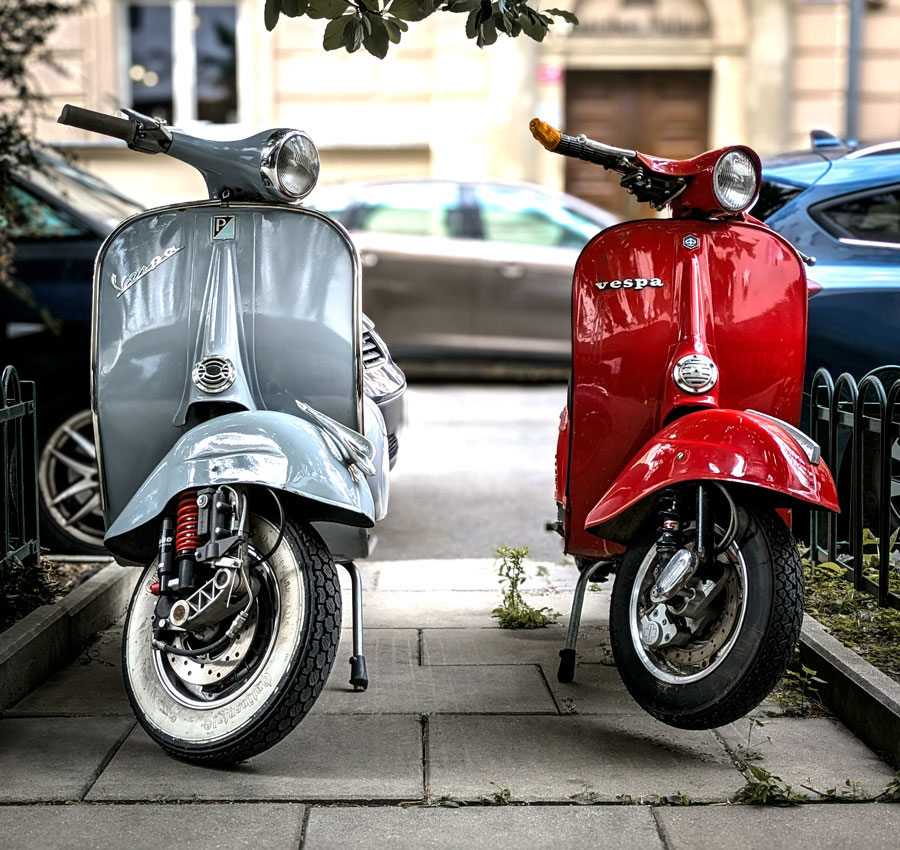
VESPA - An icon at Life in Classic
From Patent to Urban Icon
On April 23, 1946, a patent filed in Florence set a new course for everyday mobility. In the decades since, Vespa has become a global shorthand for freedom, Italian craft, and city style. Today, nearly 20 million scooters trace that legacy across streets on every continent. As a result, the brand now stands at the intersection of engineering and art, where practicality meets beauty.
Postwar Europe needed simple, reliable transport. Vespa answered with a fresh form that almost anyone could ride. Moreover, the scooter’s compact size fit narrow streets and tight budgets. The design also carried a certain grace that felt modern and optimistic. Therefore, the Vespa did more than move people. It gave them a new way to experience their cities. Eighty years on, that spirit remains the core of the brand’s enduring appeal.
Engineering Roots and Early Fame
The story began with Corradino D’Ascanio, an aeronautical engineer who set out to build a clean, accessible machine. He placed the engine to one side, protected the rider with a step-through frame, and used small wheels to make the scooter compact and practical. When Enrico Piaggio saw the slim waist and heard the distinctive buzz, he coined the name that stuck: Vespa, Italian for “wasp.”
From the first Vespa 98 in 1946, the company favored steel unibody construction. This choice delivered strength, quietness, and a refined silhouette. Over time, the brand created more than 160 models, each pushing the idea forward while preserving the familiar form. During the 1950s and 60s, the scooter also leapt from street to screen. Roman Holiday turned it into a cinematic co-star. Meanwhile, the British Mod movement adopted it as a badge of taste. Consequently, a practical tool grew into a full cultural signifier.
Style, Art, and a Global Community
Vespa did not stop at transportation. Instead, it became a canvas for fashion, art, and personal identity. Collaborations and artistic interpretations involving names such as Salvador Dalí, Giorgio Armani, Christian Dior, Sean Wotherspoon, Justin Bieber, Urs Fischer and Frank Gehry show how far the design could travel beyond mechanics. Furthermore, color, trim, and accessories let riders shape each machine to their own style. As a result, the scooter transformed into both a vehicle and a statement.
Today, the “Vespisti” community keeps that spirit alive across borders and languages. Owners swap stories, trade parts, and organize rides that turn city streets into rolling festivals. Meanwhile, clubs maintain history through restoration and careful documentation. Vintage favorites such as the 125 GS, Primavera, Rally and P200 still draw attention at gatherings. Newer models like the Primavera welcome first-time riders into the fold. Above all, the shared passion binds generations, proving that mobility can carry meaning as well as miles.
Anniversary Editions Blend Past and Present
To mark eight decades, Vespa introduced special editions that celebrate heritage while embracing modern life. The anniversary Primavera and GTS wear a refined Verde Pastello finish, a nod to the first single-color Vespa models of the 1940s. Additionally, both models carry commemorative “80th” details and darker green tone-on-tone elements. Subtle rim designs evoke the closed stamped-steel wheels of the original Vespa 98 from 1946. Therefore, every detail speaks to continuity.
Yet the technology looks forward. Current Primavera and Sprint S models for 2026 include updates such as new rims, a fully digital dashboard, keyless ignition on versions above 50 cc, and improved braking with a rear disc on 125 and 150 cc small-body models. The range also includes petrol and electric versions, showing how Vespa is preserving style while adapting to modern urban mobility.
The aim is clear: honor classic style without freezing it in time. Consequently, the special editions feel familiar, but they also feel ready for tomorrow’s streets. For many riders, that balance captures the essence of the brand’s longevity.
An Enduring Future on the Streets of Rome
The 80th anniversary celebrations will reach a peak in Rome in the summer of 2026. From June 25 to 28, Vespisti from around the world will gather in the Eternal City. There, history and modernity meet, much like the scooter itself. Parades, exhibitions, and rides will turn shared memories into new ones. In turn, the event will underline a simple truth: icons endure because people keep them alive.
Looking ahead, Vespa’s mission stays clear. Cities will keep changing, and riders will expect cleaner, safer, and smarter machines. However, the core idea remains remarkably stable. A Vespa should be easy to use, beautiful to look at, and enjoyable to ride. It should make daily journeys feel lighter. It should bring design into ordinary movement.
That is why the brand still matters. Vespa is not only a nostalgic object from postwar Italy. It is a living design language. Its shape has survived because it solves real problems with elegance. Its cultural power has endured because it lets people feel part of something larger than transport.
Why Vespa Still Feels Modern
Many vehicles age because they belong too strongly to one decade. Vespa avoided that fate. Its silhouette is instantly recognizable, yet it can accept new colors, new engines, new electronics, and new materials without losing identity. That is rare. Most designs must choose between tradition and innovation. Vespa has learned to carry both.
The reason lies in the original brief. D’Ascanio did not simply design a small motorcycle. He designed a new way of moving. The step-through body made riding easier. The front shield protected clothes from road spray. The enclosed engine helped keep dirt and oil away from the rider. The compact body made parking simple. These were practical choices, but they also created beauty.
This is why Vespa works equally well outside a café, in a museum, beside a beach, or in a crowded city center. It belongs to everyday life, but it also photographs like an object of design. Few machines can do both.
The Collector’s Perspective
For collectors, Vespa offers unusual depth. Early widebody models, 1950s sport versions, GS models, Rally variants, Primavera and PX scooters all have their own following. Some buyers want perfect restorations. Others prefer original paint, small marks, and documented history. In both cases, authenticity matters.
A vintage Vespa is also more approachable than many classic vehicles. It is small, easy to store, and mechanically simpler than most cars or motorcycles. Parts availability is generally strong for popular models, and specialist knowledge is widely shared among clubs and workshops. That makes ownership less intimidating.
However, restoration should be treated carefully. Original badges, seats, trim, wheels, engine numbers and paint colors can influence value. Poor repainting, incorrect accessories or careless mechanical work can reduce historical interest. As Vespa values continue to strengthen, the best examples will likely be those with clear provenance and sympathetic preservation.
Protecting a Vespa Properly
A Vespa may be compact, but it still needs proper protection. Paint, chrome, rubber, saddle material, cables and electrical parts can all suffer from sun, rain, humidity and dust. This matters even more for anniversary editions, special colors, restored classics and original-paint scooters.
A tailored cover helps protect the scooter without hiding its form completely. For indoor storage, a soft breathable cover is ideal to prevent dust and small scratches. For outdoor storage, a more resistant waterproof and breathable cover is better suited to rain, UV exposure and changing temperatures. Fit is especially important because a Vespa has mirrors, curved bodywork, exposed wheels and delicate trim. A loose universal cover can flap in the wind and mark the paint.
For collectors, this is not just about cleanliness. It is about preserving originality. A correct cover reduces exposure, slows cosmetic deterioration and keeps the scooter ready for regular use. That is important because a Vespa should not only be displayed. It should still be ridden.
A Design That Still Belongs to the Street
Vespa’s great achievement is that it never became only a museum piece. It remains part of daily urban life. People use it for commuting, errands, weekend rides and social events. In cities where space is limited, its compact size still makes sense. In places where style matters, its design still speaks clearly.
This combination of use and emotion explains its longevity. A Vespa is rational enough to justify, but emotional enough to desire. It offers low running costs, easy parking and simple mobility. At the same time, it carries memories of Italian cinema, summer streets, youth culture and personal freedom.
That dual identity is difficult to copy. Many scooters can move people through a city. Few can make the journey feel like part of a larger story.
The Final Word
Eighty years after its patent, Vespa remains one of the clearest examples of successful industrial design. It began as a practical response to postwar mobility needs. It became a symbol of Italian optimism. Then it evolved into a global object of style, art, fashion and community.
The anniversary editions show why the formula still works. They look backward without becoming trapped in the past. They use heritage as a foundation, not as a limit. The Rome celebrations will make that message visible on a grand scale, but the real celebration happens every day wherever a Vespa moves through traffic, rests outside a café, or waits in a garage for the next ride.
From patent drawing to urban icon, Vespa has remained faithful to one idea: mobility can be useful and beautiful at the same time. That is why, after 80 years, the wasp still flies.