
25 Years of Modern Mini: From Retro to Electric
Classic MINI at Life in Classic
A Quarter-Century of Reinvention
In 2026, Mini celebrates 25 years of its modern era. BMW relaunched the storied British nameplate in 2001, and the bet worked. The new chapter kept character while adding safety, polish, and tech. As a result, Mini reshaped what a small premium car could be. The mix of charm and precision struck a nerve around the world.
Through booms, new rivals, and changing cities, the formula stayed clear. Minis felt eager, agile, and personal. Owners found a community as much as a car. Moreover, the brand linked daily driving with joyful design. Now it looks to the next quarter-century with the same bold spirit.
The 2001 Relaunch That Sparked a Movement
The 1959 original changed how the world viewed small cars. Yet by the late 1990s, a fresh start was needed. BMW answered in 2001 with a sharper, safer, and sturdier Mini. The first modern MINI rolled off the production line at Plant Oxford on 26 April 2001, beginning a new chapter for the brand under BMW Group.
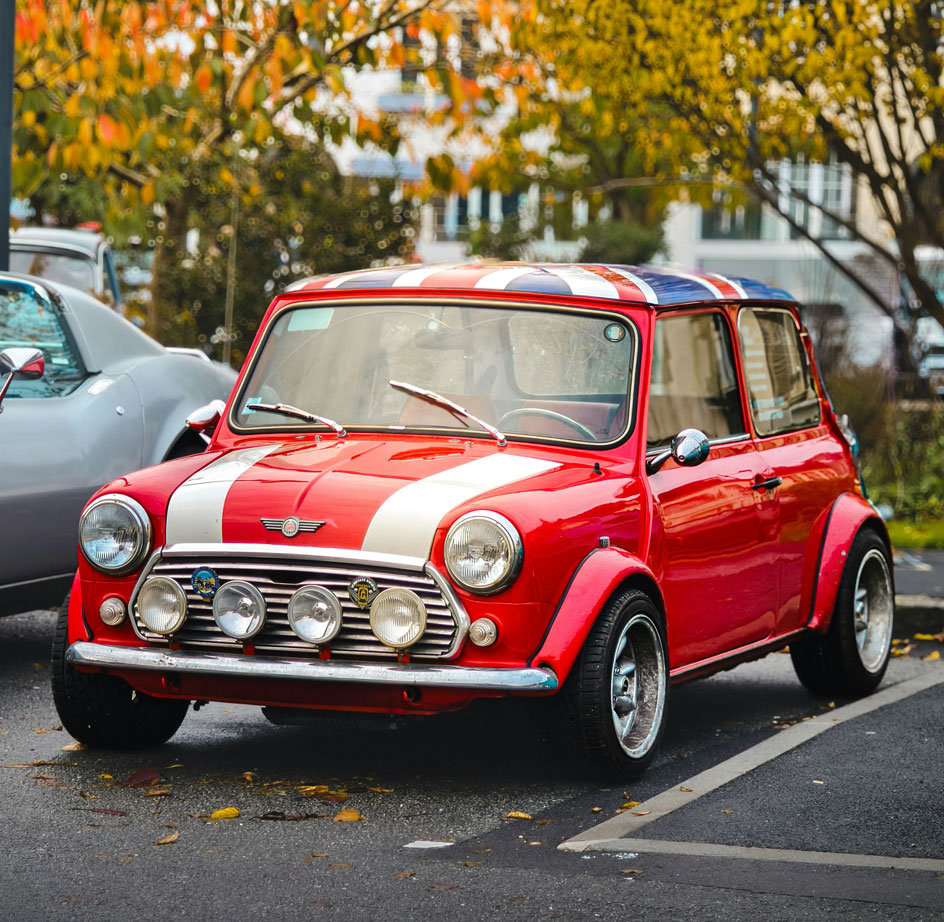
The car kept its compact stance, wheels pushed to the corners, and cheeky face. However, it added modern crash structures, strong brakes, and reliable powertrains. Drivers wanted more than basic transport. Therefore, Mini helped create a premium small-car segment almost overnight. Color-contrasted roofs, stripes, and trims turned each car into a statement. Dealers leaned into the buzz with lively showrooms and test drives. Consequently, the relaunch did more than revive a legend. It built a new market for fun-sized quality.
Design Evolution and a Broader Lineup
Across three generations of the Hatch, designers refined rather than reinvented. Round headlights, a floating roofline, and short overhangs stayed. Inside, toggle switches and playful details survived, yet materials improved. Seats, sound insulation, and ergonomics grew better with each update. Meanwhile, technology advanced without dulling the cabin’s character.
The lineup also grew to match more lifestyles. The versatile Clubman arrived with split rear doors. Then the Countryman brought all-road attitude and extra space. An open-air Convertible added sunny-day charm. Infotainment improved with navigation, smartphone tools, and crisp displays. Driver aids and efficiency gains came, but the joy stayed at the wheel.
MINI’s official 2001–2026 timeline shows how the modern family expanded from the Hatch into models such as the Clubman, Convertible, Countryman, Aceman, and electric Cooper variants. The Clubman’s final chapter came in 2024, while the Aceman arrived as a new all-electric crossover positioned between the Cooper and Countryman.
Performance Roots and Motorsport Spirit
Performance has always sat at the center of the Mini story. The Cooper S sharpened throttle response and chassis feel. Then John Cooper Works models dialed up power, grip, and braking. On back roads, the steering felt quick and communicative. Around town, the short wheelbase made every gap and corner feel playful. That balance gave Mini its famous “go-kart” personality.
This spirit came from deep roots. The classic Mini was not only a city car; it became a motorsport hero. In the 1960s, Mini Cooper S victories in the Monte Carlo Rally helped prove that clever engineering could beat larger and more powerful cars. MINI’s official anniversary material highlights those 1960s Cooper successes as central to the brand’s performance identity.
Modern John Cooper Works models continued that tradition in a different era. They were more refined, safer, and more powerful, but they kept the idea of a compact car with serious attitude. In 2025, John Cooper Works reached an all-time high of 25,630 units sold, representing 8.9% of total MINI volume. That shows the performance side of the brand remains more than a nostalgic detail.
The Mini Community
Few modern cars inspire such strong personal attachment. Many owners do not simply buy a Mini; they configure it, name it, photograph it, and join events around it. Stripes, mirror caps, wheels, roof graphics, interior trims, and special editions make the car feel individual. This customization culture has been part of Mini’s success since the relaunch.
The brand understood that small cars could still feel premium and expressive. A Mini was not just an economical choice. It was a lifestyle choice. It appealed to city drivers, design lovers, young professionals, empty nesters, and enthusiasts who wanted a car with charm. That broad appeal helped the modern Mini survive changing trends.
Special editions also played a major role. From heritage-inspired trims to designer collaborations, Mini used limited models to keep the range fresh. In 2026, MINI is paying tribute to British design with the MINI Paul Smith Edition, continuing a long relationship between the brand and fashion-led personalization.
From Petrol Fun to Electric Character
The next reinvention is electric. Mini’s compact size, urban focus, and instant-response driving feel make electrification a natural fit. The MINI Electric began series production at Plant Oxford in 2020, and the newer generation has expanded the electric side of the family.
The latest MINI Cooper Electric and Countryman Electric show how the brand is adapting. The all-electric MINI Cooper was unveiled in 2023, while the new Countryman became available with both combustion and fully electric powertrains. The Aceman then added a new electric-only crossover to the range.
This matters because Mini cannot rely only on nostalgia. Cities are changing, emissions rules are tightening, and customers expect cleaner technology. Yet the challenge is not simply to make an electric Mini. The challenge is to make an electric Mini that still feels like a Mini. Instant torque helps. Compact proportions help. But the final answer depends on steering feel, design character, and emotional appeal.
So far, the brand appears committed to that balance. MINI says its current model lineup is the most extensive and varied in its history, with five models and powertrain options that include fully electric and efficient combustion engines.
Why the Modern Mini Worked
The modern Mini succeeded because it avoided two traps. It did not copy the original too literally, and it did not abandon it completely. The shape was familiar but not retro in a lazy way. The cabin was playful but usable. The driving experience was sharper than most small cars, yet the car still worked every day.
BMW’s engineering resources gave the project credibility. Better build quality, stronger safety standards, and more advanced technology made the car acceptable to premium buyers. At the same time, the Oxford production story preserved the British link. MINI says 4,671,664 modern MINIs have been built in Britain since 2001, with Plant Oxford and Plant Swindon at the heart of the brand’s manufacturing story.
That combination gave Mini an unusually strong identity. It was not the cheapest small car. It was not the most practical small car. It was not always the most rational choice. But it was one of the few small cars that made people care.
The Collector Angle
Early modern Minis are now entering an interesting period. First-generation Cooper and Cooper S models are no longer just used cars. Clean, original examples are beginning to feel collectible, especially limited editions, low-mileage cars, early build cars, John Cooper Works versions, and well-preserved Convertibles.
Condition matters. Many early cars were used hard because they were enjoyable to drive. Others were modified, neglected, or exposed to harsh weather. A carefully maintained Cooper S with good history has a very different appeal from a tired car with unknown repairs. As with many modern classics, originality and documentation are becoming increasingly important.
The same may eventually apply to later special editions and electric models. Cars that mark a technological or design shift often gain interest with time. The first MINI Electric, limited-run JCW models, and distinctive collaborations may become reference points in the brand’s story.
Protecting a Modern Classic Mini
A Mini’s appeal is strongly visual. Paint color, roof design, stripes, wheels, chrome details, black trim, and mirror caps all shape its personality. That makes preservation important, especially for special editions and early cars in original condition.
A tailored indoor car cover helps protect the paint from dust, small scratches, and garage marks. For cars stored outside, a breathable outdoor cover is more appropriate, especially if the vehicle is exposed to sun, rain, humidity, or tree debris. Fit is important because a Mini has short overhangs, a rounded roof, pronounced mirrors, and compact proportions. A loose universal cover can move in the wind and rub against the paint.
For collectors, the right cover is not only about keeping the car clean. It helps preserve originality. Roof graphics, stripes, gloss black trims, and polished details can fade or deteriorate if left exposed. A good cover reduces that risk and keeps the car ready for weekend drives, events, or long-term storage.
Looking Toward the Next 25 Years
The modern Mini has already survived one major reinvention. Now it faces another. The next 25 years will likely be shaped by electrification, software, urban mobility, sustainability, and changing ownership habits. However, the brand’s core challenge remains the same: make a small car feel special.
That is what the original Mini did in 1959. It made clever packaging enjoyable. That is what the 2001 relaunch did again. It made a premium small car feel desirable, personal, and fun. If the electric era can preserve that same emotional connection, Mini will remain relevant.
The future Mini may be quieter, cleaner, and more digital. It may use new materials and new production methods. It may appeal to drivers who never experienced the original car or the first BMW-era Hatch. But if it still feels agile, friendly, and full of character, the idea will survive.
A Small Car with a Big Legacy
After 25 years, the modern Mini has earned its own place in automotive history. It is no longer simply a revival of the classic. It has become a long-running success story in its own right. The relaunch proved that heritage could be modernized without losing its soul. The expanding range proved that a small-car brand could grow without becoming ordinary. The electric shift now gives Mini another chance to reinvent itself.
The reason people still respond to Mini is simple. It makes everyday driving feel less anonymous. It turns a commute into something more personal. It adds humor to design and precision to small-car engineering. Few brands manage that balance for one decade, let alone a quarter-century.
In 2026, Mini’s modern era deserves celebration not because it copied the past, but because it understood it. The original Mini was clever, compact, and full of life. The modern Mini kept that spirit and gave it new tools. That is why, 25 years later, the story still feels unfinished.