
Dream Garage Debate: Icons of the 80s and 90s
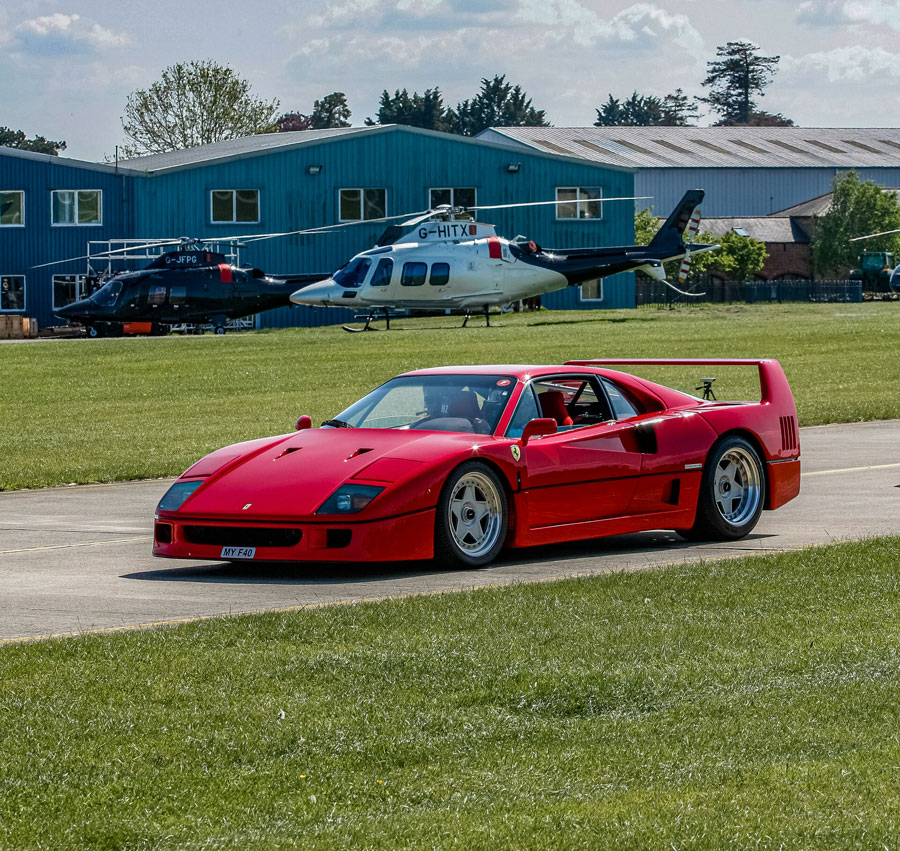
Ferrari F40 at Life in Classic
What Builds a Dream Garage?
What really defines a dream garage? Is it the analog purity of a 1990s supercar, or the squared-off, turbocharged ambition of the 1980s? Is it the car that dominated magazine covers, the one that lived on your bedroom wall, or the machine you once heard fly past on a summer evening and never forgot?
In a new episode of Between Two Pumps, the hosts open the doors to both decades and invite a spirited discussion about the cars that shaped a generation of enthusiasts. The result feels part time capsule, part friendly argument, and entirely driven by passion.
From the first minute, the show blends memory with metal. The hosts recall the posters that lined their walls, the cars that appeared in films and video games, and the machines that roared through their imaginations long before they ever sat behind the wheel. However, the conversation also goes deeper than nostalgia. It asks why certain cars remain alive in the enthusiast mind decades after production ended.
The debate moves quickly, but it never loses sight of the feeling that made these icons unforgettable. Some cars matter because they were technically brilliant. Others matter because they were flawed, dramatic, rare, loud, beautiful, or simply attainable enough to become part of real life.
As a result, the episode becomes less about building a perfect list and more about understanding why dream garages are so personal. A dream garage is not only a collection of cars. It is a collection of memories, ambitions, sounds, shapes, and moments. Ultimately, the discussion proves that a garage can be deeply personal and strangely universal at the same time.
Attainable Icons That Stirred the Streets
The team begins with the “attainable icons,” the cars people could actually see, hear, and sometimes even buy. These were not always the poster cars of the decade, but they were often the ones that created lifelong enthusiasts.
Think of turbocharged hatchbacks, boxy sedans with serious attitude, compact sports coupes from Japan and Europe, and performance versions of ordinary cars that suddenly made the school run or the daily commute feel like a qualifying lap. These were the cars that brought a taste of motorsport to normal roads.
Their appeal came from proximity. You might see one parked outside a shop, hear one accelerate from a traffic light, or know someone’s older brother who had one. They were not fantasy objects locked behind velvet ropes. They existed in the real world.
That made them powerful.
These machines did not always dominate the spec sheets. Some had laggy turbos, awkward ergonomics, fragile trim, or suspension that demanded attention. Yet they delivered excitement that felt honest and immediate. They taught drivers about balance, grip, boost, lift-off oversteer, manual gearboxes, and the fine line between bravery and overconfidence.
Moreover, they proved that personality did not require a supercar badge. A great hot hatch or compact sports car could feel more alive at legal speeds than a much faster exotic. A homologation special could bring rally engineering to a country lane. A lightweight coupe could make every roundabout memorable.
Today, those once-attainable cars anchor many dream garages. Their values may have risen, but their emotional role remains the same. They represent the point where performance met reality. They were the cars that people chased, modified, raced, restored, and remembered.
Still, the hosts are careful not to let nostalgia do all the work. Time can polish memories. It can soften flaws and exaggerate virtues. Therefore, the conversation stays honest about what these cars really were: exciting, imperfect, characterful machines from eras when performance often felt rawer and less filtered.
The 1980s: Angles, Boost, and Attitude
The 1980s brought a special kind of drama. Car design became sharper, wider, and more aggressive. Turbocharging moved from exotic experimentation into mainstream performance culture. Aerodynamics became visible. Wings, vents, box arches, spoilers, and deep bumpers were not just styling details; they were declarations of intent.
This was the decade of ambition. Manufacturers were learning how to make cars faster, more stable, and more visually assertive. Some succeeded elegantly. Others created machines that were slightly wild, slightly intimidating, and all the more memorable because of it.
The hosts capture this energy well. The 1980s were not always subtle, but subtlety was not the point. These cars looked like they had something to prove. Many of them did.
Turbocharged engines delivered a particular kind of excitement. There was anticipation, then boost, then acceleration that often arrived in one dramatic wave. By modern standards, many of these cars were less polished, but that was part of the theater. The driver had to participate. You could not simply press the throttle and let electronics tidy up the consequences.
For many enthusiasts, that is precisely why the decade still matters. The 1980s were full of machines that felt mechanical, ambitious, and occasionally dangerous. They had edges. They had quirks. They rewarded attention.
A dream garage built around the 1980s is rarely quiet. It is full of wedge shapes, period graphics, analog gauges, forced induction, motorsport influence, and cars that seem to carry the confidence of their age in every line.
The 1990s: Analog Precision Before the Digital Age
If the 1980s were about boost and attitude, the 1990s brought refinement, balance, and technical maturity. Performance cars became more complete. Chassis development improved. Engines became more responsive. Materials advanced. Aerodynamics became more sophisticated. Yet the driving experience remained largely analog.
That is why the 1990s occupy such a special place in modern car culture. The decade sits at a perfect crossroads. The cars were advanced enough to feel genuinely capable, but not so digitized that the driver became secondary. Manual gearboxes still mattered. Steering feel still mattered. Throttle response, weight, visibility, pedal placement, and mechanical feedback still defined the relationship between car and driver.
The hosts return to this idea throughout the discussion. The 1990s produced cars that many enthusiasts now see as the final great analog generation. They had enough technology to be fast, but not so much that the experience became distant.
This was also the decade when Japanese performance cars reached extraordinary heights. European manufacturers refined the sports saloon, the grand tourer, and the supercar. Motorsport continued to influence road cars in visible ways. At the same time, the rise of video games, magazines, television, and global media turned certain models into international legends.
A 1990s dream garage often feels more curated than chaotic. It may include a lightweight roadster, a high-revving coupe, a turbocharged Japanese icon, a German sports saloon, and a supercar that still feels modern enough to drive but old enough to demand respect.
The decade’s magic lies in that balance.
Halo Legends: From F40 to F1
Then the spotlight swings to the celestial tier, where legends like the Ferrari F40 and the McLaren F1 reign. These cars are not simply expensive collectibles. They are reference points. They represent different answers to the same question: how far can a road car go when compromise is reduced to the minimum?
The Ferrari F40 channels raw intensity. It is light, loud, turbocharged, and brutally focused. It feels like a road-going expression of late-1980s excess and engineering courage. It does not try to be polite. It does not try to be luxurious. It exists to make the driver feel speed in the most direct way possible.
The McLaren F1 represents a different philosophy. It is not just fast; it is meticulously conceived. Its central driving position, naturally aspirated V12, lightweight construction, and obsessive engineering make it feel almost architectural. Where the F40 is explosive, the F1 is complete. Where the Ferrari seems to shout, the McLaren seems to reason at very high speed.
Both cars send pulses racing, yet they represent different ideals. The F40 is drama. The F1 is purity. The F40 feels like the ultimate expression of an era. The F1 feels like it arrived from slightly beyond its own time.
The hosts weigh those differences without reducing the debate to a simple winner. Which one better captures its decade? Which one influences today’s cars more? Which one would you actually want to drive hard? Which one would you simply want to stand beside in silence?
Because these cars were never common sights, their mystique only grows with each passing year. Most enthusiasts will never drive either one. Yet both occupy a permanent place in the collective imagination. They are the cars against which other dream cars are measured.
In the end, the segment does not need to crown a single king. The F40 and F1 stand less as rivals and more as perfect complements. One reminds us that speed can be savage. The other reminds us that speed can be intellectual. Together, they show how diverse visions can produce greatness.
Beyond Specs: How These Cars Make You Feel
Numbers matter. Horsepower, torque, weight, acceleration, and top speed all tell part of the story. They help us understand context. They explain why one car shocked the world and another quietly outperformed expectations.
However, the panel insists that the experience behind the wheel matters more.
The whistle of a turbo. The weight of a clutch. The smell of hot brakes. The click of a manual gearshift. The way a steering wheel loads up in a corner. The view over a long bonnet. The silence before an engine fires. These details often define a car more deeply than any performance figure.
A dream garage is built from sensations as much as specifications. Some enthusiasts crave a roaring V12. Others prefer a featherweight chassis and a modest engine used to its limit. Some want the violence of boost. Others want the precision of a naturally aspirated redline. Some care about lap times. Others care about the way a car makes them feel on an empty road at sunrise.
This is where the episode finds its strongest rhythm. The hosts understand that the best cars communicate. They speak through the pedals, the seat, the shifter, the steering column, the exhaust, and the bodywork. They do not merely transport the driver. They involve them.
Therefore, the ultimate measure becomes simple: did the car make you feel alive?
If the answer is yes, the specs only add chapters to a story already worth telling.
The Poster Car Effect
Every dream garage begins somewhere. For many enthusiasts, it begins with a poster, a magazine cover, a race broadcast, a scale model, or a car glimpsed briefly in traffic. These first encounters matter because they arrive before logic. They create desire before comparison.
That is why the poster car effect remains so strong. The cars people wanted at twelve years old often remain powerful decades later. Even if better, faster, safer, and more comfortable cars arrive, the original dream does not disappear. It becomes part of personal history.
The episode understands this emotional layer. The hosts are not just discussing machines. They are discussing the way machines become symbols. A Ferrari might symbolize success. A rally-bred hatch might symbolize youth. A Japanese coupe might symbolize tuning culture. A German saloon might symbolize understated competence. A British supercar might symbolize engineering purity.
These associations are not always rational, but they are real. They explain why two people can look at the same car and feel completely different things. One sees a flawed old performance car. Another sees the sound of their childhood street, the cover of a favorite magazine, or the dream that kept them saving for years.
That is why dream garages cannot be standardized. They are built from biography.
Why the Debate Endures
The conversation refuses to end because the 1980s and 1990s blended breakthrough technology with real-world drama. Turbocharging took risks. Aerodynamics advanced quickly. Motorsport shaped road cars in ways buyers could see and feel. Materials like carbon fiber moved from competition into the highest levels of production engineering. At the same time, many cars still felt mechanical enough to be understood by the driver.
That combination is difficult to recreate today.
Modern performance cars are astonishingly capable. They are faster, safer, cleaner, and more consistent. Yet many enthusiasts still return to the 80s and 90s because those decades offered a different kind of involvement. The cars demanded more. They revealed more. They sometimes punished mistakes, but they also rewarded skill and attention in ways that felt deeply satisfying.
Today, the argument thrives across forums, podcasts, coffee meets, auctions, restorations, and social media. Modern media makes the eras more accessible than ever. You can rewatch period races, listen to factory soundtracks, study old brochures, compare road tests, and watch restoration projects unfold in detail.
Still, no amount of information can settle the question. Personal taste remains too powerful. Memory remains too selective. Experience remains too individual.
That is why the debate endures. It is not really about choosing the best decade. It is about explaining what kind of enthusiast you are.
Building the Ideal Garage
So what builds a dream garage?
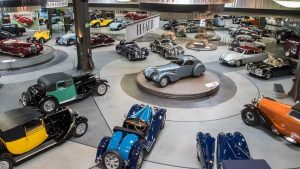
It is not simply money. A warehouse full of rare cars can still feel cold if there is no personal thread connecting them. Nor is it simply performance. The fastest car is not always the most meaningful. A true dream garage needs contrast, emotion, and purpose.
It may need one car that terrified the world when it was new. One car that made ordinary roads feel special. One car that carries a family memory. One car that represents a design movement. One car that is imperfect but impossible to sell. One car that exists purely because its shape still stops you in your tracks.
The best garages tell a story. They do not just display horsepower. They reveal taste, memory, curiosity, and identity.
That is why the episode works. It does not treat car enthusiasm as a spreadsheet exercise. It treats it as a living conversation. The hosts know that every choice invites disagreement, but disagreement is part of the fun. The garage becomes a debate in physical form.
The Joy of Not Agreeing
One of the strongest parts of the discussion is its willingness to leave questions open. In car culture, disagreement is not a weakness. It is fuel. One person’s perfect car is another person’s overrated icon. One person values originality. Another values modifications. One wants analog delicacy. Another wants turbocharged violence.
The episode embraces that tension. It invites listeners to defend their own heroes, challenge the hosts, and build their own imaginary lineups. That is exactly what keeps automotive culture alive.
Because in the end, dream garages are not built by consensus. They are built by conviction.
The best answer might not be the most expensive car, the rarest car, or the one with the greatest racing record. It might be the car that still makes you turn around for one last look after you park it.
Final Thoughts
Between Two Pumps uses the 1980s and 1990s as a starting point, but the real subject is bigger than either decade. The episode asks why cars become icons, why enthusiasts hold onto certain memories, and why the idea of a dream garage remains so powerful.
The answer is not found in one model, one country, or one era. It lives in the connection between machine and imagination.
Some dream garages begin with an F40. Others begin with a hot hatch, a rally special, a Japanese coupe, a German saloon, or a car that once seemed just barely within reach. Some are built around speed. Others are built around design, sound, rarity, or personal history.
Ultimately, a dream garage is not a museum of perfect choices. It is a map of enthusiasm. It shows where your taste came from, what still moves you, and which machines continue to make the past feel close.
That is why the debate never really ends.
And that is exactly why it should not.