
Route 66 Forever Stamps Celebrate America’s Mother Road
Route 66 foerever stamps at Life in Classic
A Centennial Tribute Hits the Mail
Get ready to travel without leaving your desk. The U.S. Postal Service has released a new Route 66 stamp set to mark the highway’s 100th anniversary. The series honors a road that helped shape American life, culture, mobility and the romance of the open highway.
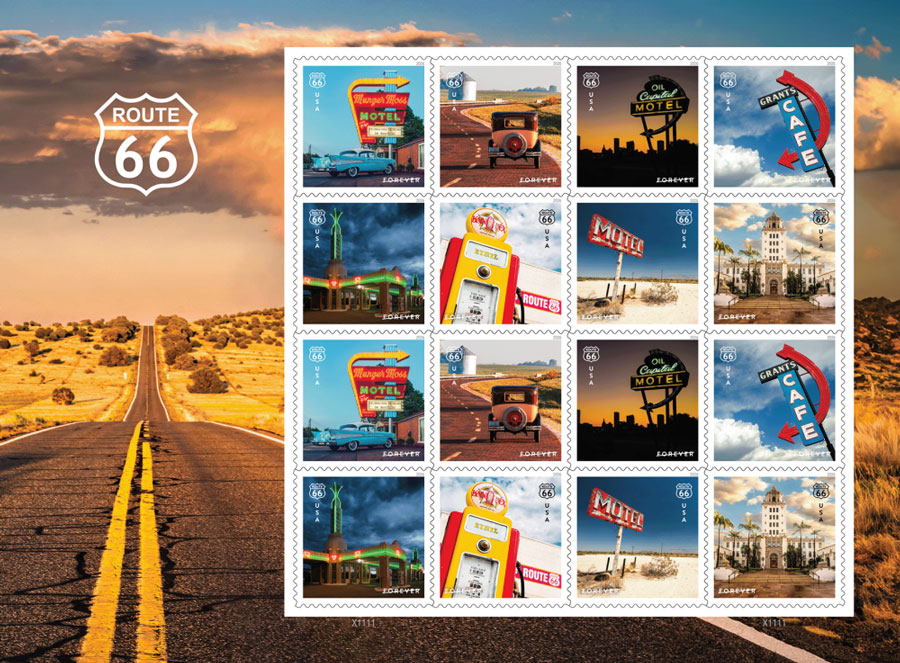
Route 66 was established on November 11, 1926. It linked Chicago with the American West and later became famous as the route to the Pacific, with Santa Monica now remembered as its symbolic western end. Across roughly 2,400 miles, it connected large cities, small towns, desert landscapes and roadside businesses. The USPS release celebrates that legacy with eight new Forever stamp designs. Each pane includes 16 stamps, with two of each design. :contentReference[oaicite:0]{index=0}
Because they are Forever stamps, they keep their value for a one-ounce First-Class Mail letter even if postal rates rise in the future. The USPS lists the Route 66 stamps with an issue date of May 5, 2026, and a pane price of $12.48. :contentReference[oaicite:1]{index=1}
For fans of Americana, the collection offers more than postage. It delivers a small but vivid reminder of the road that became known as both the “Mother Road” and the “Main Street of America.” It also invites new generations to discover the motels, diners, gas stations and wide horizons that made Route 66 a legend.
Images That Capture the Mother Road
Authenticity drives the visual appeal of the set. Photographer David J. Schwartz created the images after years of traveling and documenting Route 66. According to Stamps Forever, he first drove the route in 2004 and has returned more than 40 times. His work now appears on the stamp pane, with images representing each of the eight states along the highway.
The designs showcase Illinois, Missouri, Kansas, Oklahoma, Texas, New Mexico, Arizona and California. You will find neon motel signs, classic diners, weathered gas pumps, roadside sculptures, desert skies and main streets that still welcome travelers. USPS art director Greg Breeding designed the stamps and the pane using Schwartz’s existing photographs.
The result feels less like a corporate souvenir and more like a visual road diary. These are not polished fantasy scenes. They have texture, age and atmosphere. That matters because Route 66 was never only about pavement. It was about the places that grew around it.
Schwartz has described Route 66 as living history. His photographs reflect that idea. They show a road where old signs still glow, family businesses still matter and weathered buildings still carry stories. At their best, the stamps do what good travel photography should do. They make you want to go there.
Why These Stamps Matter
Commemorative stamps may seem modest in a digital world. Yet that is part of their charm. A stamp is small, practical and personal. It moves through real hands. It travels across cities and states. It can sit on a postcard, a letter, a first-day cover or a collector’s album.
That makes the Route 66 set especially fitting. The highway itself also connected people through movement. Families drove it in search of work. Soldiers and supplies moved along sections of it during World War II. Tourists later followed it for motels, diners, scenery and adventure. The National Park Service notes that Route 66 helped support Dust Bowl migration, wartime movement and the postwar boom in automobile tourism.
The stamps also arrive at the right moment. In 2026, Route 66 is not just a nostalgic symbol. It is the focus of renewed interest from travelers, preservationists and small towns along the old road. The centennial gives communities a reason to tell their stories again.
For collectors, the pane offers a compact piece of the centennial. For travelers, it may become a trigger. A single image of a neon sign or desert road can bring back a memory. It can also start a new plan.
The Road Behind the Legend
Route 66 belongs to a specific chapter of American history. It was born during the rise of the automobile and the development of the U.S. numbered highway system. The idea was practical: connect regions, improve travel and make long-distance driving easier to understand.
Yet the road quickly became more than practical infrastructure. It offered a promise. For many families during the Great Depression, it became a route west. John Steinbeck helped cement its emotional place in American culture by calling it the “Mother Road” in The Grapes of Wrath.
After World War II, Route 66 took on a different identity. It became a pleasure route. Americans bought cars, took vacations and discovered the freedom of the road. Motels, gas stations, drive-ins, cafes and souvenir shops flourished. Neon signs became landmarks. Roadside architecture became part of the journey.
That world began to change after the Federal-Aid Highway Act of 1956. New interstate highways gradually replaced many sections of Route 66. The old road lost traffic, and many businesses suffered. The National Park Service notes that the bypassing of the last section by Interstate 40 led to the highway’s official decommissioning in 1985.
Still, the road never disappeared from memory. In fact, the loss of its official highway status helped turn it into a heritage route. Travelers began seeking out the older alignments, the surviving signs and the towns that the interstates had left behind.
Eight States, Eight Moods
One reason Route 66 remains powerful is its variety. It is not one landscape. It is a sequence of changing American scenes.
Illinois brings the urban beginning and the Midwestern highway rhythm. Missouri adds river towns, Ozark curves and early roadside culture. Kansas contributes the shortest state stretch, but its small section has become a beloved part of the route’s personality.
Oklahoma gives Route 66 some of its deepest identity. It has long stretches, important preservation sites and a strong claim to the road’s spirit. Texas brings open skies, the Panhandle and a sharper sense of distance. New Mexico adds adobe tones, trading-post culture and dramatic light.
Arizona may be the most cinematic section, with desert horizons, old motels and long views that seem built for road-trip photography. California closes the story with the Mojave Desert, Los Angeles and the Pacific dream.
The USPS pane captures that state-by-state character. Each design works as a small window. Together, they suggest the full journey.
A Stamp Set for Travelers and Collectors
The Route 66 release also offers several collector-friendly options. USPS lists not only the pane of 16 stamps, but also related philatelic products such as first-day covers, postcards and collector items. The official first-day-of-issue event took place in Phoenix, Arizona, during the National Postal Forum on May 5, 2026.
That Phoenix setting makes sense. Arizona holds some of the most evocative surviving sections of the road. It also appears on the stamp pane’s selvage, where a photograph shows Route 66 stretching into the distance. USPS describes that image as a symbol of the possibility inspired by the open road.
Collectors may appreciate the stamps for their centennial timing. Road-trippers may enjoy them for their mood. Designers may notice the balance between photography and postal format. The best commemorative stamps often work on several levels, and this set does exactly that.
It is also a reminder that travel does not always begin with a booking confirmation. Sometimes it begins with an image. A sign. A name. A small square of paper that makes the imagination move.
The Automobile at the Heart of the Story
For Life in Classic readers, Route 66 matters because it belongs to the golden age of the automobile. The road helped define how cars changed American life. It turned driving into more than transportation. It made the journey itself part of the reward.
Classic cars and Route 66 naturally belong together. Picture a Chevrolet Bel Air under a neon motel sign. Imagine a Ford Mustang crossing the high desert at sunset. Think of a Cadillac Eldorado gliding past a roadside diner, or a dusty pickup stopped beside an old gas pump.
Those images endure because Route 66 gave the automobile a stage. The road made cars feel cinematic. It gave ordinary travel a sense of freedom, scale and personal discovery.
That is why these stamps feel relevant beyond the world of philately. They celebrate the culture that grew around driving. They honor the motels where people slept, the cafes where they stopped, the service stations that kept them moving and the towns that turned traffic into identity.
Preservation Through Everyday Objects
Route 66 preservation often focuses on buildings, signs and old roadbeds. That work is essential. Without it, the physical evidence of the highway would continue to fade. Yet preservation also happens through stories, images and everyday objects.
A stamp can play a small role in that process. It carries a picture into homes that may never own a vintage car or drive the full route. It gives a national audience a reason to pause and ask why this old highway still matters.
The USPS release also supports a broader truth. Heritage survives when people use it. Route 66 is not a sealed museum. It remains a living corridor, even if the old federal highway no longer exists in its original official form.
Travelers still eat in its diners, sleep in its motels and photograph its signs. Local business owners still rely on the road’s magnetism. Artists still find inspiration in its colors and textures. The centennial stamps carry that living identity into the mail stream.
A Small Souvenir with a Long Road Inside
The new Route 66 Forever stamps are small, but they carry a large story. They honor a highway born in 1926, shaped by migration, transformed by tourism and challenged by the interstate age. They also celebrate the people who kept the road alive after official maps moved on.
David J. Schwartz’s photographs give the set credibility. They come from years of looking closely, returning often and understanding that Route 66 is not only a road. It is a chain of places, memories and human encounters.
For collectors, the pane marks an important anniversary. For travelers, it may become a prompt to plan a drive. For lovers of classic Americana, it captures the familiar magic of neon, chrome, asphalt and sky.
Route 66 has always promised movement. These stamps continue that promise in miniature. They may travel on letters, sit in albums or become keepsakes from the centennial year. Either way, they remind us that the Mother Road still has power.
A century after its birth, Route 66 remains one of America’s strongest travel symbols. The road may no longer function as it once did, but its emotional map is still alive. With this stamp set, the USPS has placed that map into the smallest possible format and sent it back out into the world.