
British Classics You Can Buy Right Now
jaguar e type at Life in Classic
Britain shaped car and motorcycle history as boldly as it shaped rock and roll. From nimble roadsters to rugged 4x4s and race-bred tourers, the nation’s machines still spark desire. This roundup tours recent and current listings across budgets, guided less by investment math and more by style, story, and driveability. However, it also notes what makes each pick stand out today.
You will find sleek Jaguars and pragmatic Land Rovers, plus icons from Lotus, Triumph, and Bentley. Meanwhile, parts support and active clubs keep many of these vehicles on the road. As ever, the key is choosing the example that fits your taste, use, and tolerance for tinkering. Here are highlights to inspire your search.
Budget Finds Under $20,000
Start with the 2005 Jaguar X-Type Sportwagon, a rare U.S. import that blends all-wheel drive with classic cues. Estimates say only 1,602 wagons reached American buyers, a figure also cited by Jaguar enthusiast sources and period ownership discussions. One well-kept example traded for $8,000, which underlines the model’s value. Additionally, sedans remain plentiful and even cheaper, making the X-Type a low-risk way into the brand.
The appeal is not hard to understand. The X-Type never had the status of an XJ or XK, yet time has softened old criticism. The wagon body gives it real usefulness, while the cabin still carries a touch of Jaguar warmth. Wood trim, leather, compact proportions, and winter-friendly traction make it a more interesting daily classic than many generic modern crossovers.
Motorcycle fans should consider a 1972 BSA Rocket Three, the charismatic 750-cc triple built alongside Triumph’s Trident. The model arrived as the Honda CB750 changed the game, yet it still delivers sound, character, and strong performance. Updated ignition and fresh engine work can make these bikes very dependable. Consequently, rider-ready examples in the $8,000–$10,000 range feel like smart fun.
The Rocket Three also offers a useful lesson in British classic buying. Perfection is not always the goal. A machine with sympathetic upgrades, honest use, and proper maintenance can be better than a static museum piece. These bikes like to run, and their mechanical personality rewards riders who enjoy involvement.
On the wilder side, a 1951 Hillman Minx convertible hot rod swapped its 38-hp four for a Chevrolet 350 V8, a TH400, and a stout 9-inch Ford rear axle. It sold for $11,550 and proves tastefully built hybrids can extend a modest car’s life. However, stock Minxes do appear at approachable prices, and they bring a gentler kind of charm.
The 1974 MGB also remains a no-brainer starter classic. Parts are everywhere, values are sensible, and smart upgrades improve reliability without hurting charm. The MGB may be obvious, but that is part of its strength. It has one of the best support networks in the classic world, and almost every mechanical problem has already been solved by someone else.
A good chrome-bumper MGB still feels light, direct, and cheerful. Later rubber-bumper cars often cost less and can make excellent drivers. Buyers should focus on rust, panel fit, and evidence of regular care. Engines and gearboxes matter, but the body usually decides whether a cheap MGB stays cheap.
Icons in the Middle Lane: $25,000–$75,000
The 1973 Triumph Hurricane X-75 wears Craig Vetter’s dramatic bodywork over the BSA triple drivetrain. Production was short, and survivors earn steady attention. One unmolested rider in original paint even carried Vetter’s signature. Average values run roughly $20,000–$35,000, and a recent auction high reached $36,500. Therefore, buyers get both sculpture and speed.
The Hurricane looks unlike almost anything else from the period. Its sweeping tank and side panels give it a custom-show presence, yet it came from a real manufacturer at a time of industry pressure. That tension makes it fascinating. It is both a production motorcycle and a design statement from the end of Britain’s old motorcycle empire.
For pure sports-car joy, the 1966 Lotus Elan S3 remains a benchmark. Its featherweight chassis, twin-cam four, and agile suspension inspired the Mazda Miata decades later. A comprehensively restored S3 with rebuilt drivetrain and renewed cosmetics asked $48,000, which reflects rising respect for sorted cars. Recent market listings still show that $48,000 figure for restored S3 examples.
The Elan is not about brute power. It is about response. Steering, braking, weight transfer, and engine note all arrive with unusual clarity. That is why the car still feels modern on the right road. It proves that speed does not need mass or intimidation to be memorable.
Prefer mud over mountain switchbacks? A 1958 Land Rover Series II balances simple engineering with go-anywhere toughness. Aluminum bodywork, stout axles, and the famous 2.25-liter architecture define the breed. Early examples also carry a purity that later utility vehicles slowly lost. Recent market data for 1958 Series II models shows a wide range, with restored or special examples reaching far higher than rough projects.
The example reviewed wore the right kind of period character: honest presentation, utilitarian details, and the square-shouldered confidence that made Land Rover famous. These trucks are not fast, quiet, or luxurious. That is the point. They turn every short drive into an event and every gravel track into an invitation.
In the same price territory, the Austin-Healey 3000 deserves a serious look. The big Healey gives you long bonnet style, straight-six torque, and a soundtrack that feels perfectly suited to coastal roads or mountain passes. It is more muscular than an MG and less delicate than a Lotus. For many buyers, that makes it the ideal British roadster.
The later Mk III BJ8 is especially appealing because it adds comfort without losing the essential shape. Recent market guides place median values for Mk III BJ8 cars in the low-to-mid five-figure range in pounds sterling, with exceptional cars much higher.
This is also where the Bentley Turbo R starts to look tempting. It is not a sports car, but it may be one of the great undervalued British grand tourers. The Turbo R combined old-world luxury with real pace and sharper road manners than earlier Bentley saloons. Buyers must respect maintenance costs, but the reward is immense presence for money that still seems modest against its original status.
Aspirational British Metal: $75,000 and Beyond
Above $75,000, the field becomes more emotional and more selective. This is where condition, provenance, originality, and specification start to matter far more than basic model recognition. A beautiful badge alone is not enough. The right car must have the right history.
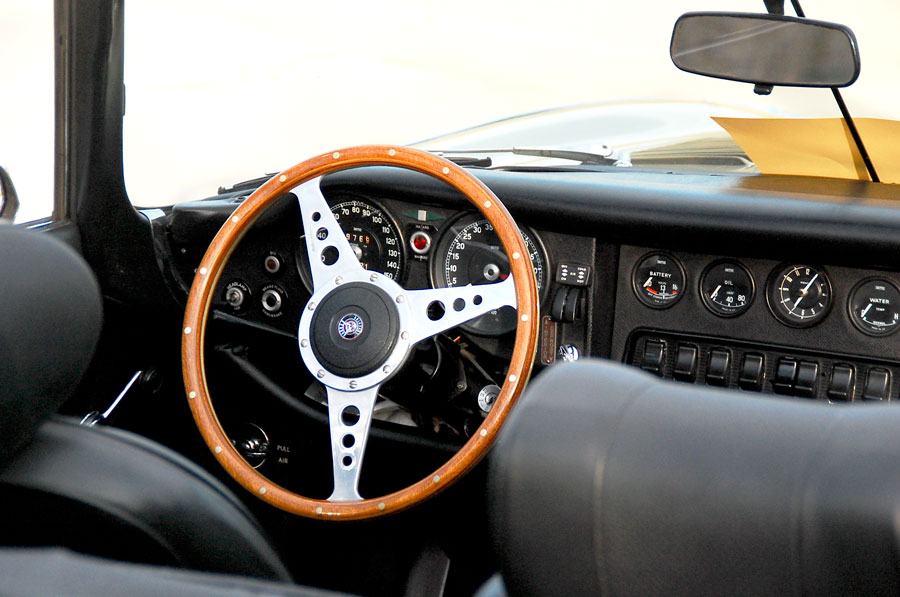
The Jaguar E-Type remains the obvious star. It may be too famous to feel like a discovery, but it still earns its place. Series 1 cars, especially early roadsters and desirable fixed-head coupes, remain the purest expression of the form. The long bonnet, covered headlamps, compact cabin, and independent rear suspension created a car that was both beautiful and technically advanced for its time.
Market data continues to show strong interest in E-Types, with Series 1 cars sitting at the top of the regular production hierarchy. Special examples can reach extraordinary figures, while more ordinary cars vary heavily by body style, engine, history, and restoration quality.
Still, buyers should avoid buying the legend without inspecting the metal. E-Types can hide corrosion and poor repair work. A cheaper car may become expensive very quickly. A well-restored example from a known specialist often costs more upfront but can save money and frustration later.
The Aston Martin DB7 offers a different kind of opportunity. It is younger, smoother, and more usable than many earlier British GTs. Ian Callum’s shape has aged with real grace, and the V12 Vantage brought the performance to match the badge. Market data shows a broad DB7 spread, with projects at the bottom and excellent Vantage or special versions far above ordinary driver cars.
For a Life in Classic garage, the DB7 makes sense as a modern classic rather than an old one. It brings occasion without asking the driver to accept 1960s ergonomics. A manual V12 is especially desirable, but even automatic cars can deliver a rich grand touring experience.
Then comes the Range Rover Classic. Few vehicles changed the world so quietly. It fused rural toughness with comfort and created the template for the luxury SUV. Early two-door examples have become collectible, while later four-doors remain easier to use. Rust, previous modifications, and neglected mechanicals demand close attention, but the best examples have become genuine design icons.
A well-bought Range Rover Classic gives you something no modern SUV can fully replicate. It feels upright, airy, mechanical, and relaxed. It can appear at a country house, a ski lodge, or a beach road without looking out of place. That versatility explains why interest keeps growing.
For those who want drama, the Jaguar XJS is another strong candidate. Early cars still divide opinion, but later examples have aged well. The coupe shape is long, low, and more sophisticated than its critics once allowed. A V12 XJS offers turbine-like smoothness, while six-cylinder cars can be easier to live with.
The XJS also has an important role in British car history. It replaced the E-Type, which was an impossible job. Judged on its own terms, it is a refined grand tourer with real presence. The market has already begun to recognize the best cars, especially convertibles, low-mileage coupes, and rare specifications.
Motorcycles with Lasting Pull
British motorcycles deserve their own corner of this story. Norton, Triumph, BSA, Vincent, and Velocette all created machines with lasting appeal. Some are valuable enough to feel like fine art. Others remain accessible to riders who want sound, smell, and mechanical honesty.
The Norton Commando may be the most usable classic British motorcycle for many enthusiasts. It has real performance, excellent looks, and a strong support network. A properly sorted Commando feels alive without becoming punishing. It also has the right amount of mechanical charisma.
At the higher end, the Vincent Black Shadow sits in a different league. It was one of the fastest motorcycles of its era and still carries an almost mythical reputation. Values reflect that status, but so does the experience. Few machines combine engineering, rarity, and legend so effectively.
The key with British motorcycles is similar to the key with British cars. Buy condition, documentation, and careful ownership. A cheap machine with missing parts and poor previous work can become a long and expensive education.
What to Check Before Buying
British classics reward patience. They also punish assumptions. Rust is the first concern on many cars, especially monocoque sports cars such as the MGB, Lotus Elan, Jaguar E-Type, and XJS. Frame condition matters on separate-chassis machines such as Land Rovers and big Healeys.
Electrical systems deserve attention, but old jokes about British wiring should not replace proper inspection. Many problems come from age, poor repairs, weak grounds, and added accessories. A carefully rewired car may be more dependable than an untouched original with brittle insulation.
Parts support varies by model. MGBs, Triumphs, Minis, Land Rovers, E-Types, and many classic motorcycles enjoy excellent supply. More obscure cars can be rewarding, but trim, glass, interior pieces, and model-specific hardware may be hard to source.
Documentation adds confidence. Service records, restoration invoices, ownership history, and photos of bodywork can tell you more than a polished engine bay. Matching numbers matter most on high-value cars, but history matters on everything.
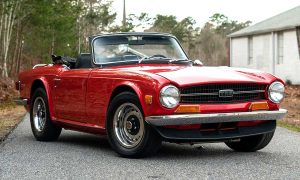
Finally, match the vehicle to your intended use. A Lotus Elan is perfect for a Sunday road. A Bentley Turbo R is better for long-distance elegance. A Land Rover Series II turns short local trips into small adventures. An MGB can do almost everything at a sensible cost.
The Enduring Charm of British Machines
British classics still captivate because they rarely feel anonymous. Even the flawed ones have personality. They offer proportion, tactility, sound, and a direct connection to the eras that produced them.
A Jaguar brings grace. A Lotus brings precision. A Land Rover brings utility and stubborn charm. A Bentley brings weight and occasion. A Triumph or BSA motorcycle brings noise, heat, and old-school mechanical theatre.
That variety is the real strength of the British classic world. You can enter with a modest MGB, a usable Jaguar wagon, or a characterful motorcycle. You can move up to a Lotus Elan, Austin-Healey 3000, or Land Rover Series II. At the top, the E-Type, Aston Martin, Vincent, and early Range Rover offer design history with serious collector appeal.
Not every British classic is easy. Some require patience, specialist knowledge, and a sense of humor. Yet that involvement is part of the attraction. These machines ask something from their owners, and they give something back in return.
In a world of silent crossovers and sealed technology, that exchange feels increasingly rare. British classics remind us that driving and riding can still be personal. They turn a route into a memory, a garage into a workshop, and a machine into a companion. That is why they continue to matter.