
Hand-Built Lancia 037 Revives Group B Glory
Hand-Built Lancia 037 Revives Group B Glory - Life in Classic
Group B legend, rebuilt for the road
Group B rally cars competed in the World Rally Championship for only five seasons, from 1982 to 1986. Yet their reputation keeps growing as new fans discover wild footage online. Original cars are scarce and priced for collectors. For most enthusiasts, ownership feels out of reach.
Canadian fabricator Brandon Hegedus of Hegedüs Automobili offers a different path. After creating a stunning Ferrari 412p tribute in his suburban garage, he has completed a faithful Lancia Rally 037 replica for a local client who previously owned a Ford RS200 tribute. The build took 13 months and followed a quick recommissioning of a genuine 1966 Ford GT40 Mk I. His workshop is low on ceremony and high on output. Friends can visit, but the work never stops.
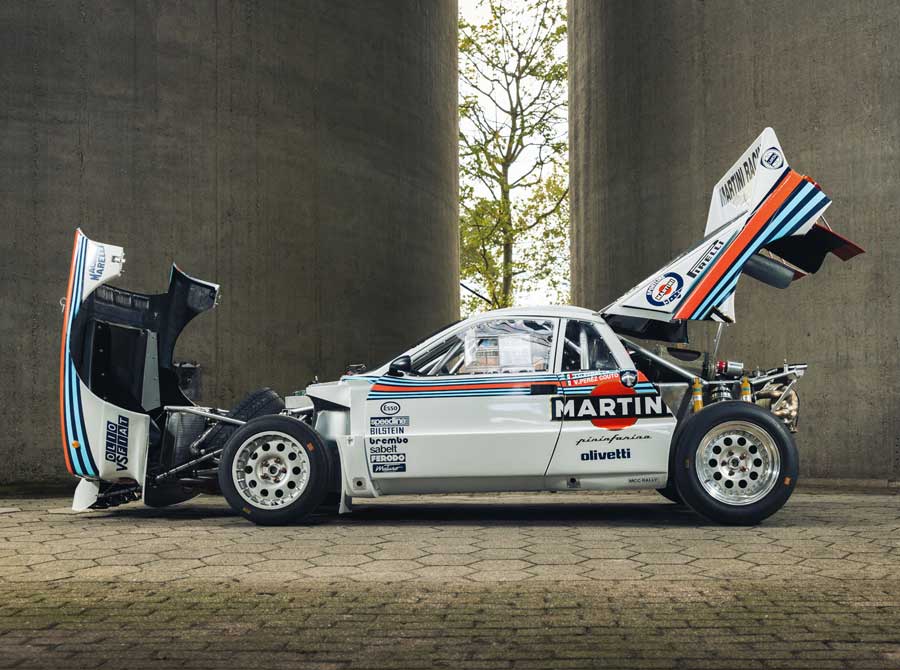
The finished car channels the spirit of Lancia’s first purpose-built Group B machine. Crucially, it also brings modern craft, better safety, and day-to-day usability.
Stronger structure, smarter packaging
The project began in the UK, where a previous owner had gathered parts, a tube-frame, and fiberglass panels. However, once the rolling kit reached Calgary, it needed far more than final assembly. The original 037 used the Lancia Beta Montecarlo’s center section with steel front and rear subframes. That layout made the race car quick and light, but it also left it vulnerable in big crashes.
Hegedus kept the Montecarlo core yet engineered a full-length chassis that runs nose to tail. As a result, the structure is stiffer and safer. He then corrected floor height, which had crept too high, and reworked cage elements so the seats and rails could sit low and far enough back. He also adjusted head bars and the main hoop for better ergonomics. Unnecessary braces were removed to reduce weight and improve access.
The outcome is a period-correct stance with modern fundamentals. It looks right, and it feels secure.
A supercharged heart with period flavor
Power comes from an Audi 1.8-liter four-cylinder mounted amidships, about eight inches farther back than on the original Lancia. That shift was possible thanks to a shorter transaxle bellhousing adapted from front-drive Audi and Volkswagen models. The move improved weight distribution and created useful cabin-adjacent space.
Instead of a turbo, Hegedus chose an Eaton supercharger and added a custom charge cooler after dyno testing showed hot intake temperatures under boost. The engine internals remain stock, while a translucent red timing-belt cover and a matching open air filter add flair. Output sits around 250 to 300 horsepower. Because the car weighs about 2,000 pounds, the power-to-weight ratio delivers lively performance without stressing the drivetrain.
He fabricated the exhaust in mild steel. The result looks raw by design, echoing the functional, “get-it-done” welds seen on period 037s. Meanwhile, twin welded-aluminum fuel tanks sit directly behind the firewall and inside the cage for safety. A large balance tube links the tanks, so either filler will top both. Expect roughly 300 miles of range per fill.
Suspension, wheels, and road manners
The car’s purpose is not to become a museum copy. It is meant to be driven. That explains the use of modern suspension, carefully chosen wheels, and a setup aimed at real roads rather than only display lawns. Hegedüs Automobili describes the project as an attainable, road-going, reliable, and maintainable Group B replica, built around a Lancia Montecarlo core with a full cage and tube chassis. The company also notes modern suspension from Intrax, Emtron stand-alone fuel injection, Italian-sourced three-piece wheels, and bodywork using fiberglass and Kevlar supplied from England. :contentReference[oaicite:0]{index=0}
That combination matters because the original 037 was never a gentle car. It was created for competition, with rear-wheel drive, low weight, and a supercharged four-cylinder engine. In works form, it became the last rear-wheel-drive car to win the World Rally Championship manufacturers’ title, beating Audi’s four-wheel-drive Quattro in 1983. :contentReference[oaicite:1]{index=1}
This replica respects that story without pretending the world has not moved on. The stance, proportions, and mechanical layout speak the language of early 1980s rallying. However, the hidden decisions serve a modern owner. Better structure, updated fuel management, improved cooling, and carefully considered ergonomics make the car less intimidating to use. The goal is not to dilute the 037 idea. It is to make that idea survivable and enjoyable beyond a rally stage.
A cabin built around intent
Inside, the car follows the same philosophy. Nothing feels decorative for the sake of decoration. The cockpit is purposeful, compact, and direct. Low-mounted seats give the driver the correct relationship with the wheel, pedals, and windscreen. The adjusted cage geometry also helps the cabin feel usable rather than compromised by the frame around it.
That is important in any road-driven rally tribute. A car can look spectacular and still fail if the seating position is wrong. In this case, the packaging work supports confidence. The driver sits down in the chassis, not on top of it. The view out remains theatrical, framed by the low nose, wide arches, and upright screen. Yet the controls feel arranged for use, not just photography.
There is also honesty in the way the car is finished. The exposed fabrication, mechanical textures, and compact engine bay do not hide the effort behind the build. Instead, they make the process visible. That suits the 037 perfectly. Lancia’s original machine was beautiful, but it was never soft. It was a tool, shaped by engineers and rally crews who cared about speed, access, serviceability, and survival.
Why the 037 still matters
The Lancia Rally 037 occupies a special place in motorsport because it arrived at a turning point. Group B encouraged extreme thinking, and manufacturers responded with machines that blurred the line between engineering and obsession. Audi pushed four-wheel drive. Peugeot would later refine the formula with the 205 T16. Lancia, however, won with balance, strategy, lightness, and traction management rather than all-wheel-drive certainty.
That makes the 037 more than a beautiful rally car. It represents the final triumph of an older idea: a light, rear-wheel-drive machine with precise responses and enough power to demand respect. Its legacy survives because it was both heroic and slightly doomed. By the middle of the decade, the sport had moved toward more complex four-wheel-drive weapons. Then Group B itself disappeared after 1986, leaving cars like the 037 frozen in legend.
Original examples now belong to a very different world. They are historically important, expensive, and often too valuable to use with abandon. That creates space for builds like this one. A faithful replica cannot replace an original competition car, and it should not claim to. Instead, it offers another kind of value: the chance to experience the shape, sound, and attitude of the era without treating every mile as a financial risk.
A tribute with its own identity
What makes Hegedus’s 037 especially interesting is that it does not rely only on nostalgia. The car looks back, but it also solves problems in the present tense. The Audi-based engine choice is unconventional, even ironic, given the original rivalry between Lancia and Audi. Yet it also makes sense. It is compact, tunable, available, and supported by modern knowledge. The supercharger brings the immediate response expected from an 037-inspired machine, while the charge-cooling work shows the build was tested rather than merely assembled.
The same attitude runs through the chassis and packaging. Keeping the Montecarlo connection preserves the project’s spiritual link to the original. Extending the structure, lowering the driving position, and refining the cage make it more usable. This is not a kit completed by convenience. It is a reinterpretation shaped by hands-on judgment.
That distinction matters. The classic world is full of replicas, continuations, recreations, and restomods, and the labels often become distracting. The better question is simpler: does the car understand the original? In this case, the answer appears clear. It captures the tension that made the Lancia 037 so compelling: elegance and aggression, lightness and danger, Italian style and mechanical pragmatism.
The road-going Group B fantasy
For many enthusiasts, Group B exists through grainy footage, screaming engines, night stages, and crowds standing far too close to the road. The cars feel almost mythological. This Canadian-built 037 tribute brings that myth back into physical form, but with enough modern thought to make it more than a static homage.
It is not an original Lancia. It is not trying to be one. Instead, it is a hand-built answer to a question many enthusiasts quietly ask: what would it take to make a Group B dream usable today? In Brandon Hegedus’s case, the answer involves a Montecarlo core, a stronger tube structure, a supercharged Audi four-cylinder, careful packaging, and a refusal to let legendary shapes remain trapped behind glass.
The finished result stands somewhere between reconstruction and reinvention. It honors the 037’s competition history while accepting the needs of a modern owner. It looks like a rally weapon, but it has been built for roads, fuel stops, inspections, and real mileage. That may be the most convincing tribute of all. Group B was brief, dangerous, and unforgettable. This car gives one of its greatest silhouettes another life, not as a relic, but as a machine ready to move.