
Inside the World’s Largest Classic Car Junkyard
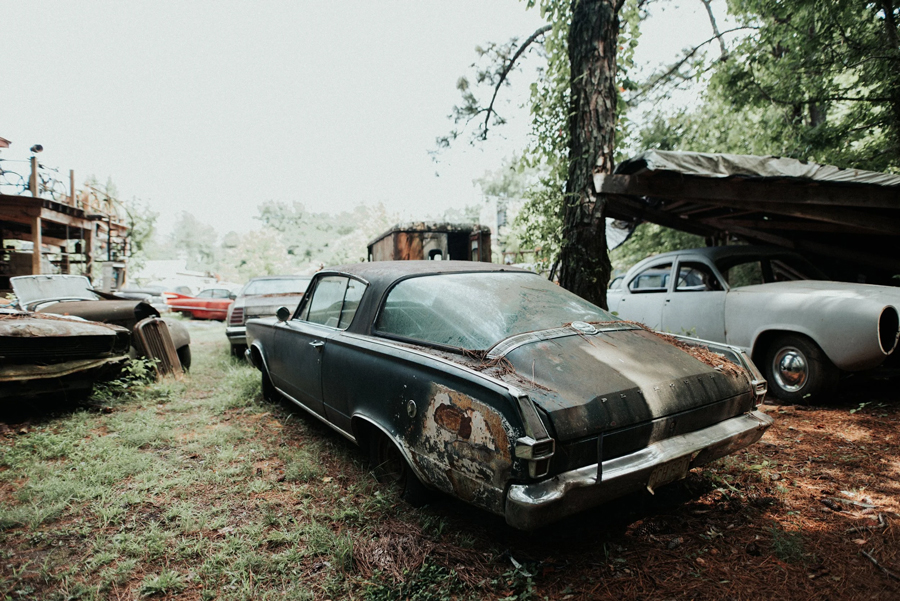
Old car city USA at Life in Classic
For many vintage car enthusiasts, the idea of a vast graveyard of old automobiles—rusty, sun-faded, and slowly being reclaimed by the woods—sounds like a fantasy. In White, Georgia, that dream has a real address. Often recognized as the world’s largest classic car junkyard, Old Car City USA offers a haunting, beautiful walk through American automotive history, one that feels equal parts museum, memory bank, and nature trail.
An hour north of Atlanta, Old Car City USA is not a salvage yard in the traditional sense. This is an open-air museum with a distinctly American story. What started as a small general store in 1931, run by the Lewis family, evolved over generations into an extraordinary seven-acre sprawl of vehicles from another era. Today, under the care of owner Dean Lewis, the site holds more than 4,000 cars, trucks, vans, and even a school bus—most dating from the 1930s through the 1970s. Visitors pay not to pick parts, but to wander. With roughly six miles of trails threaded through the woods, it’s a place designed for looking, lingering, and letting the past speak.
Scale is part of the spectacle. Vehicles are packed densely along footpaths and stacked in layers that seem to stretch to the horizon. There’s an almost cinematic feeling to seeing so many familiar shapes—tailfins, round headlights, chrome badges—standing quiet and still under the canopy. It is widely regarded as the largest known accumulation of classic vehicles of its kind anywhere in the world, and the superlative feels justified the moment you step onto the trails.
What sets Old Car City apart goes beyond numbers, though. It is the strange, poetic partnership between metal and forest. Pine trees have driven their way through engine bays and windshields. Moss softens fenders; ivy braids through grilles. Paint has surrendered its shine to time: blues bleached to pastel, reds peeled back to raw steel, whites turned to ghostly grays. With every season, the look of the place changes—the light, the color, the textures. For photographers and artists, it’s a treasure trove. For anyone with a soft spot for the past, it’s a place where nostalgia is not a feeling but a landscape.
The vehicles themselves serve as time capsules. You’ll recognize the silhouettes of mid-century Fords and Chevrolets, the distinctive lines of Studebakers, and dozens of other makes that once roamed American roads. They stand as monuments to a manufacturing age when cars were stamped from thick steel and ornamented with badges and bezels that made bold promises about the future. Here, the future arrived differently. Instead of being restored and revved, these machines found a final resting place under the pines, and somehow that fate reveals as much about the cars—and their era—as any polished concours display.
Old Car City draws visitors from across the world, many making the pilgrimage specifically to witness the strange beauty of decay. Others come for the history, to read design cues in the sheetmetal and trace the evolution of American automotive style. Many more come simply to feel something: the quiet pull of memory, the awe of scale, the hush of nature doing its slow work. The site’s purpose leans toward preservation and education rather than commerce. It is not about shopping or parting out. It’s about keeping a conversation alive—between past and present, industry and environment, function and art.
Walk here long enough and patterns emerge. Hubcaps collect like coins on the forest floor. Steering wheels and dash clusters appear in unexpected places, their dials and fonts a language of another time. Some vehicles sit remarkably intact; others have become skeletal, frames and ribs visible, their identities reduced to a badge or a curve. Even when the body is gone, the story remains: of a work truck that outlasted its route, a family wagon that shuttled kids and groceries, a coupe that felt like freedom on a Friday night.
There’s a humility to the experience. No velvet ropes. No climate-controlled galleries. Just dirt paths, birdsong, and the gentle creak of trees. The museum exists in motion, if not in the way engines intended. Sunlight shifts, leaves fall, and rust spreads like lichen. Every photograph taken here is a document of a specific moment—one day in the long fade of paint and steel. In that way, Old Car City is less about loss than about transformation. Time takes, but it also gives: context, meaning, and a new kind of beauty.
For anyone who loves cars, design, or American history, this is a place to see once, and perhaps again in another season. It’s a reminder that objects built to move can be powerful even when still; that the story of the automobile is not only about speed and shine, but also about endurance, memory, and place.