
Aero Muscle: Wind-Tunnel Icons of the 1980s
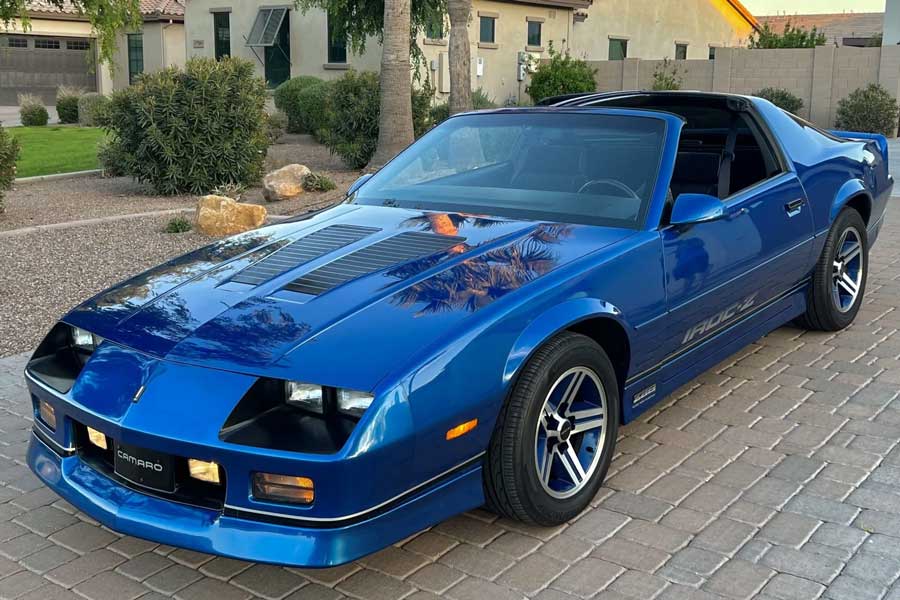
Chevrolet Camaro IROC-Z at Life in Classic
From Boxy to Slippery: The 1980s Aero Shift
By the mid-1980s, American muscle shifted shape and purpose. The squared-off profiles of earlier decades gave way to sleeker, wind-cheating bodies. Automakers chased fuel efficiency and racing success at the same time. Consequently, the wind tunnel became as crucial as the dyno.
Designers lowered hoods, swept back windshields, and smoothed every edge they could. As a result, “Aero” muscle emerged: cars that sliced air rather than bludgeoning it. These machines looked modern and felt faster, even at idle. Today, those wedge-like silhouettes read as icons of the era. Moreover, they mark the start of a sharper, more technical approach to American performance.
Ford’s Wind-Tunnel Turn: Mustang and Thunderbird
Ford moved early. In 1983 it softened the Fox-body Mustang and dramatically reshaped the Thunderbird. The changes were not subtle. Both cars gained cleaner noses, tighter panel gaps, and smoother grilles. The Thunderbird’s long “beak” and sloped rear glass cut drag and added attitude. Meanwhile, the Mustang began its march toward the slick late-1980s look enthusiasts now prize.
When the Mustang received its 1987 refresh, it arrived with flush composite headlights and a more integrated front fascia. Those details mattered. They improved airflow and sharpened the car’s identity. Importantly, Ford proved that American performance could look elegant as well as quick. The message landed with buyers and racers alike. Therefore, the Blue Oval helped set the decade’s aerodynamic tone.
GM’s Streamlined Icons: Camaro, Firebird, and the Turbo Trans Am
General Motors took the lesson and ran. The third-generation Camaro and Firebird arrived as low, wide, and dramatically raked wedges. Windshields leaned steeply, and the Pontiac added pop-up headlights for an even cleaner face. Ground effects and integrated spoilers pushed air around the body and down onto the pavement. Consequently, these F-bodies looked fast and felt planted.
The IROC-Z era cemented the look on the street, while the high-spec Firebird GTA brought grip and grace. Pontiac doubled down in 1989 with the Turbo Trans Am. It dropped Buick’s turbocharged 3.8-liter V6 into the Firebird’s smooth shell. The combination delivered brutal midrange thrust and serious top speed. Because of the car’s low drag and stout power, it could reach around 160 mph. It closed the decade with a statement: style and science belonged inside the same muscle car.
NASCAR Specials: Monte Carlo SS Aero Coupe and Grand Prix 2+2
Stock-car racing also shaped the showroom. Chevrolet’s Monte Carlo SS Aero Coupe existed because NASCAR demanded sleeker bodywork at super-speedways. Engineers replaced the upright notchback with a long, sloped rear window. The result reduced turbulence and gave the car a striking profile. Production stayed limited, with roughly 6,000 examples built across 1986 and 1987. Therefore, collectors now hunt them as G-body crown jewels.
Pontiac answered with the Grand Prix 2+2. It wore a unique fiberglass nose, a bubble-style rear window, and a small trunk opening that prioritized airflow over convenience. Only 1,225 were made, all in a consistent silver-over-charcoal scheme. While the car favored function, it also delivered a distinct identity. Together, these homologation specials show how racing rules can create some of the most memorable street machines.
Why Aero Muscle Is Rising With Collectors
Today, these 1980s aero cars hit a sweet spot for drivers and investors. First, they are usable. Fuel injection, overdrive gearing, and better suspensions make them friendly on modern roads. You can commute, cruise, and road-trip without drama. Secondly, the culture has shifted. The “Radwood” wave embraced digital dashboards, tape stripes, and wedge styling. What once seemed dated now reads as cool and cohesive.
Affordability has also fueled interest. While halo cars like the Buick GNX can be expensive, many clean examples of Monte Carlo SS and Camaro IROC-Z remain within reach. Prices are rising, though. As more enthusiasts discover the blend of style, story, and practicality, demand climbs. Therefore, the window for budget shopping is narrowing. Even so, smart buyers can still find honest drivers and well-kept survivors that deliver daily joy and long-term promise.
Ultimately, Aero muscle reflects a turning point. Engineers and stylists worked together, and the results still feel fresh. The wind tunnel made these cars quicker and more efficient. It also gave them a language of speed that reads clearly today. Because of that, their appeal continues to grow on the street, at shows, and in the auction lanes.