
Comète A French Ford in Italian Style
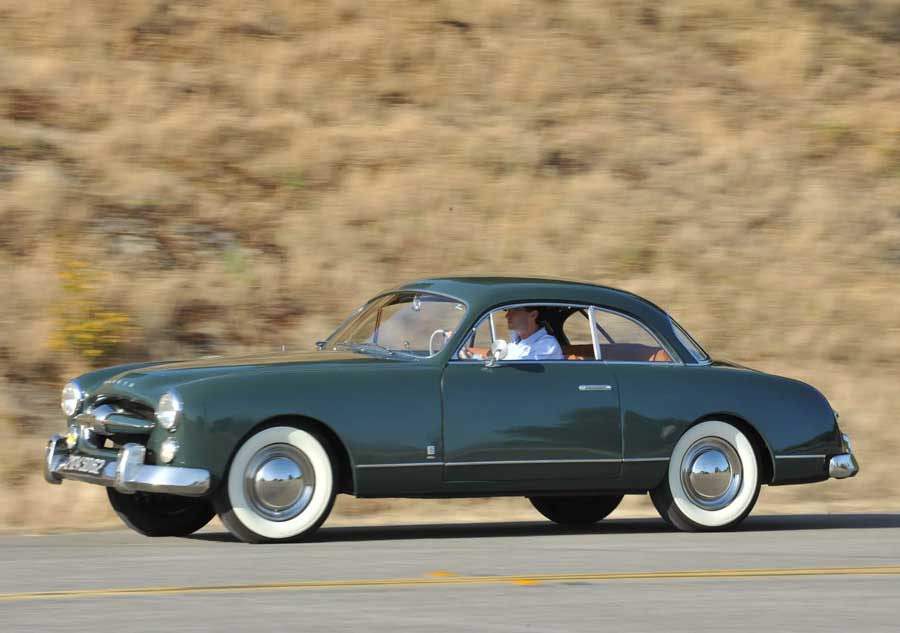
Ford Comete at Life in Classic
From Dearborn to the Seine
Ford and France might seem an unlikely pair. Yet the relationship began well before the Model T. Dearborn shipped CKD kits to Paris in the early years, and French sales grew under Ford’s British arm. In 1916, Ford formalized its presence by creating Ford SAF, short for Société Anonyme Française. This move anchored the brand on the continent and set the stage for a distinct French identity within Ford’s global network.
During the 1930s, Ford also partnered with Mathis. Under that agreement, cars carried the Matford name. The arrangement bridged British and American designs for local buyers. However, World War II disrupted plans and production. After the war, the company reorganized again as Ford SAF. The aim was clear: build cars that fit French taste and regulations. Therefore, engineers and stylists searched for a formula that blended American power with European poise. The Vedette and, later, the Comète would test that vision.
The Vedette Sets the Stage
In the late 1940s, Ford SAF launched the Vedette, a tidy sedan with transatlantic charm. It carried a 136-cu.in. flathead V8, rated at 60 horsepower. That engine felt smooth and modern at the time. However, France taxed vehicles by displacement, not output. As a result, even modest-capacity V8s became costly to own. Buyers weighed style and performance against annual levies, and many chose smaller engines from rival brands.
Nevertheless, the Vedette found a niche, thanks to its looks and its V8 thrum. Ford SAF then reached higher. It green-lit a glamorous coupe to crown the range. That car, the Comète, took the Vedette’s foundation and wrapped it in bespoke allure. Meanwhile, Ford’s French operations faced economic headwinds and tough competition. In 1954, Ford sold the Poissy factory to Simca. Yet the Comète had already arrived, adding a flash of grand touring style to Ford’s brief postwar chapter in France.
Italian Lines, French Craft
The Comète’s style came from Stabilimenti Farina, an Italian coachbuilder founded by Giovanni Carlo Farina in 1906. That firm should not be confused with Pinin Farina, later known as Pininfarina, created by Giovanni’s brother Battista. Stabilimenti Farina penned a crisp, elegant shape for the Comète. The result balanced restraint and luxury, with clean proportions and a confident stance.
Construction went to Paris-based Facel-Métallon, a specialist in short-run bodies. The company had already built stylish coachwork for Simca, Panhard, Delahaye, and others. Its metalwork gave the Comète a hand-finished feel that stood apart from mass-market sedans. Furthermore, Facel-Métallon would soon use this hard-won expertise to launch its own marque, Facel Vega, marrying French elegance with American V8 power. Altogether, the Comète represented a true cross-border collaboration. Italian design set the tone, French craftsmanship sealed the deal, and Ford’s V8 provided character under the hood. In spirit, it previewed the grand touring wave that defined European luxury in the 1950s.
Monte-Carlo Muscle and Market Realities
Ford introduced the Comète in October 1951 with the Vedette’s 63-hp flathead V8. The car looked the part. It drove with effortless charm, yet buyers wanted more pace. In 1954, Ford SAF delivered the Comète Monte-Carlo. This version gained the Mistral engine, a 3.9-liter (239-cu.in.) flathead V8. It also received a four-speed Pont-à-Mousson gearbox, replacing the standard three-speed. The upgrades sharpened response and cruising ability.
Moreover, the Monte-Carlo dressed to match its performance. A leather-trimmed interior, wire wheels, and an eggcrate grille set it apart. The details pushed the coupe into true GT territory. Even so, France’s displacement-based taxes struck again. The larger V8 triggered higher annual costs. Consequently, some shoppers chose the less expensive Vedette Vendôme sedan, which carried the same 239-cu.in. engine. As price and tax pressure mounted, sales struggled. In the end, Ford built only 699 Monte-Carlos before production wound down. Comète output stopped in 1954. However, under new ownership, Simca kept the Vedette line alive until 1961.
Rarity, Recognition, and Lasting Appeal
Today, the Comète stands out as a rare blend of American hardware and European taste. Survivors remain few, and top examples draw serious attention. One fully restored 1954 Comète Monte-Carlo even earned an invitation to the 2019 Pebble Beach Concours d’Elegance. That nod underscores the car’s design quality and the precision of high-level restorations. Moreover, market interest reflects its scarcity and its story as much as its scarcity. The Comète is not simply rare for rarity’s sake. It sits at an unusual crossroads: a Ford with coachbuilt manners, a French grand routier with American pulse, and a precursor to Facel Vega’s more famous formula. That layered identity gives it depth beyond the usual production-number appeal.
Collectors increasingly value cars with clear stories, and the Comète has several. It connects Dearborn to Poissy, Farina to Facel, and postwar austerity to continental glamour. It also represents a time when Ford could still surprise the luxury market with something genuinely boutique. Few cars wearing the blue oval have ever felt so handcrafted, so European, or so quietly aristocratic.
That character explains why good examples are hard to replace. Restoring one is not like reviving a Mustang or a Thunderbird. Trim pieces, glass, body panels, and interior details can require specialist work or careful fabrication. The coachbuilt structure demands patience, while the mechanical side benefits from its Ford V8 roots. Therefore, the Comète sits in an interesting middle ground. It is exotic in appearance and construction, yet not entirely alien under the hood.
For buyers, condition matters more than almost anything else. A complete, well-preserved car can be a compelling entry into coachbuilt French luxury. A neglected example, however, may become a complex and expensive project. Body integrity, correct trim, gearbox condition, and documentation all deserve close attention. Provenance also helps, especially because surviving cars often passed through long private ownership.
A Ford Unlike Any Other
Part of the Comète’s charm is that it resists easy classification. It is not a muscle car, although it has V8 character. It is not an Italian gran turismo, although its lines carry Italian influence. It is not a pure French luxury car either, because its engineering roots reach across the Atlantic. Instead, it feels like a one-off idea that briefly reached production.
That makes it especially appealing today. In an era when many collector cars are valued through familiar categories, the Comète offers something more nuanced. It rewards curiosity. The more you learn about it, the more interesting it becomes. Its beauty is not loud or obvious in the American sense. Rather, it has the calm confidence of a hand-tailored suit.
Seen from the side, the long roofline and balanced glasshouse give the car a graceful, almost formal presence. From the front, the Monte-Carlo grille adds just enough drama. Inside, leather, brightwork, and period instrumentation create an atmosphere closer to a salon than a sports car. Yet the V8 reminds you that this was still a Ford at heart.
That contradiction is the point. The Comète was born from compromise, ambition, and cultural overlap. It tried to be elegant and practical, exclusive and mechanically familiar, French and American at once. It never became a commercial success, but it became something more enduring: a fascinating footnote that now reads like a missed opportunity.
Final Thoughts
The Ford Comète Monte-Carlo deserves more than a passing mention in postwar automotive history. It captures a brief moment when Ford’s French operation aimed beyond volume and into the world of style-led grand touring. The result was expensive, imperfect, and commercially difficult. However, it was also beautiful, distinctive, and unusually sophisticated.
Today, that is exactly what makes it compelling. The Comète tells a story of ambition on both sides of the Atlantic. It shows how American V8 power could be softened by European design and elevated by French coachbuilding. It also foreshadows the Facel Vega idea that would soon become one of the great luxury-car stories of the 1950s.
For Life in Classic readers, the Comète is a reminder that some of the most interesting classics live outside the obvious lanes. They are not always the fastest, the most famous, or the most commercially successful. Sometimes, they are the cars that reveal a forgotten connection between places, people, and ideas.
The Comète Monte-Carlo is exactly that kind of car. It is rare, refined, and quietly dramatic. More importantly, it proves that even Ford, a company built on mass production, could once create something that felt almost couture.