
Six Muscle Legends Ready for a Modern Comeback
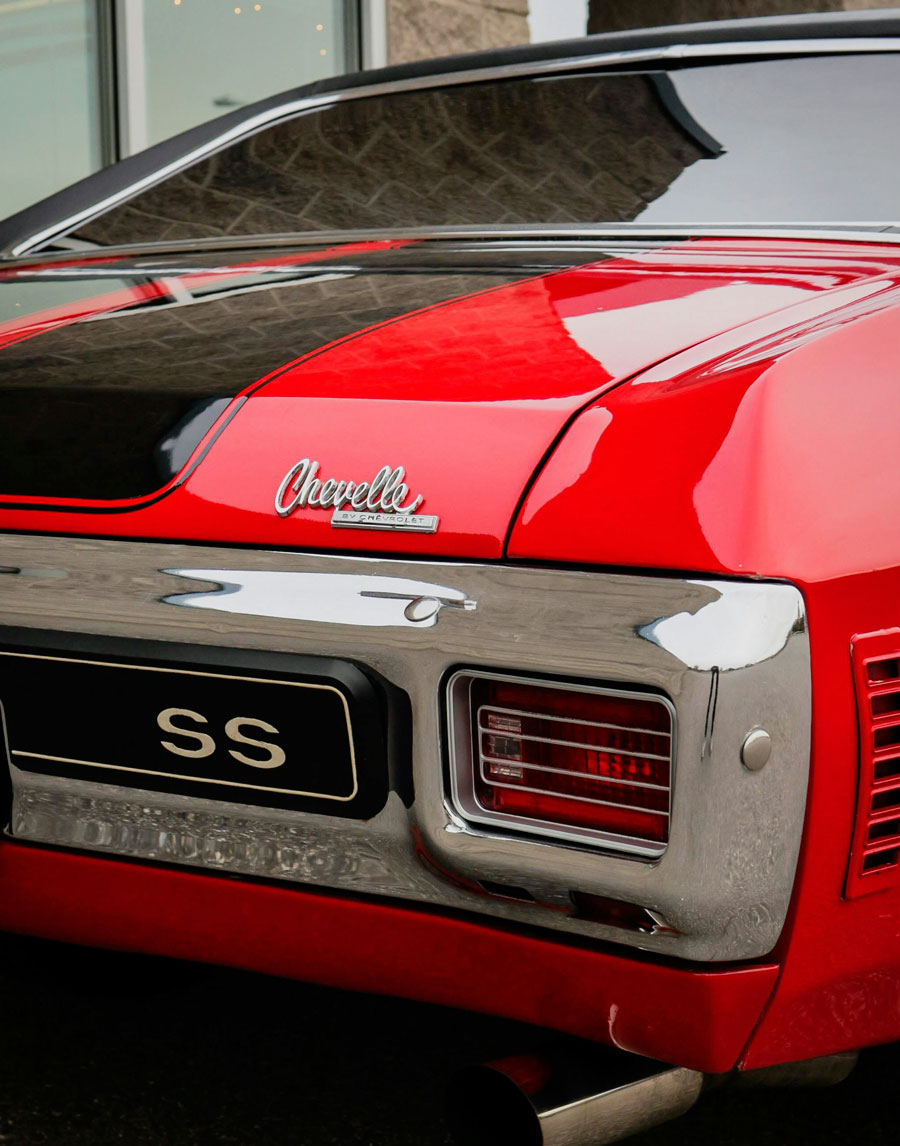
Chevelle SS at life in Classic
Muscle Icons That Deserve a Modern Comeback
Across America, the familiar V8 thunder grows quieter. Electric motors and small turbo engines now lead the performance parade. The benchmarks keep rising, and the numbers amaze. Yet many drivers still crave drama, sound, and swagger.
The Mustang endures, and a reimagined Charger returns. Even so, several storied nameplates remain parked in history. Their time, however, may not be over. With the right vision, these icons could roar again and feel perfectly at home in the 21st century.
Plymouth Barracuda and ’Cuda Models
The Plymouth Barracuda reached showrooms two weeks before the Mustang in April 1964. Early versions rode on Valiant bones and leaned “sporty compact” more than street brawler. Then 1970 arrived, and everything changed. The move to Chrysler’s E-Body unlocked a meaner shape and massive power. Suddenly, the ’Cuda badge carried 426 HEMI and 440 Six-Pack fury, and stoplight duels became legend.
Today, a reborn ’Cuda could blend heritage with modern control. Think compact proportions, rear-wheel drive, and a big, breathing V8. However, a high-output hybrid or electric variant could broaden the appeal. Either way, the mission stays clear: fast off the line, loud in personality, and unmistakable in profile.
Oldsmobile 442: The Gentleman’s Hot Rod
The 442 began as code for four-barrel carburetor, four-speed transmission, and dual exhaust. It quickly grew into something more refined. By the end of the 1960s, a 455-cubic-inch V8 supplied tidal-wave torque. Meanwhile, the ride felt composed, and the cabin looked upscale. It proved muscle could be quick without shouting.
A modern 442 could target that sweet spot again. Deliver deep torque, a supple chassis, and long-distance poise. Then add rich materials, quiet cruising, and the latest safety tech. With that formula, it could challenge European grand tourers while staying proudly American.
Pontiac GTO: The Original Muscle Statement
Few names carry more weight than GTO. The 1964 Pontiac GTO did not invent the idea of putting a large engine in a mid-size car, but it gave the formula a name, an attitude, and a market. John DeLorean and his team understood the appeal perfectly. The GTO was not subtle. It was youthful, loud, quick, and just polished enough to feel desirable rather than crude.
The later Judge versions added color, stripes, spoilers, and theatrical confidence. They captured the late-1960s mood better than almost anything else on wheels. Even today, the GTO badge feels too important to remain dormant.
A modern GTO would need care. It should not return as a soft crossover or a purely nostalgic styling exercise. It needs rear-wheel drive, muscular proportions, and serious performance. A naturally aspirated V8 would be ideal, though a hybrid setup could work if it added instant torque without dulling the experience. The key is character. A GTO must feel slightly rebellious, not merely fast.
AMC AMX and Javelin: The Independent Choice
American Motors never had the resources of General Motors, Ford, or Chrysler. That limitation became part of its charm. The AMX and Javelin offered something different in a market crowded with Camaros, Mustangs, and Challengers. They were stylish, compact, and a little unconventional.
The two-seat AMX, introduced for 1968, was especially distinctive. It gave American buyers a short-wheelbase performance coupe with big-engine attitude and a personality all its own. The Javelin, meanwhile, gave AMC a true pony car contender and later earned serious credibility in Trans-Am racing.
A modern AMX could be one of the most interesting revivals of all. Because the original was not a mass-market giant, designers would have room to be brave. The car could be smaller, lighter, and sharper than today’s typical performance coupe. It could focus on handling, driver involvement, and visual individuality rather than simply chasing huge horsepower. In a world where many cars look increasingly similar, the AMX name could stand for independence again.
Buick Grand National and GNX: Dark Suit, Bad Intentions
The Buick Grand National arrived from a very different era. By the 1980s, classic muscle had largely faded, emissions rules had changed the landscape, and performance was only beginning to recover. Then Buick did something unexpected. It took the Regal coupe, gave it turbocharged V6 power, dressed it in black, and created one of the most intimidating American cars of the decade.
The 1987 GNX pushed the idea even further. Built in limited numbers with help from ASC/McLaren, it became an instant legend. It looked sinister, launched hard, and proved that muscle did not always need a V8. Turbocharging had entered the American performance story with authority.
That makes the Grand National one of the easiest icons to imagine in modern form. A turbocharged six-cylinder, all-wheel-drive traction, dark minimalist styling, and serious straight-line performance would fit the name perfectly. It should not be overly flashy. The best Grand National would look restrained at first glance, then reveal its menace when the road opens.
Mercury Cougar: Mustang’s Sophisticated Cousin
The Mercury Cougar began as a more refined relative of the Mustang. Launched for 1967, it offered many of the same basic ingredients but with a longer wheelbase, hidden headlamps, and a more grown-up image. It was still sporty, but it had a different tone. Where the Mustang shouted youth culture, the Cougar spoke in a lower voice.
That distinction matters. A modern Cougar would not need to compete directly with the Mustang. Instead, it could become an elegant American performance coupe, aimed at buyers who want style and speed without the harder-edged image. Think clean lines, a comfortable cabin, and enough power to make a long highway journey feel effortless.
The Cougar name also has European potential. Its original positioning as a personal luxury coupe gives it room to be more sophisticated than retro. It could be the kind of car that looks at home outside a boutique hotel, a desert motel, or a mountain lodge. Not every muscle revival has to be brutal. Some can be graceful.
Chevrolet Chevelle SS: The Blue-Collar Hero
The Chevelle SS remains one of the defining muscle cars of the late 1960s and early 1970s. It had the right stance, the right proportions, and the right engines. In LS6 454 form, the 1970 Chevelle SS became one of the most celebrated big-block machines of its time.
Its appeal was direct. It looked tough without being exotic. It was powerful without pretending to be delicate. For many enthusiasts, the Chevelle represents the ideal American muscle car: simple, handsome, strong, and honest.
A modern Chevelle SS would need to avoid becoming a caricature. It should not rely only on stripes and badges. The real opportunity lies in building a proper two-door performance car with a usable cabin, rear-wheel drive, and a choice of powertrains. A V8 version would satisfy purists, while a hybrid performance model could bring the name into a new era. Done correctly, the Chevelle could sit above the Camaro’s former territory and offer something broader, more mature, and more versatile.
Why These Names Still Matter
Nostalgia alone is not enough to justify a comeback. Many classic names carry emotional power, but emotion must meet engineering, design, and timing. The successful modern revival cannot simply copy old sheet metal. It must understand why the original mattered.
The Barracuda had attitude. The 442 had refinement. The GTO had swagger. The AMX had independence. The Grand National had menace. The Cougar had sophistication. The Chevelle had honesty. Those qualities remain relevant because they describe feelings, not just specifications.
The automotive world is changing quickly. Electric performance is real. Hybrid power is advancing. Traditional V8s are under pressure. Yet the desire for distinctive cars has not disappeared. In fact, as vehicles become faster, quieter, and more efficient, personality may become even more valuable.
A revived muscle icon does not need to reject the future. It only needs to bring some soul along for the ride. The best comeback would not ask drivers to choose between heritage and progress. It would prove that both can share the same road.