
Decoding De Tomaso Models and Selling Tips
Decoding De Tomaso Models - Life in Classic
A Bold Vision from Modena to America
Alejandro de Tomaso built cars that challenged easy labels. The Argentine-born racing driver set up shop in Modena, partnered with Ford, and tapped Italian design houses while using American dealer networks. As a result, his machines mixed cultures, technologies, and ambitions in unusual ways. At the time, many buyers struggled to place them. Yet, in hindsight, the lineup looks both daring and coherent.
Today, the De Tomaso story reads as a tale of persistence and vision. The company pursued mid-engine layouts early, experimented with grand tourers, and even offered a luxury saloon. Moreover, it kept refining ideas long after the initial hype faded. Therefore, collectors now view the brand with growing respect. For owners, that recognition brings opportunity. However, it also demands careful preparation when bringing a car to market.
The Models That Shaped the Legend
Vallelunga (1963–1967): The first production De Tomaso arrived as a lightweight, mid-engine sports car with a steel backbone chassis. It used a Ford Cortina engine and wore aluminum bodywork with clean, purposeful lines. Only about 50 were built. Consequently, survivors function more as historical markers than weekend drivers, and serious Italian car collectors often pursue them.
Mangusta (1967–1971): Designed by Giorgetto Giugiaro at Ghia, the Mangusta announced De Tomaso’s ambition with flair. Its long hood, recessed cockpit, and twin gull-wing engine covers framed a Ford 289 or 302 V8 mounted transversely. Around 400 examples left the factory, most heading to the United States. Visually, it remains one of the era’s most dramatic statements.
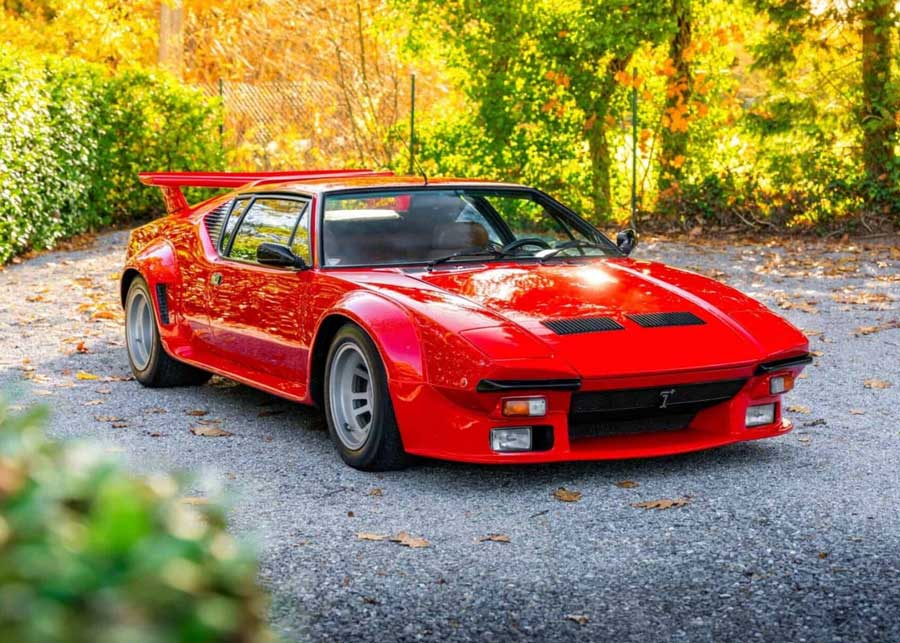
Pantera (1971–1993): This is the name most people know. Sold through Lincoln-Mercury dealers from 1971 to 1974, the Pantera placed roughly 5,500 cars in American garages early on. Production continued in evolved forms into the early 1990s. In total, about 7,260 were built across variants. Therefore, the Pantera enjoys the broadest market, the deepest knowledge base, and the most liquid trading.
Longchamp (1972–1989): A V8 grand tourer with a 2+2 layout, the Longchamp paired Ford 351 Cleveland power with a ZF five-speed in many cars. Styled by Tom Tjaarda, it targeted buyers who wanted comfort with character. Around 400 were produced. Thus, it is rarer than most Panteras, yet collector demand remains more selective.
Deauville (1970–1985): The four-door De Tomaso aimed at European luxury sedans. Built in small numbers with Ghia coachwork and Ford running gear, it serves a niche audience even within the brand’s circle. Nevertheless, it showcases the breadth of De Tomaso’s vision.
What Drives Value in Today’s Market
Values reflect a few consistent factors. Condition, originality, and documentation sit at the top. Therefore, cars with verified drivetrains, clear histories, and careful maintenance attract stronger interest. Moreover, rarity and design reputation play key roles. For example, the Vallelunga’s scarcity and historical importance anchor its appeal. Meanwhile, the Mangusta’s iconic form still commands attention from style-focused buyers.
The Pantera stands apart for liquidity. Parts support, active clubs, and long production help owners and shoppers alike. As a result, pricing trends are easier to track, and transactions move more quickly. Conversely, the Longchamp and Deauville reward patient, informed buyers. Their values often hinge on tasteful preservation, solid provenance, and realistic expectations about use.
Market timing also matters. However, preparation matters more. With the right story, photos, and records, the best examples rise above average comps. Consequently, sellers who invest in clarity usually see faster, cleaner deals.
Preparing Your Car for a Serious Offer
Start with clear, honest photography. Provide exterior shots from all angles in good light. Include close-ups of trim, wheels, glass, and badges. Additionally, show the interior, gauges, seats, carpets, and headliner. Then add engine-bay photos and, if possible, undercarriage images. Most importantly, document any rust, damage, or known issues. Accurate photos build trust and prevent wasted time.
Next, assemble key identifiers. Share the VIN and chassis number. For Panteras, the VIN helps decode build date and basic specifications. If applicable, confirm engine stampings that match the car’s records. Moreover, gather paperwork: title, prior registrations, service invoices, restoration receipts, and club documents. A simple timeline of ownership and major work also helps.
Finally, organize everything in a single digital folder. Label files clearly and keep image sizes readable. Therefore, potential buyers can review details quickly and make informed decisions. With that groundwork complete, discussions become straightforward and productive.
From First Contact to a Done Deal
Seek specific offers with clear reasoning. Avoid vague ranges or proposals tied to unscheduled inspections. Moreover, ask for a timeline, payment method, and shipping plan in writing. Verify funds and confirm that logistics match your schedule. In many cases, prepared sellers can close within a week.
Transparency protects both sides. Therefore, disclose issues early, and expect the same in return. Additionally, choose a secure payment structure before the car leaves your possession. Bank wire, verified escrow, or another traceable method should be agreed in advance. International sales may require extra paperwork, export documents, and transport coordination. Therefore, it is wise to confirm responsibilities before signing anything.
Why Specialist Knowledge Matters
De Tomaso cars reward informed handling. A Pantera with common upgrades may be attractive to one buyer, while another may insist on factory-correct details. A Mangusta with older restoration work may still carry strong value if the body, chassis, and mechanical history are well documented. Likewise, a Longchamp or Deauville may need a buyer who understands their rarity rather than simply comparing them to better-known Italian grand tourers.
This is where specialist knowledge makes a meaningful difference. General classic car buyers may admire the shape, but they may not understand the differences between early and later cars, U.S. and European specifications, or factory features and later modifications. A knowledgeable evaluator can separate marketable improvements from changes that reduce collectability. That distinction often affects both price and speed of sale.
For sellers, the goal is not simply to find interest. The goal is to find qualified interest. A serious buyer should understand what the car is, what it needs, and why its history matters. That creates a more realistic negotiation and reduces the risk of delays once the inspection process begins.
Pantera: The Market Benchmark
Among all De Tomaso models, the Pantera remains the easiest to position. Its combination of Italian styling and American V8 power gives it broad appeal. It is exotic enough to feel special, yet supported enough to remain usable. That balance explains why the Pantera has become the market reference point for the brand.
Early chrome-bumper cars often attract buyers who prefer original 1970s character. Later GT5 and GT5-S models appeal to those drawn to wider bodywork and a more aggressive presence. Modified cars also have an audience, especially when the work is well executed and documented. However, undocumented modifications can complicate valuation. Buyers want to know who performed the work, when it was completed, and whether original parts are included.
Because the Pantera market is more active, sellers can usually benchmark their cars against recent transactions. Even so, small details matter. Paint quality, cooling-system upgrades, engine condition, gearbox behavior, interior finish, and accident history all influence the final number. Two cars that appear similar in photos can produce very different offers once records and inspections enter the discussion.
Rarer Models Need Patience
The Vallelunga, Mangusta, Longchamp, and Deauville operate in thinner markets. That does not mean they lack value. It means the buyer pool is narrower and more specialized. In these cases, rushing the process can lead to weak offers or poor comparisons. A rare De Tomaso needs context.
The Vallelunga appeals to collectors focused on early mid-engine sports cars and De Tomaso history. The Mangusta attracts design-led collectors who value Giugiaro’s work and the car’s sculptural presence. The Longchamp speaks to enthusiasts who appreciate understated Italian grand touring cars. The Deauville, meanwhile, requires perhaps the most patient positioning, because its appeal lies in rarity, originality, and the unusual idea of a De Tomaso luxury saloon.
For these models, provenance can be as important as presentation. Ownership history, restoration photos, correspondence, old registration papers, and period documentation all help establish credibility. When the story is clear, the car becomes easier to understand and easier to value.
A Marque Finally Getting Its Due
De Tomaso built cars for people who wanted something outside the expected order. They were not Ferraris, not Maseratis, and not American muscle cars, even when they borrowed elements from all three worlds. That independence made them difficult to categorize when new. Today, it makes them fascinating.
The brand’s best cars combine drama with usability, rarity with mechanical character, and Italian design with international engineering. They also carry the personality of Alejandro de Tomaso himself: ambitious, stubborn, unconventional, and impossible to ignore. Those qualities now resonate strongly with collectors who want more than a predictable badge.
For owners considering a sale, this is an important moment. Interest in distinctive classic cars remains strong, but buyers are more selective than ever. They expect transparency, documentation, and a realistic understanding of condition. A seller who prepares carefully can stand apart from casual listings and attract the right attention.
Whether the car is a famous Pantera, a dramatic Mangusta, a rare Vallelunga, or one of the quieter grand touring models, the principle remains the same. Present it accurately, support the story with records, and work with people who understand the marque. De Tomaso cars were never ordinary machines. They deserve a selling process that respects their originality, complexity, and place in automotive history.