
Fifty Years of Citroën Passion in America
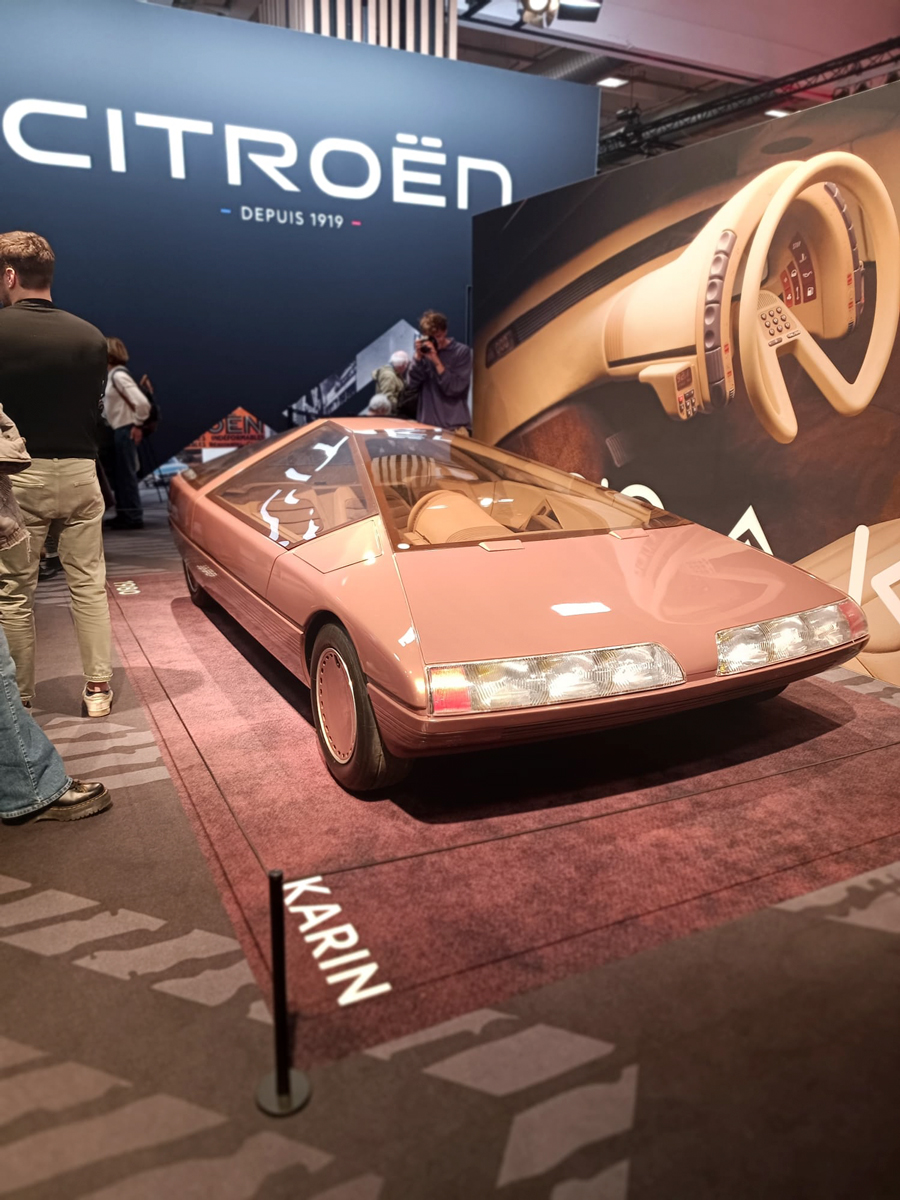
Citroen at Retromobile 2026
A faithful community returns to upstate New York
French marques have never had it easy in the United States. Renault tried twice and left after 1987. Peugeot exited in 1992. And Citroën, squeezed by federal safety rules that clashed with its innovations, withdrew in 1974. Yet, the brand’s spirit never left. In the mid-1970s, a small circle of owners met in the hills of Cummington, Massachusetts, to keep their beloved cars alive. That first gathering drew about 80 enthusiasts from the Northeast and Canada.
Fifty years later, their idea has grown into the Citroën Rendezvous. This golden-anniversary edition brought roughly 175 people and around 70 cars to Lakeside Farms in Ballston Lake, New York, just south of Saratoga Springs, from June 11 to 14. Under a bright June sun, newcomers mingled with longtime caretakers. One recent 2CV buyer even flew in from Texas to learn from veterans. Together, they lined a green lawn with decades of French design and ingenuity.
Early milestones that shaped the brand
Citroën’s story began in 1919, when André Citroën transformed his wartime munitions factory into a car works. His first model, the Type A, became Europe’s first mass-produced car. By 1927, the company hit its stride. That year’s B14, launched at the Paris Salon with a 1,583-cc four, arrived as sales topped 76,000. A beautifully restored 1927 B14 on the show field won a people’s choice award and reminded visitors how quickly the brand matured between wars.
Then came the 1934 Traction Avant. It introduced front-wheel drive and unit-body construction, developed with America’s Budd Company. The car nearly sank the firm financially, but Michelin stepped in, and the gamble paid off. An elegant 1950 11CV—named for its taxable horsepower and powered by a 1,911-cc four—represented the line that ultimately exceeded 600,000 units. A rarer six-cylinder 15CV rounded out that breakthrough era.
From humble 2CVs to clever utility
After the Traction, Citroën aimed to mobilize rural France. The 2CV, envisioned before World War II and launched in 1948, did exactly that. Dealers worried at first, yet buyers adored its honesty and comfort. Over time, its 375-cc flat-twin grew to 602 cc and 33 hp, and the model family blossomed into 8.6 million cars by 1990. Special editions kept the legend fresh. The 1976 two-tone Spot sold its 1,800 units in a flash. Later, the yellow 2CV “James Bond” spoofed movie fame with OO7 graphics and faux bullet holes.
Utility followed the fun. The Fourgonette, or Truckette, carried tools, bread, and mail across continents. France’s postal service even specified six rear windows for better visibility. One couple at the Rendezvous drove a Truckette roughly 1,800 miles round-trip from Indiana. With a fresh 652-cc engine, they cruised at about 55 mph out of mechanical respect. That measured pace fit the weekend’s mood: unhurried, social, and deeply practical.
Design Daring and Technical Leaps
Then Citroën shocked the world again. On October 6, 1955, the DS19 debuted at the Paris Motor Show. It floated on hydropneumatic suspension, stopped with front disc brakes, and wore sculptural bodywork that seemed to arrive from the future. Buyers were captivated. Citroën reportedly received more than 12,000 orders on the first day alone, an extraordinary achievement that cemented the DS as one of the most influential cars ever built.
Two years later, the more affordable ID joined the range. It retained the spacious body and innovative suspension while simplifying some mechanical features, including its transmission. Together, the DS and ID remained in production until 1975, with combined output reaching approximately 1.45 million cars.
The DS continued to evolve throughout its life. In 1967, designer Robert Opron introduced a redesigned front end featuring aerodynamic covered headlights. More remarkably, the inner lamps turned with the steering wheel, providing one of the world’s earliest adaptive lighting systems. Decades before the technology became common on luxury cars, Citroën had already demonstrated how innovation could improve both safety and driver confidence.
Several DS and ID models lined the lawns at Ballston Lake, their futuristic silhouettes still looking remarkably modern seventy years after their introduction. Visitors gathered around them not only to admire their styling but also to discuss the ingenious hydraulic systems that continue to fascinate mechanics and engineers alike.
Beyond the DS: The SM and Later Innovations
Citroën refused to stand still after the success of the DS. In 1970, the company launched the SM, a luxurious grand tourer that combined French engineering with Italian performance thanks to its Maserati-designed V6 engine. Like the DS, it featured self-leveling hydropneumatic suspension, speed-sensitive power steering, and advanced aerodynamics.
Although the 1973 oil crisis and tightening American regulations limited its commercial success, the SM became an instant icon among automotive enthusiasts. Well-preserved examples at the Rendezvous attracted constant attention, their low nose and dramatic proportions reminding visitors how boldly Citroën approached automotive design.
The company’s spirit of innovation continued through later models such as the GS, CX, BX, XM, and Xantia. Each carried elements of Citroën’s unconventional philosophy, blending comfort, practicality, and engineering solutions rarely found elsewhere in the industry.
More Than a Car Show
While the automobiles remained the stars of the weekend, the Citroën Rendezvous has always been about people as much as machinery.
Technical seminars gave owners practical advice on maintaining hydraulic systems, sourcing hard-to-find parts, and preserving originality. Swap meets offered everything from trim pieces and workshop manuals to rare badges and new-old-stock mechanical components. Experienced owners happily shared decades of knowledge with first-time Citroën buyers, continuing a tradition that dates back to the very first gathering in Massachusetts half a century ago.
Stories flowed as freely as the coffee. Some attendees had owned their cars since new. Others had spent years restoring forgotten examples rescued from barns or fields. Many had driven hundreds—or even thousands—of miles simply to spend a weekend among fellow enthusiasts who understood why these unconventional French cars inspire such loyalty.
That sense of community may be the Rendezvous’ greatest achievement. In a country where Citroëns have officially been absent from new-car showrooms for more than fifty years, owners have created their own support network that continues to preserve the marque’s legacy.
Fifty Years of Keeping Citroën Alive
The 2026 Citroën Rendezvous celebrated much more than an anniversary. It honored five decades of dedication by owners who refused to let an extraordinary automotive heritage disappear from American roads.
From humble 2CVs and hardworking Fourgonettes to elegant Traction Avants, futuristic DS sedans, and sophisticated SM grand tourers, the gathering showcased nearly every chapter of Citroën’s remarkable history. More importantly, it demonstrated that enthusiasm for the marque continues to attract new generations of collectors.
Citroën may no longer sell new cars in the United States, but its influence remains unmistakable. Its innovations shaped suspension technology, steering systems, aerodynamics, and automotive design long before many competitors caught up.
As another Rendezvous came to a close and the distinctive sounds of flat twins, inline fours, and Maserati V6s echoed across upstate New York, one thing became clear: the spirit that first brought eighty enthusiasts together in rural Massachusetts fifty years ago remains very much alive. For this devoted community, Citroën has never really left America—it has simply found its own unique way to endure.