
Challenger R/T: A Brief, Bright Muscle Era
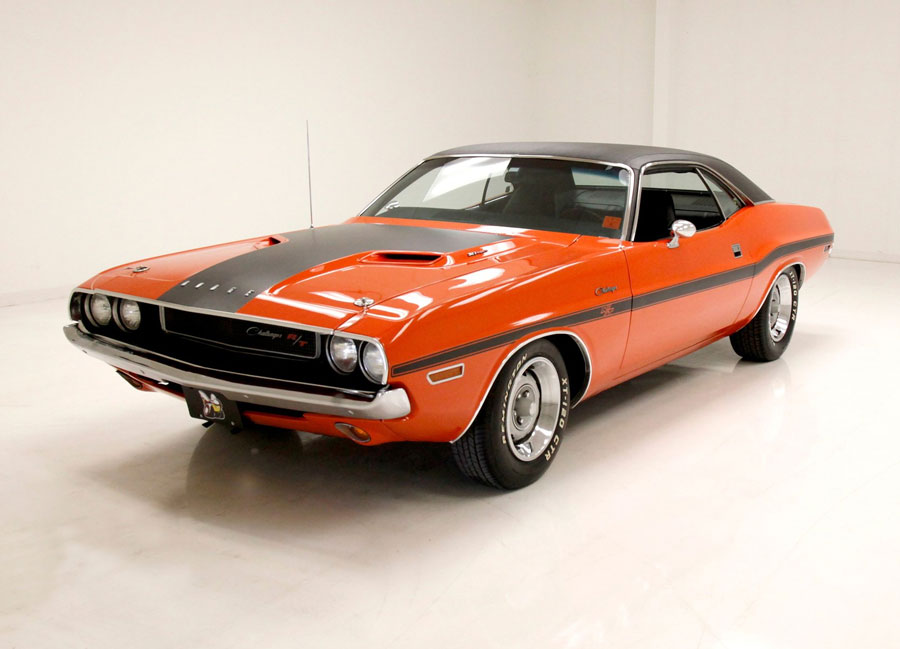
Dodge Challenger RT 1970 - Life in Classic
A Short Run with Lasting Impact
Convertibles, however, were fading across the industry by the early 1970s. Rising insurance costs, tightening safety concerns, and changing buyer habits all worked against open-top muscle. The Challenger convertible lasted only through 1971, which makes the 1970 R/T drop-top especially desirable today. It combined the rarest body style with Dodge’s most assertive trim, and it did so at the peak of the muscle car era. The R/T convertible was available in 1970, while later Challenger lineups became narrower as the market changed. :contentReference[oaicite:0]{index=0}
That short production window now gives the car much of its mystique. A hardtop Challenger already has presence, but the convertible adds something more emotional. With the roof lowered, the car feels less like a weapon and more like an event. The driver hears more of the engine, smells more of the road, and becomes part of the landscape. In a bright period color, with white-letter tires and the R/T graphics in place, it becomes almost cinematic.
Why the Press Photo Still Works
The Wallace Family Archive image captures that exact quality. It is not a drag strip shot, nor a studio portrait under perfect lighting. Instead, it places the Challenger in a believable world. The car is stopped, but the story is moving. The empty road suggests distance. The lowered top suggests confidence. The R/T badge suggests that the next few miles may not be taken slowly.
That is why period press photography matters. Automakers were not simply documenting machines. They were selling identity. Dodge wanted the Challenger to feel bold, modern, and slightly rebellious. The photo communicates all of that without shouting. It lets the shape do the work: the broad nose, the tucked cabin, the muscular rear quarters, and the relaxed driver position. It is performance marketing, but with restraint.
In retrospect, the image also carries a quiet sense of timing. Nobody in late 1969 could fully know how quickly the original muscle car moment would change. Emissions regulations, insurance pressure, fuel concerns, and shifting tastes would soon reshape Detroit performance. Within only a few years, big-block convertibles would feel like artifacts from another age. That makes the roadside scene even more compelling. It catches the Challenger just as the road ahead still looked wide open.
The Character of an R/T Convertible
The R/T badge stood for Road/Track, and Dodge meant it to signal more than decorative trim. The package brought a performance image, stronger hardware, and the attitude buyers expected from Mopar’s most extroverted machines. The standard 383 Magnum was already serious, while optional engines could push the car into truly intimidating territory. The 440 Six Pack and 426 HEMI remain the headline acts, but the 383 gave the R/T a balanced personality: strong torque, real sound, and enough civility for long drives.
That balance suited the convertible especially well. A HEMI Challenger drop-top may dominate auction headlines, but the 383 R/T captures the usable fantasy. It is powerful without becoming absurd, refined enough for cruising, and dramatic enough to make every fuel stop a conversation. The car’s appeal lies in that mixture of theatre and usability. It could idle through town with style, then lunge forward with unmistakable big-block authority when the road opened.
Inside, the Challenger offered the kind of cockpit that made performance feel personal. The driver sat behind a broad dash, close to simple, purposeful controls. The Pistol Grip shifter, when fitted, turned every gear change into a physical gesture. It was not delicate. It was mechanical, confident, and memorable. In an era when many cars promised speed, details like that helped the Challenger create a stronger bond with the person behind the wheel.
A Mopar Icon Beyond the Numbers
Today, collectors often focus on rarity, engine codes, factory colors, and documentation. That is understandable, because first-generation Challengers can vary enormously in value depending on specification. Yet the car’s enduring appeal is not only numerical. It survives because it has a clear personality. The Challenger arrived late to the pony car fight, but it arrived with conviction. It was wider, bolder, and more flamboyant than many of its rivals, and it carried Mopar’s performance reputation with pride.
The T/A racers, the street R/Ts, the high-impact colors, and the open-top cars all contributed to that legend. Sam Posey’s Trans-Am effort gave Dodge a credible competition story, while the showroom cars gave ordinary buyers access to the mood of that campaign. The Challenger T/A was built for 1970 as a homologation model for SCCA Trans-Am racing, using a 340 Six Pack street engine while the race cars ran smaller-displacement competition engines. :contentReference[oaicite:1]{index=1}
Still, the convertible R/T represents another side of the same myth. It is less about lap times and more about atmosphere. It belongs to warm evenings, two-lane highways, gas station forecourts, and photographs that make a stopped car look ready to run. That emotional pull is why the Challenger remains so recognizable decades later. It does not need explanation at first glance. It looks like freedom wearing a Dodge badge.
The Road Still Calls
The late-1969 press photo endures because it captures more than a new model launch. It captures confidence before complication. The Challenger R/T convertible sits at the edge of a changing decade, full of color, sound, and possibility. It represents Detroit at its most expressive, when styling departments and engine rooms worked together to create machines with unmistakable presence.
More than fifty years later, the scene still feels alive. The car is not merely parked. It is waiting. The shoulder is temporary, the horizon is next, and the V8 seems ready to clear its throat. That is the magic of the original Dodge Challenger R/T convertible. It was built for a brief moment, but it continues to suggest movement, youth, and open-road drama long after the photograph was taken.