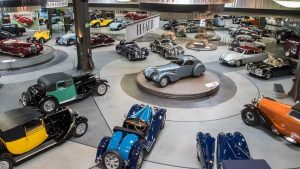

Rare Elegance of the Fiat 1500 Vignale
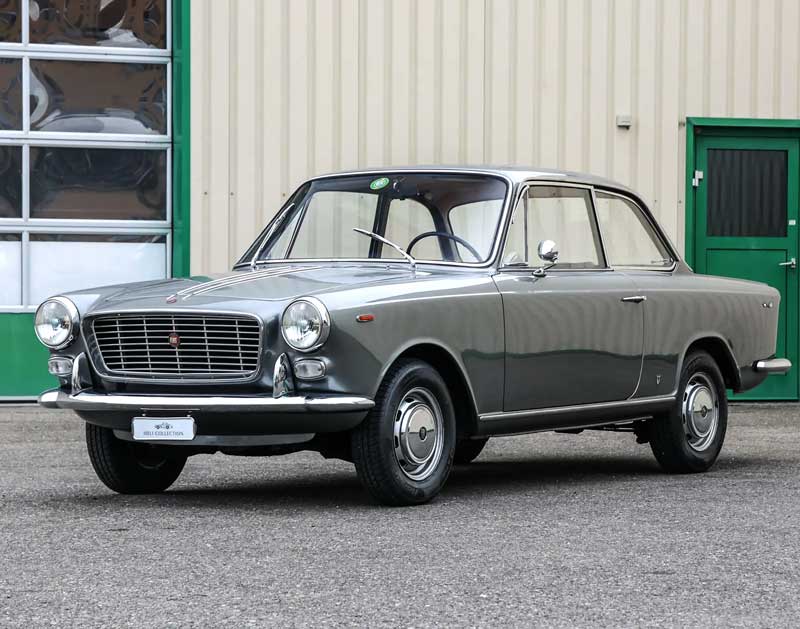
Fiat 1500 vignale at Life in Classic
Origins of a Turin Coachbuilder
Carrozzeria Vignale may not enjoy the name recognition of Pininfarina or Bertone. Nevertheless, its cars stand out for clarity of line and measured elegance. Alfredo Vignale founded the firm just after World War II, channeling the creative energy that defined postwar Turin, Italy’s Motor City.
He learned the hands-on craft of panel beating at Stabilimenti Farina before the war. Meanwhile, night classes helped him translate ideas into confident sketches. As Italy rebuilt, he blended artisanal skill with a designer’s eye, and a small workshop grew into a respected coachbuilder.
From the start, Vignale’s approach favored restraint over flash. Consequently, the company’s work aged gracefully. The shapes looked simple, yet every crease carried purpose and balance.
Partnerships and a Young Visionary
Like many Italian carrozzieri in the industry’s renaissance, Vignale partnered with established automakers. Alfa Romeo, Lancia, Fiat, and even Jensen supplied the mechanicals. In turn, Vignale delivered hand-finished bodies in limited numbers for discerning buyers willing to pay for craft and style.
During the early 1950s, the firm also worked with a young Giovanni Michelotti, one of Italy’s most influential independent designers. Their collaboration helped define Vignale’s visual language: clean profiles, delicate pillars, elegant glass areas, and a natural sense of proportion. While other coachbuilt cars of the period chased theatrical curves, many Vignale designs felt more architectural.
That discipline suited Fiat particularly well. Fiat’s standard production cars were practical, affordable, and mechanically straightforward. When a coachbuilder such as Vignale reinterpreted them, the result could be surprisingly sophisticated. The Fiat 1500 Vignale is a perfect example.
A Special Fiat for a More Stylish Age
The Fiat 1300 and 1500 family arrived in the early 1960s as a modern middle-class car line. With front-mounted four-cylinder engines, rear-wheel drive, and conventional engineering, these Fiats were not exotic machines. They were intended to be usable, dependable, and comfortable. However, the platform also offered coachbuilders a strong foundation.
Vignale saw the opportunity to create something more personal. The Fiat 1500 Coupé by Vignale transformed sensible mechanicals into a compact grand tourer with a distinctly Italian flavor. Under the hood sat Fiat’s 1,481-cc inline-four engine, paired with a four-speed manual gearbox. That specification did not promise supercar performance, but it offered enough energy for lively touring, especially in a light and elegant coupé body.
The appeal was not measured only in speed. The 1500 Vignale belonged to a world where style, craftsmanship, and individuality mattered as much as horsepower. It was a car for someone who wanted Fiat reliability but did not want to park beside another identical sedan outside a café, hotel, or country house.
Design with Quiet Confidence
The Fiat 1500 Vignale’s design is best appreciated slowly. Its charm does not come from dramatic excess. Instead, the coupé presents a crisp roofline, slim pillars, balanced overhangs, and an understated front end that gives the car a poised expression.
From the side, the proportions feel carefully judged. The cabin sits neatly within the wheelbase, while the rear section carries just enough length to suggest touring ability. Chrome trim is present, as expected in the 1960s, yet it is used with discipline. Nothing feels heavy or decorative for its own sake.
This restraint gives the Fiat 1500 Vignale much of its modern appeal. Many coachbuilt cars from the same period now feel tied to a very specific fashion moment. The Vignale, by contrast, remains elegant because it avoids trying too hard. It has the relaxed confidence of a well-cut Italian jacket: modest at first glance, refined on closer inspection.
Inside the Coachbuilt Experience
The interior followed the same philosophy. Compared with a standard Fiat sedan, the Vignale coupé offered a more intimate and special atmosphere. The driving position, dashboard treatment, trim details, and upholstery helped separate the car from ordinary family transport.
It was not a luxury car in the grand sense. Rather, it was a small coachbuilt GT, designed for owners who enjoyed design and individuality. The cabin was compact but stylish, with the kind of tactile charm that defined small-series Italian cars of the era.
That character is important. Today, classic cars are often judged by figures: power, production numbers, auction prices, and acceleration times. The Fiat 1500 Vignale reminds us that some cars were built around mood. They were not created to dominate a racetrack or make a loud social statement. They were created to make ordinary journeys feel more deliberate.
Italian Craft on a Practical Platform
One of the great strengths of the Fiat 1500 Vignale was its mechanical simplicity. The underlying Fiat components made the car easier to understand and maintain than many more exotic Italian contemporaries. Owners could enjoy coachbuilt style without the complexity of a high-strung sports car.
That practicality did not make it common. Vignale bodies were not mass-produced in the way Fiat’s regular sedans were. Each car carried the aura of a specialist workshop, where design decisions were measured in line, stance, trim, and finish. This combination of accessible mechanicals and rare bodywork gives the model a particularly appealing position in the classic car world.
For collectors, this means the Fiat 1500 Vignale offers two personalities. On one hand, it is approachable and usable. On the other, it is rare enough to feel special at any gathering of Italian classics. It is not the obvious choice, and that is precisely the point.
Why the Fiat 1500 Vignale Matters
The car also represents a vanished chapter of European motoring. During the 1950s and 1960s, buyers could still purchase relatively humble mechanical platforms dressed by independent coachbuilders. This tradition had roots in the prewar luxury world, yet after World War II it briefly reached smaller cars too.
By the late 1960s, that world was fading. Safety regulations, industrial consolidation, changing economics, and the rise of integrated in-house design departments made small-series coachbuilding harder to sustain. Vignale itself would not remain independent for long, and Alfredo Vignale died in 1969, closing a deeply personal chapter in Italian design history.
Seen in that context, the Fiat 1500 Vignale becomes more than an elegant coupé. It is a reminder of a time when Turin’s specialist workshops could take a practical automobile and give it a second identity. The car speaks of craftsmanship, not scale. It belongs to the final golden years of the Italian carrozzeria.
A Collector’s Quiet Prize
Today, the Fiat 1500 Vignale attracts enthusiasts who appreciate subtlety. It does not have the instant recognition of a Ferrari, Alfa Romeo Giulietta Sprint, or Lancia Aurelia. Yet that relative obscurity is part of its appeal. It invites conversation. It rewards knowledge. It feels discovered rather than displayed.
Condition matters greatly, as with all limited-production coachbuilt cars. Trim pieces, glass, interior fittings, and body panels can be difficult to source. A complete, well-restored example is therefore far more desirable than a project missing unique details. However, for the right owner, the effort brings a rare reward: a classic Fiat with true coachbuilt character.
The Fiat 1500 Vignale is not about excess. It is about proportion, taste, and the quiet confidence of Italian design at its most graceful. In a world that often celebrates the loudest cars, this small Turin coupé offers a different kind of pleasure. It reminds us that elegance does not need to shout. Sometimes, it simply needs the right line.