
Oldsmobile Aurora Final 500 A Lasting Legacy
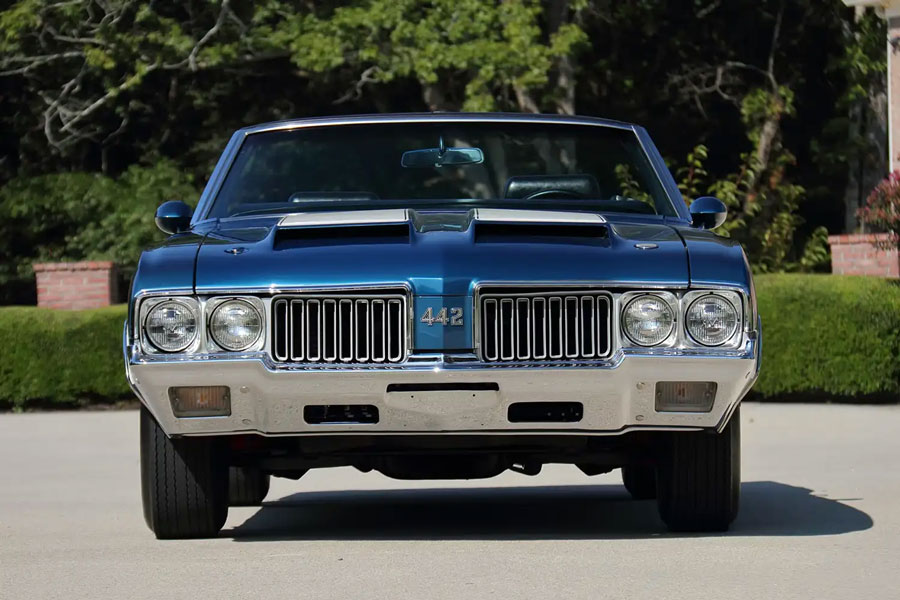
Oldsmobile history at Life in Classic
The Rocket Division’s Long Shadow
Children born when General Motors closed Oldsmobile can now raise a toast to the memories. Many have families of their own. As the Rocket Division fades in the rearview, its importance to American car culture still stands tall.
Oldsmobile’s story began with bold ideas. In 1902, Ransom E. Olds mass-produced the affordable “Curved Dash” Model R. At the same time, Henry Ford was still trying to steady his new venture. That early momentum set a pattern of practical innovation that would echo for a century.
Through the decades, Oldsmobile built cars for real drivers. It fused technology with approachability. As a result, the brand often moved first, then pulled the rest of Detroit along.
Innovations That Changed the Road
Just before World War II, Oldsmobile made driving easier with the Hydra-Matic. This four-speed automatic transmission removed the daily grind of shifting. After the war, the brand launched the OHV Rocket V8, shaping the direction of American engine design.
Then came a leap few expected. In 1966, the Toronado brought front-wheel drive to a big American coupe, powered by a 425-cubic-inch Rocket V8. Its long-hood fastback shape and concealed headlights looked daring then. Today, it still turns heads.
The 1970s called for comfort over speed, and Oldsmobile answered with plush, Blaine Jenkins-designed interiors. It rode the personal luxury wave with precision. The Cutlass even became America’s best-selling car, a symbol of the era’s taste.
Chasing Economy, Then Finding Balance
Fuel fears in the late 1970s changed buyer behavior. Imports gained ground. Oldsmobile tried to respond with a diesel V8, which promised economy but brought headaches. Still, the brand kept searching for the right mix of thrift and fun.
By the 1980s, drivers wanted handling and value. Olds replied with the Quad 4, its last in-house engine. The 2.4-liter DOHC four was loud but lively, with up to 180 bhp right off the lot. Moreover, the Olds-developed FE3 suspension traded marshmallow softness for real grip.
That arc—innovate, adjust, and refine—prepared Oldsmobile for one last ambitious flagship. It arrived with a mission to merge luxury, tech, and character in one shape.
Aurora Arrives With Confidence
In 1994, the first-generation Aurora debuted as Oldsmobile’s high-tech standard-bearer. It carried a 4.0-liter V8 derived from Cadillac’s Northstar, itself influenced by Quad 4 thinking. The design language felt organic and sculpted. Inside, gathered leather and a wraparound binnacle evoked a Star Trek: The Next Generation vibe, softened by real wood.
Some thought the styling pushed too far, so Oldsmobile refined the look for 2001. The second-generation Aurora stayed sleek but went more conservative. Even so, it retained its modern core.
Technology remained central. The V8 returned, and an optional DOHC V6 joined the menu. The updated car shed weight, sharpened its road manners, and delivered quick responses. With the V8, 0–60 mph took about 7.5 seconds. Meanwhile, the cabin kept its premium feel, only now with a touch more Middle America than starship.
Final 500: An Elegant Farewell
At the turn of the millennium, GM faced deep financial strain. Hard choices followed. In December 2000, the company announced that Oldsmobile, in business since 1897, would wind down.
To mark the end with grace, Oldsmobile created Final 500 editions across its lineup. Each wore rich Dark Cherry Metallic paint. Aurora Final 500 models added heated leather front seats embroidered with a bold Oldsmobile emblem. Heritage-style logos appeared on the decklid and front fenders. Buyers also received commemorative keychains and artwork.
The Aurora’s Final 500 package felt thoughtful, not flashy. It honored the brand’s earliest days while celebrating a polished, modern flagship.
A Collector’s Time Capsule
One example from 2003, Final 500 Aurora number 174, reflects the idea perfectly. It shows just over 57,000 miles. The car reportedly scored 992/1000 points in 2019 and 983/1000 in 2023 at judged events. It rides on factory 17-inch chrome-plated wheels and offers the expected luxury touches: climate control, a sunroof, and power windows. According to its seller, it drives like a new car leaving the showroom.
That impression seems fitting. Oldsmobile helped normalize front-wheel drive, V8 power, and automatic transmissions for everyday cars. The Aurora carried all three with poise. Therefore, this Final 500 is more than a well-kept luxury sedan. It stands as a concise summary of what Oldsmobile did best: make advanced ideas usable, and make comfort feel earned.
The slogan once claimed, “There is a special feel in an Oldsmobile.” In the Aurora Final 500, that feel remains intact—quiet, confident, and unmistakably its own.