
South American Spin on the Citroën Mehari
Citroen Mehari - Life in Classic
Citroën Mehari Ranger: the South American Mehari with a tougher spirit
A playful workhorse with French roots
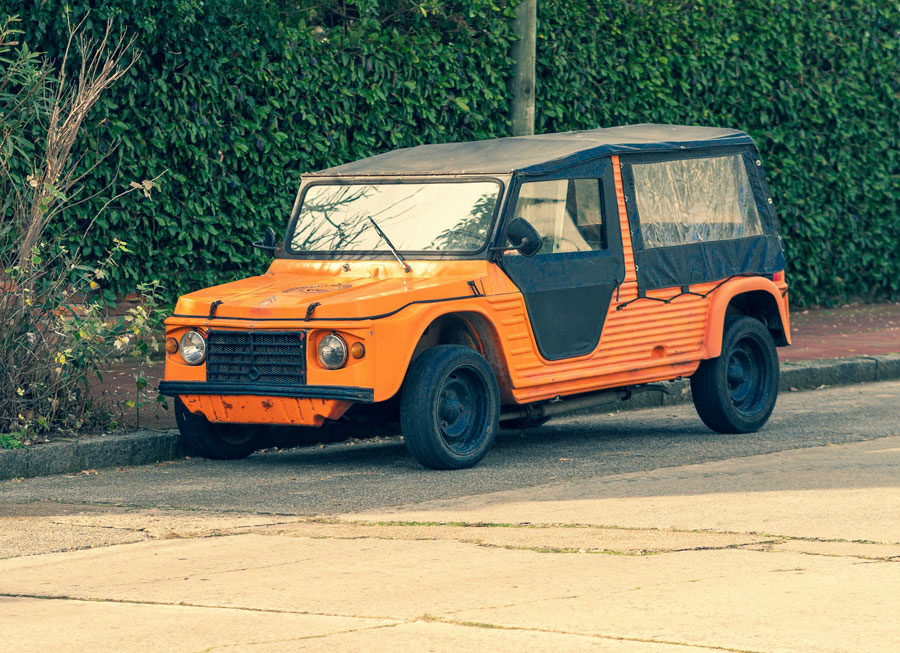
Citroën launched the Mehari in 1968 as a playful workhorse that could go almost anywhere. The light ABS plastic body seated four and left room for a small cargo bay. Citroën built it on the Dyane platform, the 2CV’s slightly upmarket sibling. Under the hood sat an air-cooled 602-cc flat twin, paired with a four-speed manual transaxle. Citroën advertised the Mehari as an all-road companion named for the hardy Saharan dromedary. The formula was simple, durable, and fun. Drivers loved the airy feel and the easy maintenance. Moreover, farmers, beachgoers, and city dwellers found it equally useful. Over time, the Mehari became a symbol of practical freedom across Europe.
Citroën built 144,953 Meharis before production ended in 1987, including 1,213 examples of the 4×4 version. Most came from the factory in Forest, Belgium. Even so, other plants in France, Spain, and Portugal contributed to the total. Because of this broad footprint, the Mehari’s DNA spread far and wide. That reach set the stage for a distinct South American chapter.
South American twist: the Mehari Ranger
In the 1970s, South America gave the Mehari its own identity. A version known as the Mehari Ranger rode on a chassis supplied through Citroën’s regional network, while Uruguay handled bodywork and final assembly. The result looked familiar yet carried local character. It kept the cheerful lines and open-air spirit. However, details signaled a unique origin. Buyers in Uruguay and Argentina saw a vehicle designed for their roads and lifestyles. It felt tougher, more purposeful, and slightly less beach toy than the original French Mehari.
The biggest difference was the body. While the European Mehari used thermoformed ABS plastic, South American examples often used fiberglass-reinforced material. This was not just a cosmetic change. It reflected local manufacturing realities and gave the vehicle a different feel. The Ranger also received more robust visual details, including wider wheel arches and a more enclosed appearance on some versions. Compared with the minimalist European car, the Ranger looked more utilitarian and better suited to rural use.
This regional adaptation made sense. Uruguay and Argentina had a strong need for simple, affordable, easily repairable vehicles. Roads could be rough, distances long, and maintenance networks limited. A light Citroën-based utility vehicle was a logical answer. The 602-cc flat twin was not powerful, but it was economical and familiar. The front-wheel-drive layout gave useful traction on loose surfaces, while the simple suspension helped the car cope with imperfect roads.
A practical vehicle, not just a curiosity
Today, the Mehari is often remembered as a fun beach car. That image is true, but incomplete. The Mehari was also a serious working tool. Its light weight, washable interior, removable roof and simple mechanicals made it ideal for farms, holiday resorts, coastal towns and small businesses. The Ranger continued that logic in South America.
In Uruguay and Argentina, the vehicle was less about Riviera glamour and more about practical mobility. It could carry tools, supplies or passengers. It could be repaired without specialist equipment. It could survive sun, dust and rough daily use. Its charm came from the same place as the 2CV: it did not pretend to be more sophisticated than necessary.
This is why the Mehari Ranger deserves attention. It was not simply a copy of the French car. It was an adaptation. It translated the Mehari idea into a local context, using available materials, local assembly and market-specific priorities. That makes it historically interesting. It also makes surviving examples increasingly collectible.
Why collectors are taking notice
Classic car collectors often look for rarity, originality and a strong story. The Mehari Ranger has all three. It is rarer than the standard French Mehari, especially in Europe. It also tells a broader story about Citroën’s international reach. The car connects France, Belgium, Spain, Portugal, Uruguay and Argentina through a single utilitarian idea.
Its appeal is also visual. The Ranger keeps the friendly face of the Mehari but adds a more rugged stance. The wider arches, different rear body treatment and fiberglass construction give it a distinct personality. It is still recognisably a Mehari, but not quite the same car. That difference is exactly what makes it interesting.
For collectors, the challenge is documentation. Because these cars were locally built and sometimes modified over time, originality can be difficult to verify. Body panels, trim details, roof structures, wheels and mechanical parts may vary between examples. A careful inspection matters. So does researching the car’s country of origin, chassis details and restoration history.
Driving experience: slow, light and honest
No one buys a Mehari Ranger for speed. The pleasure comes from its honesty. The steering is light, the engine is modest, and the whole car feels mechanical in the best possible way. You hear the flat twin working. You feel the suspension moving. You drive with the landscape around you rather than sealed away from it.
That simplicity is part of the charm. Modern cars isolate their occupants from the road. The Mehari does the opposite. It reminds you that movement can be simple. There is no excess weight, no unnecessary luxury and no complicated electronics. Everything has a purpose.
The Ranger adds a slightly more solid, work-ready character to that experience. It may not feel as light as the original ABS-bodied European version, but it offers its own appeal. It feels like a car built to be used, not just admired.
Preserving a Mehari Ranger today
Preserving a Mehari Ranger requires attention to both its Citroën mechanical base and its unique bodywork. The air-cooled engine is generally simple, but age, corrosion, poor storage and previous repairs can create problems. Suspension parts, brakes, steering components and chassis condition should be checked carefully.
The body is equally important. Fiberglass can be durable, but it can suffer from cracks, stress marks, poor repairs and paint deterioration. Sun exposure is another issue, especially for cars that spent decades in warm climates. A correct restoration should respect the material and construction method of the original vehicle.
Interior details also matter. Seats, roof structures, side panels and small fittings are often hard to source. Because of this, even imperfect original parts can be valuable. A sensitive restoration is usually better than an over-restored car that loses its local character.
Protecting a rare open classic
A vehicle like the Mehari Ranger needs proper protection when stored. Its shape is unusual, and many examples have delicate bodywork, exposed fittings and non-standard roof configurations. A generic cover may not fit well. It can flap, trap moisture or rub against fragile edges.
A tailored indoor cover is often the best option for garage storage. It protects the paint and fiberglass from dust while allowing the vehicle to breathe. For cars kept in semi-open spaces or transported to events, a stronger outdoor or transport-specific cover may be more appropriate. The key is fit. The cover should follow the vehicle’s shape without excessive tension, especially around the windshield frame, wheel arches and roof area.
For collectors, this is not just about cleanliness. It is about preservation. Rare cars often lose value through small repeated damage: dust scratches, UV fading, moisture marks, accidental knocks or poor storage. A proper cover is a simple way to reduce those risks.
A small car with a global story
The Citroën Mehari Ranger is a reminder that classic cars do not always need power, luxury or racing history to be fascinating. Sometimes a simple utility vehicle tells a better story. The original Mehari captured the free spirit of late-1960s France. The Ranger carried that spirit across the Atlantic and adapted it to South American life.
That is what makes it special. It is cheerful, practical and rare. It belongs to the Citroën family, but it also stands apart from it. For enthusiasts of unusual classics, the Mehari Ranger offers something different: a car with modest performance, strong personality and a genuine international background.
More than fifty years after the Mehari first appeared, its appeal remains easy to understand. It was never about speed or status. It was about freedom, simplicity and usefulness. The Mehari Ranger kept that idea alive in its own way, with a tougher body, a local identity and a character that still feels fresh today.