The Buick Electra 225 offers a different way into the American performance story. Its appeal is not the image of a stripped-out coupé waiting at a drag-strip start line. It is the combination of a large V8, generous accommodation and a driving brief built around unhurried travel. The “Deuce and a Quarter” made size part of its identity.
That makes it worth understanding on its own terms. The Electra 225 name covered changing engines, transmissions and bodies over many model years. Treating every example as the same 455-powered cruiser obscures what makes an early-sixties car different from a 1970 model.
Start with the year, not just the badge
GM Heritage describes the 1964 Electra 225 as a full-size range offered in five body styles, including a sport coupé, sedan and convertible. Four front-fender VentiPorts and substantial brightwork helped distinguish it. Its generous proportions were matched by equipment such as power steering and power brakes.
The mechanical timeline matters just as much. Earlier Electras used Buick’s 401-cubic-inch V8, while GM’s account also records a 425-cubic-inch option in the mid-sixties. These belong to the engine family enthusiasts know as the Nailhead. By 1970, the factory brochure lists a 455-cubic-inch V8 for the Electra 225. A specification from one period should not be applied to another.
This is also why a restoration description needs more than “big-block Buick.” The year, engine identity, carburettor and any later alterations all affect which parts and settings belong on a particular car.
What the 1970 brochure actually promises
For the 1970 Electra 225, Buick’s original catalogue lists a four-barrel 455 V8 with 370 horsepower at 4,600 rpm and 510 lb-ft of torque at 2,800 rpm. It specifies a three-speed Turbo-Hydramatic 400 automatic and shows a 2.56 rear-axle ratio, while directing customers to their dealer for other available ratios.
Those are period advertised engine ratings, not a modern chassis-dynamometer result. In particular, the horsepower belongs to the SAE gross era: it should not be placed alongside a modern net rating as though the measurement conditions were identical. Nor can a brochure tell us what a surviving engine produces after decades of wear, rebuilding or modification.
The useful point is the relationship between output and engine speed. The quoted torque peak arrives well below the horsepower peak. Combined with the automatic gearbox and tall standard axle ratio, the specification describes a large touring car rather than a factory recipe for maximum acceleration from rest.
Why torque alone does not win a comparison
Torque is the twisting force produced by the engine. What reaches the road also depends on the transmission ratio, final drive, tyre size and losses through the drivetrain. Acceleration then depends on the car’s mass, available grip and how its power is delivered across the rev range.
Consequently, quoting more peak torque than a lighter muscle car does not establish that an Electra will beat it to the next junction. A meaningful comparison needs measured performance from comparable cars, not a subtraction of two brochure figures. That leaves plenty to admire in the Buick without inventing a stoplight victory.
For a different branch of American performance culture, our guide to the 1968 Camaro and the distinctions between RS, SS and Z/28 shows why the exact model and equipment package matter there too.
An automatic transmission, but not always the same one
GM Heritage dates the Electra’s adoption of the Super Turbine 400/THM 400 to 1964. It is therefore misleading to describe that transmission as a feature of every early Electra. A prospective owner should identify the actual gearbox fitted rather than assuming that a familiar badge settles the question.
The 1970 catalogue’s cabin illustrations are equally revealing: broad seating, a substantial dashboard and comfort equipment dominate the presentation. They help explain the car’s purpose more convincingly than describing it as a disguised racing machine. Space and ease of operation were part of the proposition.
What to examine in a surviving Electra 225
Begin with identity and completeness. Compare the car’s identification and trim information with documentation for its model year, then establish whether the engine and transmission match the seller’s description. Keep the distinction between original specification, a period replacement and a later conversion clear.
Condition deserves more attention than a headline output figure. Arrange an inspection of the structure, floors and body mounting areas, and examine the cooling, fuel and braking systems. Check the age and suitability of the tyres, the operation of the power accessories and the quality of any wiring repairs. An attractive repaint cannot answer those questions.
Trim is worth a separate inventory. Missing mouldings, damaged interior fittings and incomplete convertible hardware can turn a seemingly straightforward project into a lengthy search. Before committing, establish which parts are actually available for that year and body style. Measure the garage and access route as well: a full-size American car asks practical questions before its engine starts.
The case for the gentle giant
The Electra’s appeal does not depend on proving that it was faster than a famous muscle car. It offers another kind of classic-car pleasure: substantial proportions, a generous cabin and an engine whose specification suits a relaxed touring role. The best example is the one whose condition and configuration support the way its owner wants to use it.
Keeping that character need not mean ignoring everyday usability. Our article on upgrading a classic-car radio while preserving the dashboard considers one way to improve touring convenience without casually discarding the original interior. That is a fitting approach to a Buick whose personality is as much about its surroundings as its engine.
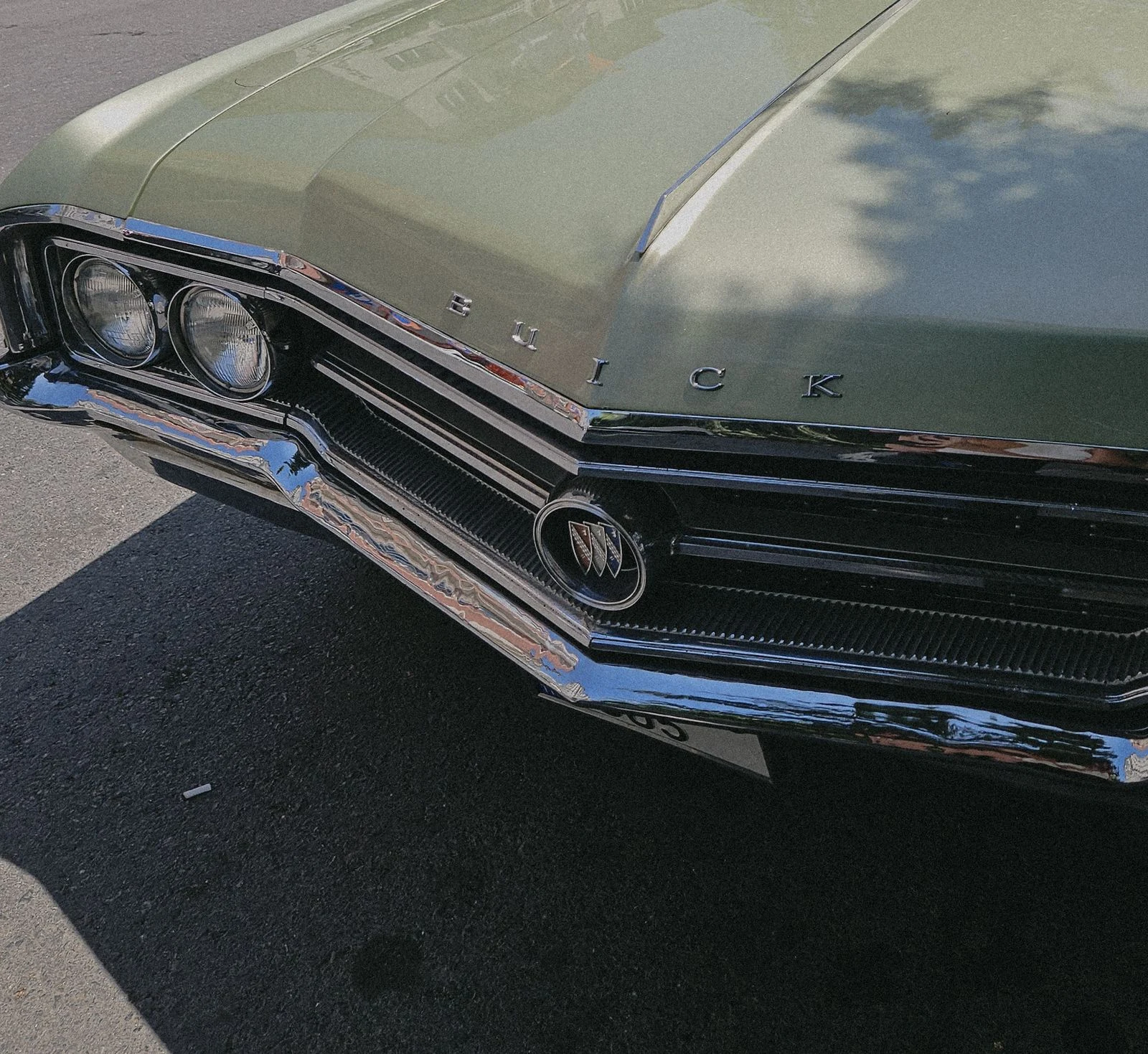
Sources: GM Heritage: 1964 Buick Electra 225; Buick’s 1970 catalogue, Electra specifications on printed page 15. Photograph: gökçe erem / Pexels. Illustrative detail of a Buick Wildcat, not an Electra 225.
Want stories like this in your inbox?
Subscribe for free to our selection of classic cars, stories and events.