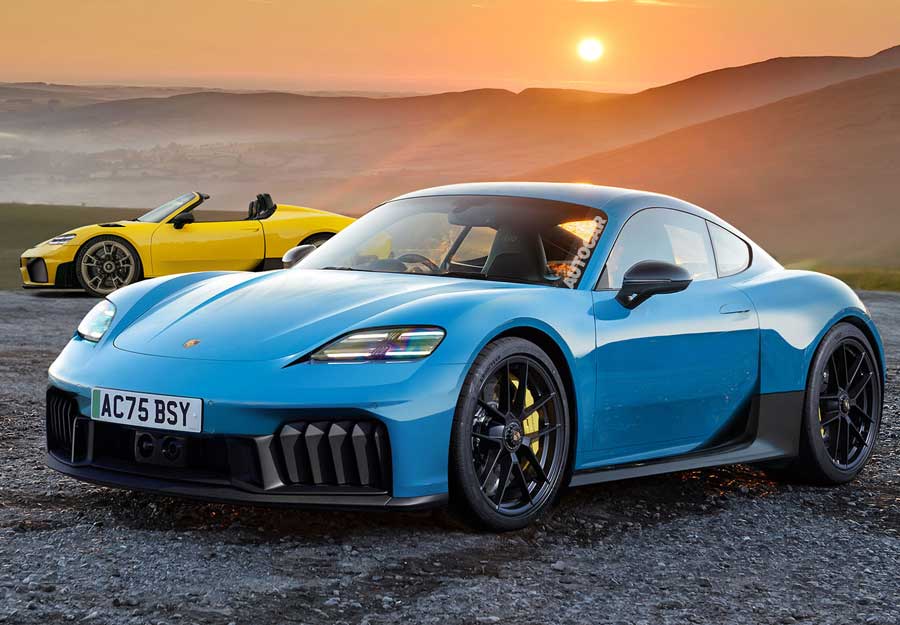
Electric Future Confirmed for Porsche’s 718 Line
Porsche has drawn a firm line under gasoline power for its junior sports cars. The company confirmed that the next-generation 718 Boxster and Cayman will be built exclusively as electric vehicles. The announcement came during its 2026 Capital Markets Day, where executives outlined the “Sportwagenschmiede ’35” roadmap. According to the plan, 2028 will be the first full production year for the all-electric 718 family.
The move ends a remarkable chapter in Porsche’s modern history. For nearly three decades, the mid-engine Boxster and Cayman defined accessible, precision handling. Now, the baton passes to a battery-electric architecture. Importantly, the iconic 911 will continue to carry Porsche’s internal-combustion flag. That distinction keeps a clear split in the lineup. One path points to electrified agility. The other preserves the brand’s traditional, high-octane heartbeat.
For many enthusiasts, this decision feels inevitable. Yet it still lands with weight. After all, the mid-engine soundtrack and tactile feedback shaped a generation of drivers.
Rumors Fade as Strategy Locks In
The road to this point has been winding. Production of the last 982-generation gasoline models concluded quietly in October 2025. That pause created space for speculation. Then global EV demand softened through late 2025 and 2026, which only fueled more rumors. Reports suggested Porsche engineers were re-evaluating a limited return to internal combustion for top-tier variants.
Furthermore, an investor presentation slide appeared to endorse the idea. It listed potential gas-powered options alongside electric versions for the 718’s peak trims. However, Porsche later clarified the situation. Head of Corporate Communications Matthias Rauter stated that a combustion-engine revival was never formally approved. Therefore, the next 718 will remain purely battery-powered.
As a result, strategy and messaging are now aligned. The 718 goes all-electric. Meanwhile, the 911 stays ICE. In the end, Porsche avoids overlap and keeps each sports car with a clear identity and purpose.
From Lifesaver to Legend: The 986 and 987 Eras
To understand why this transition matters, consider where it began. The original 986 Boxster, launched for 1997, arrived at a pivotal time for Porsche. It shared major components with the 996-generation 911, which kept costs in check. More importantly, it delivered mid-engine balance and a charismatic flat-six to a broader audience. As its name hinted—part “boxer,” part “Speedster”—it blended heritage with fresh purpose. In many ways, it stabilized the company and reignited global enthusiasm for the brand.
The second act, the 987 generation, brought even more character. In 2005, the fixed-roof Cayman joined the lineup. The chassis gained poise, the styling gained edge, and the driving experience grew sharper. Moreover, analog heroes emerged. The lightweight Cayman R and the Boxster Spyder offered raw connection and minimal compromise. Then the 2009 refresh introduced direct injection and replaced the Tiptronic automatic with Porsche’s fast-shifting PDK dual-clutch transmission. Therefore, performance and efficiency both took a leap.
By the end of the 987 run, Porsche had forged a dynamic, two-model formula. It balanced everyday usability with true sports car purity. That balance became the platform’s signature.
Peak Sound, Peak Poise: The 981 and 982/718 Chapters
The 2013–2016 981 generation is often considered a sweet spot. It featured a stiffer, lighter aluminum-steel structure, a longer wheelbase, and a more planted stance. Crucially, every variant retained a naturally aspirated flat-six placed just behind the seats. The result was a stirring soundtrack and a linear power delivery. The Cayman GT4 capped the era, proving the mid-engine layout could challenge the 911 in lap times and thrills.
In 2016, Porsche revived the historic “718” name for the 982 series. The badge honored the four-cylinder race cars that shined at the Targa Florio and Le Mans. Standard models shifted to turbocharged flat-fours, which delivered torque and efficiency. Purists, however, missed the soaring wail of the old six. Porsche listened. Soon the 4.0-liter, naturally aspirated flat-six returned in the GTS 4.0, the GT4, and the track-focused GT4 RS. Consequently, those cars became instant modern classics, blending modern dynamics with an old-school soul.
Despite those highlights, the curtain fell in 2025. The final gasoline 718s left the line, closing an extraordinary run of mid-engine excellence.
What the Shift Means for Drivers and the Market
Porsche’s electric 718 strategy marks a turning point for enthusiasts who have long admired the Boxster and Cayman. As the next generation approaches, the existing combustion-powered models enter a new phase of their lives.
For collectors, this transition raises an interesting question: will the final gasoline-powered 718 models become increasingly desirable?
History suggests that significant technological changes can influence how enthusiasts value earlier generations. However, rarity alone does not guarantee appreciation. Condition, specification, mileage, maintenance history, and long-term demand will remain essential factors.
The naturally aspirated six-cylinder models deserve particular attention. The Cayman GT4 RS, Boxster Spyder RS, and GTS 4.0 combine sophisticated chassis engineering with an engine character that future electric models cannot reproduce in the same way.
Meanwhile, earlier generations may attract drivers who prefer a more affordable entry into Porsche ownership. The 986 and 987 Boxster, for example, still offer the balanced handling and mechanical engagement that established the model’s reputation.
Rather than viewing every combustion-powered 718 as a future investment, enthusiasts should recognize the distinction between collectibility and driving enjoyment. Some examples may become valuable collector cars. Others will remain desirable because they offer an experience that modern vehicles increasingly leave behind.
Can an Electric Porsche Preserve the Driving Experience?
The greatest challenge facing the electric 718 is not necessarily acceleration or outright performance. Electric motors can deliver immediate torque, while advanced chassis systems can provide remarkable control.
Instead, Porsche must preserve the qualities that made the Boxster and Cayman special in the first place.
Throughout their history, these cars earned praise for their balance, steering precision, and connection between driver and road. Their appeal came from the way they responded to small inputs, not simply from impressive performance figures.
An electric architecture introduces different engineering priorities. Battery weight, packaging, thermal management, and power delivery all influence vehicle dynamics. Consequently, Porsche must find new ways to deliver the agility and responsiveness associated with its compact sports cars.
There is also the emotional dimension.
For many enthusiasts, the sound of a naturally aspirated flat-six forms an essential part of the Porsche experience. Engine speed, gear changes, and mechanical vibration create a connection that extends beyond measurable performance.
Electric propulsion changes that relationship. Yet it also opens possibilities for precise torque control, rapid throttle response, and new approaches to chassis balance.
Whether those advantages can create an equally compelling emotional experience remains an open question.
Ultimately, the success of the electric 718 will depend on something more important than its powertrain: whether it still feels unmistakably like a Porsche.
The Last Flat-Six Models and Their Collector Appeal
Among the final combustion-powered Boxster and Cayman variants, several models already occupy a distinctive position in Porsche’s modern history.
The Cayman GT4 brought motorsport-inspired engineering to the mid-engine platform. Its combination of chassis precision, manual transmission availability, and naturally aspirated power established a strong reputation among driving enthusiasts.
The GT4 RS took that philosophy further. With a high-revving 4.0-liter flat-six derived from the 911 GT3 family, it delivered one of the most intense driving experiences ever offered in a Cayman.
Similarly, the Boxster Spyder RS transformed the open-top roadster into a particularly focused sports car. Its lightweight approach and distinctive engine character connected modern Porsche engineering with the brand’s traditional roadster philosophy.
These models have qualities that collectors often appreciate: distinctive specifications, strong enthusiast recognition, and an important place in a model’s history.
However, future values remain uncertain. Production numbers, market conditions, maintenance costs, and changing buyer preferences will influence demand.
For anyone considering ownership, the most sensible approach remains straightforward. Choose a well-documented example, understand its maintenance requirements, and prioritize the driving experience over speculative appreciation.
After all, Porsche developed these cars to be driven.
A New Chapter in Porsche’s Sports Car Heritage
Porsche has repeatedly demonstrated its ability to adapt without abandoning its identity.
The transition from air-cooled to water-cooled engines in the 911 initially divided enthusiasts. Likewise, the introduction of turbocharged four-cylinder engines in the 718 generated considerable debate.
Nevertheless, the company continued refining its sports cars, combining new technologies with familiar engineering principles.
Electrification represents another significant challenge. However, the underlying question remains unchanged: how can Porsche create a sports car that delivers precision, excitement, and a distinctive connection with its driver?
The company’s broader strategy also suggests that different powertrain technologies will coexist across its portfolio. While the electric 718 represents one direction, Porsche continues investing in combustion engines, plug-in hybrids, and battery technology.
This approach reflects a changing automotive industry in which regulations, customer preferences, and technological progress increasingly influence product decisions.
For Porsche enthusiasts, the result may be a more diverse sports car landscape rather than a complete rejection of the past.
The End of an Era, Not the End of the Story
The transformation of the Porsche 718 Boxster and Cayman represents more than a change in propulsion. It closes an important chapter in the history of the compact, mid-engine sports car.
From the original 986 Boxster to the extraordinary Cayman GT4 RS, these models helped define Porsche’s reputation for accessible driving engagement and exceptional chassis balance.
Their legacy will continue through the cars that owners preserve, restore, and enjoy on the road.
Meanwhile, the electric 718 faces the challenge of establishing its own identity. It must demonstrate that driving pleasure can evolve beyond the familiar sound and mechanical character of a combustion engine.
For enthusiasts of classic and modern-classic automobiles, this transition offers an opportunity to reflect on what makes a sports car memorable.
Performance figures eventually become outdated. Technology continues to advance. Yet the emotional connection between a driver and a remarkable machine can endure for generations.
The gasoline-powered Boxster and Cayman have already earned their place in Porsche history.
Now, the electric 718 must write its own.