
Budget Brake Boost for the MGB GT
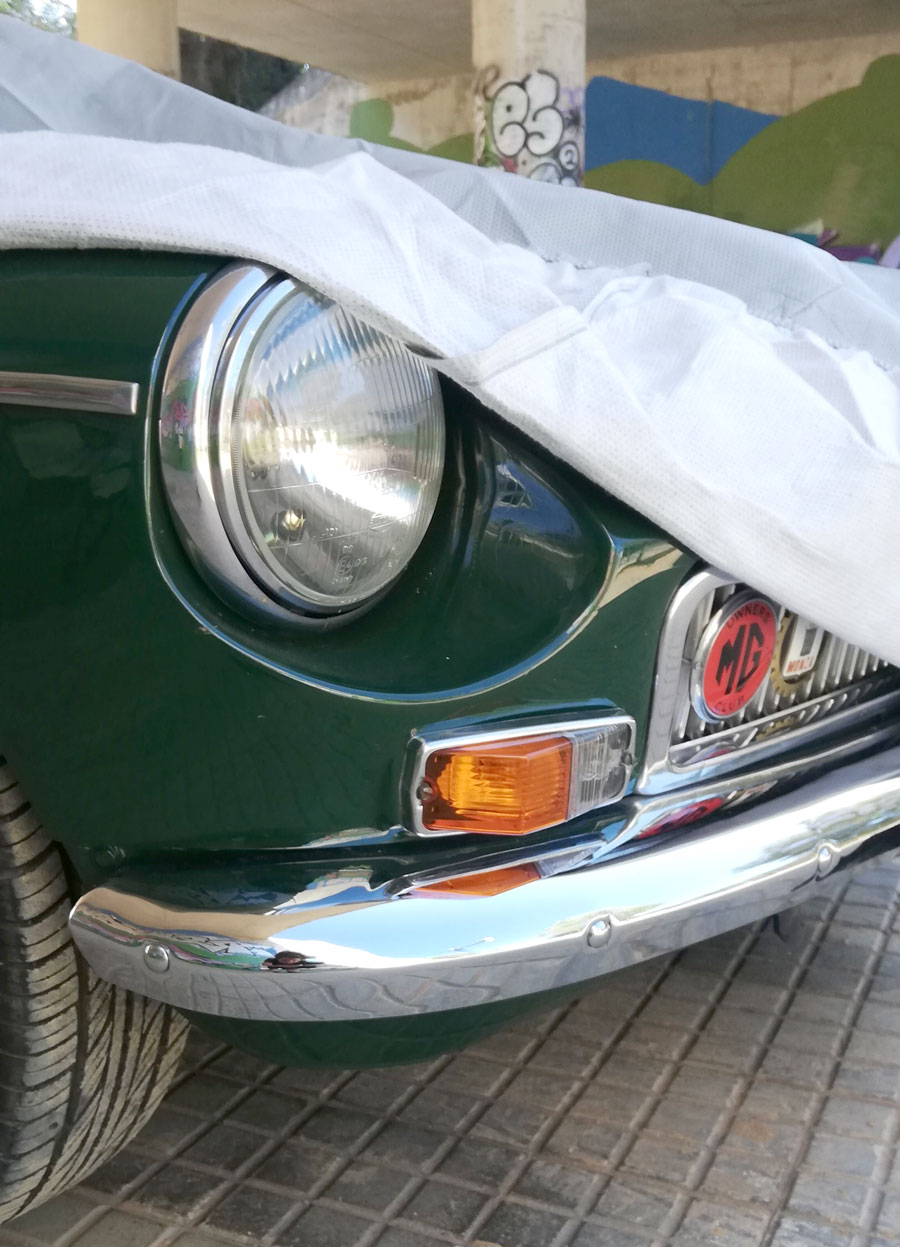
MG GT at Life in Classic
Why the MGB GT Still Charms Drivers
Among British sports cars, the MGB often wears the people’s crown. The Jaguar E-Type may win beauty contests, but its price keeps it firmly in the dream garage for most enthusiasts. The MGB, by contrast, remains one of the most accessible ways to experience classic British motoring. This project centers on an MGB GT coupe purchased for just $2,500 that was already running and driving. It is not a roadster, yet it perfectly fits a purpose-built plan: transforming an affordable classic into a lightweight “penny racer” for rally-style driving.
The GT’s fixed roof offers advantages beyond its distinctive fastback styling. It provides greater chassis rigidity than the convertible, improves practicality with a surprisingly useful cargo area, and makes the car a better platform for long-distance events. Whether tackling winding back roads or vintage rallies, the MGB GT combines simple engineering, abundant replacement parts, and an enthusiastic global community that continues to keep these cars alive more than half a century after production began.
With that philosophy in mind, every modification focuses on value rather than extravagance. Instead of chasing horsepower from the outset, the project prioritizes handling, reliability, and stopping power. Rust repairs and mechanical maintenance came first, followed by suspension improvements, and now the braking system receives a comprehensive overhaul.
Image credit: Hagerty YouTube.
Building a Budget Rally Car, Step by Step
Before thinking about performance upgrades, the GT needed a solid mechanical foundation. Years of wear had left the suspension tired, and several areas required rust repair before the car could be driven with confidence. Once those essential jobs were completed, attention turned toward reliability. The engine received a careful tune-up, fresh ignition components, and general servicing before returning to regular road use.
The next logical improvement involved the suspension. Polyurethane bushings replaced the aging factory rubber components throughout the chassis. Although this upgrade remains relatively inexpensive, it significantly sharpens steering response while reducing unwanted suspension movement. New bearings and refreshed steering components further improved precision without sacrificing the car’s friendly character.
These improvements immediately highlighted another limitation. The chassis now inspired more confidence entering corners, but the original braking system struggled to match the upgraded handling. For a lightweight rally-inspired machine expected to tackle mountain roads and repeated hard braking, improving stopping performance became the obvious next investment.
Rather than chasing expensive aftermarket hardware, the builders adopted a philosophy that many classic car owners appreciate: maximize the performance of the original design before replacing it entirely.
The Brake Upgrade Plan and Parts
The upgrade package reflects that practical approach. Brembo front brake rotors replace the worn originals, while EBC high-performance street pads provide improved friction and better resistance to brake fade during spirited driving. Although the pads represent the most expensive single purchase at roughly $299, they promise a noticeable improvement in real-world performance without compromising everyday usability.
Additional components include new flexible brake hoses, low-friction racing wheel bearings, fresh rear wheel cylinders, and an upgraded dual-reservoir master cylinder that provides an important safety advantage over the original single-circuit design. Aside from the premium pads and rotors, nearly every component closely follows factory specifications, making future maintenance both simple and affordable.
The car’s reduced weight also changes the performance equation. Through the removal of unnecessary equipment, the MGB GT now weighs comfortably under 2,000 pounds. Combined with the original B-Series four-cylinder engine producing around 98 horsepower, that relatively modest output becomes surprisingly entertaining. More importantly, the lighter vehicle places far less demand on the braking system than many modern performance cars.
Consequently, a carefully refreshed stock-style setup should provide more than enough braking capacity for enthusiastic road driving and occasional rally events. The project demonstrates that intelligent component selection often delivers greater value than expensive big-brake conversions, especially on lightweight classics.
Another pleasant surprise came during parts ordering. Nearly every component arrived within a few days from a mainstream supplier, with only a single seal delayed by backorder. That level of parts availability remains one of the MGB’s greatest strengths, allowing owners to keep these cars on the road without lengthy searches for rare components.
Installation Notes, Tips, and Small Hurdles
The MGB’s straightforward engineering makes it remarkably approachable for home mechanics. Its knock-off wire wheel hubs allow the front assemblies to come apart easily on the workbench, simplifying access to bearings and brake components.
Installing the new wheel bearings required particular care. Properly packing them with high-temperature wheel bearing grease remains essential for long-term reliability, especially on a car expected to see spirited driving. Taking time during this stage can prevent premature wear and future failures.
As with many British classics, not every job proceeded perfectly. A few stubborn fasteners required patience, penetrating oil, and careful persuasion rather than brute force. Fortunately, decades of aftermarket support mean replacement hardware is readily available if original pieces become damaged during removal.
Bleeding the upgraded braking system also deserved extra attention. The new dual-circuit master cylinder offers improved safety by separating the front and rear hydraulic circuits, but it must be properly bled to eliminate trapped air. Once completed, the brake pedal felt noticeably firmer, providing greater driver confidence before the car even returned to the road.
These small challenges illustrate one of the pleasures of restoring simple classics. Most problems can be solved with ordinary tools, careful planning, and a workshop manual rather than specialized electronic equipment.
Why Lightweight Classics Still Make Sense
Projects like this MGB GT highlight an increasingly attractive alternative to modern performance cars. Instead of spending tens of thousands of dollars chasing ever-higher horsepower figures, enthusiasts can build engaging machines by reducing weight, improving balance, and refining the fundamentals.
The MGB GT embodies Colin Chapman’s famous philosophy of adding lightness. Even with fewer than 100 horsepower, the car promises an involving driving experience thanks to its modest weight, communicative steering, and compact dimensions. Every improvement—from fresh bushings to upgraded brake pads—enhances the driver’s connection to the road rather than simply increasing straight-line speed.
That formula also keeps ownership costs remarkably reasonable. Parts remain affordable, mechanical systems are uncomplicated, and nearly every repair can be performed by an enthusiastic owner with basic tools. In an era when many modern performance cars require specialized diagnostic equipment for routine maintenance, the MGB continues to reward hands-on involvement.
The brake overhaul represents another step toward transforming this inexpensive coupe into a capable rally-inspired machine. Once complete, future upgrades will likely focus on tires, suspension tuning, and modest engine improvements, always following the same philosophy: maximize enjoyment per dollar rather than chase impressive specifications.
For many enthusiasts, that may be the MGB GT‘s greatest achievement. More than sixty years after its debut, it still proves that affordable, lightweight, and mechanically honest sports cars can deliver driving pleasure that far exceeds their modest price tags.