
Blancpain Unveils Its Most Complicated Watch Ever
Blancpain Unveils Its Most Complicated Watch Ever - Life in Classic
A Masterpiece Years in the Making
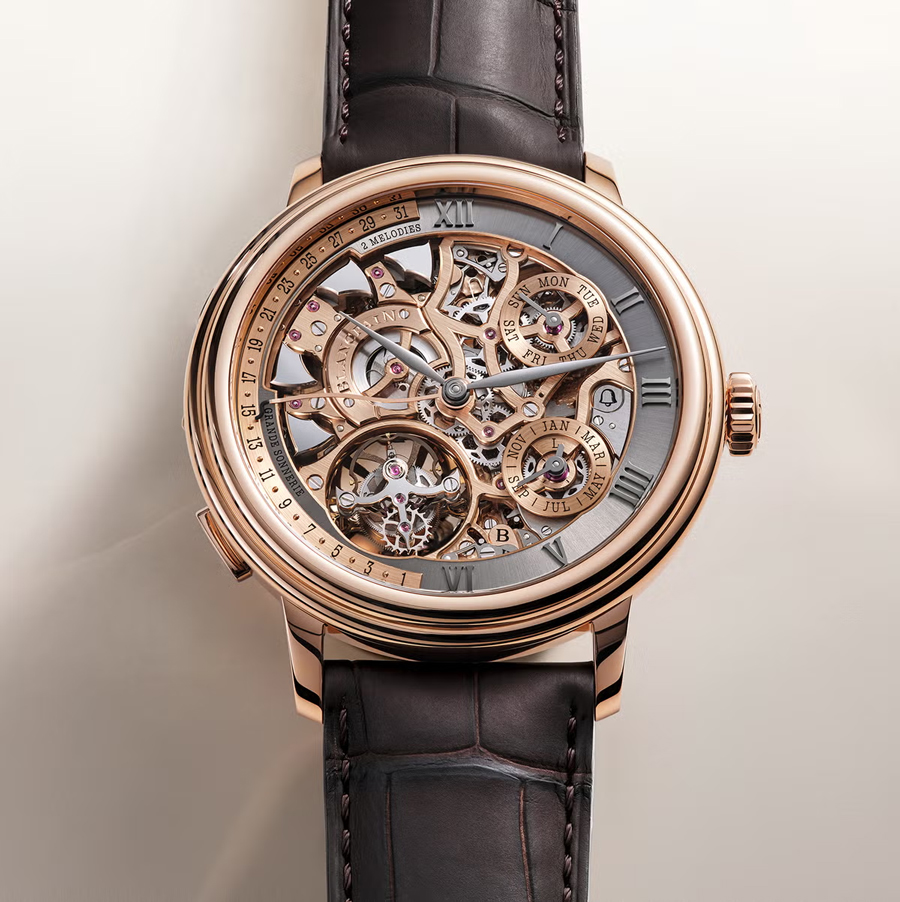
After eight years of development, Blancpain presents a landmark in high watchmaking. The new creation unites a dual melody four-tone sonnerie, a perpetual calendar, and a flying tourbillon. According to the brand, it stands as the most complicated watch Blancpain has ever produced.
This piece blends artistry and engineering in rare balance. It does more than measure time. Instead, it sings it, counts it, and elevates it. Moreover, it shows how a traditional craft can still astonish in a modern world.
Complexity alone does not define greatness, though. Precision, reliability, and legibility must follow. Therefore, Blancpain’s latest work aims for harmony. Each function supports the others without compromise. In the process, it offers collectors both technical depth and emotional resonance.
Understanding the Dual Melody Four-Tone Sonnerie
The sonnerie sits at the heart of this watch. A four-tone carillon allows a richer musical profile than the classic two or three gongs. As a result, the chimes carry nuance, depth, and presence. They ring with clarity across the hours and quarters.
In a double sonnerie, watchmakers often combine grand and petite sonnerie modes. In grand sonnerie, the mechanism strikes the hours and quarters automatically. In petite sonnerie, it chimes the quarters, with the hours on demand. Additionally, a minute repeater function commonly lets the wearer trigger the time on request. Together, these functions form a mechanical orchestra on the wrist.
Such systems demand smart energy management and robust safeguards. Springs must store power efficiently. Levers and racks must coordinate without conflict. Moreover, the mechanism must protect itself from mistimed inputs. Consequently, executing a double sonnerie with four gongs requires extreme skill and testing.
Perpetual Calendar for the Long Game
Blancpain also integrates a perpetual calendar, often shortened to QP. This mechanism automatically accounts for varying month lengths and leap years. Therefore, it keeps the correct date for decades with minimal adjustment. For many owners, that long horizon embodies true mechanical intelligence.
Calendar displays typically include day, date, month, and sometimes moonphase or year. Layout and legibility matter as much as accuracy. Moreover, correctors and crown functions must feel intuitive. In daily use, a QP should read clearly and set safely. Because of that, manufacturers design systems that reduce user error.
A well-executed perpetual calendar offers calm elegance. Its motion at midnight reveals a quiet ballet of wheels and cams. Additionally, the mechanism must resist shocks and temperature changes. In this watch, the calendar shares space with the sonnerie and tourbillon. Yet it still contributes to a cohesive whole.