
America’s First Supercharged Family Wagons
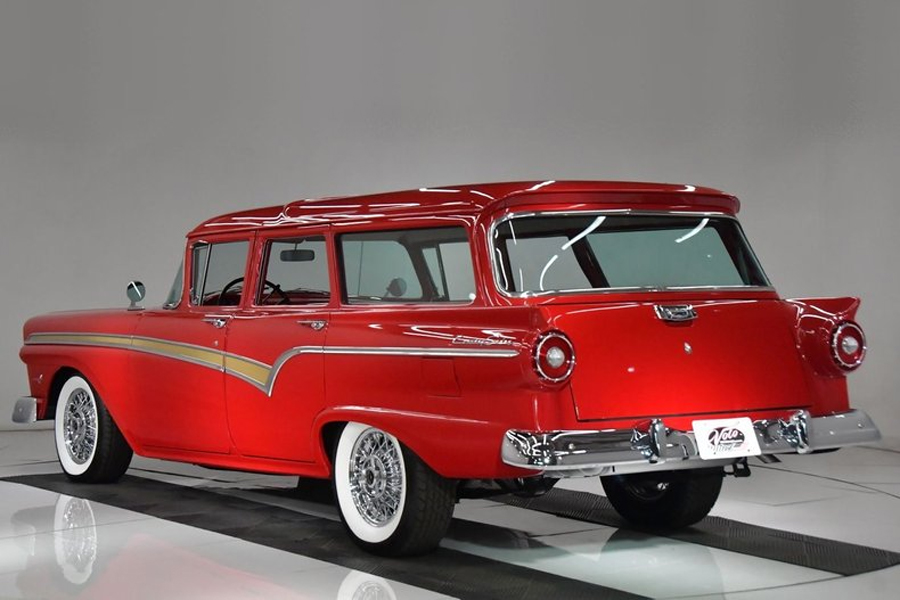
1957 Ford Country Sedan F-Code - Life in Classic
A Surprise From the 1950s
The idea of a factory-built muscle wagon sounds recent. Yet the roots go back to America’s mid-century horsepower boom. In 1957, two family wagons quietly paired everyday usefulness with serious speed. Together, they proved that a long-roof could haul more than groceries.
Those pioneers were the 1957 Ford Country Sedan F-Code and the Packard Clipper Country Sedan. Both hid supercharged V8 power under sensible sheetmetal. As a result, they became true sleepers long before the term entered car culture. Their mission was simple: carry a family, and still outrun expectations.
Even today, their formula feels fresh. Practical bodies, big torque, and real engineering courage combined in a single package. Therefore, the modern “muscle wagon” trend owes more to the 1950s than many realize. And while their numbers stayed small, their influence grew large.
Racing Rules Spark Innovation
The 1950s saw automakers race for both trophies and headlines. Crucially, NASCAR’s homologation rules demanded that race engines appear in street cars. To compete, manufacturers had to sell a minimum number of vehicles with the same hardware. Consequently, engineering departments found creative ways to bring racing tech to the showroom.
Ford seized the opportunity in 1957. Instead of limiting a supercharged V8 to a halo model, the company offered it across much of its lineup. That move shifted the narrative from pure sport coupes to everyday cars with hidden power. In turn, it expanded who could buy speed from the factory.
At the same time, the market’s appetite for horsepower grew fast. Rival brands pushed hard, and technology advanced in months, not years. However, the momentum also triggered concern. By mid-1957, industry leaders backed away from overt racing support. Even so, the brief window had already created legends.
Ford’s F-Code Country Sedan
Ford’s mid-range Country Sedan wagon could be ordered with the F-Code package. That option added a 312-cubic-inch Y-block V8 topped by a belt-driven McCulloch/Paxton VR57 supercharger. Factory ratings claimed 300 horsepower and 340 pound-feet of torque. Period testers suggested far more, sometimes near 400 horsepower under ideal conditions.
The wagon kept a low profile. With restrained chrome, a roomy interior, and an honest long-roof shape, it looked like a family car first. Yet it delivered surprising punch from a stop and a rush at speed. Buyers could choose a three-speed manual or an automatic, which broadened its appeal.
Caption: 1957 Ford Country Sedan restomod wagon
Importantly, the F-Code wagon brought racing-grade thrust to daily life. You could tow, pack the kids, and still enjoy a supercharger whine on a Sunday drive. Therefore, it did not just challenge expectations. It rewrote them for what a station wagon could be.
Packard’s Supercharged Clipper Wagon
Studebaker-Packard answered with its own force-fed family hauler. The 1957 Packard Clipper Country Sedan used a 289-cubic-inch Studebaker V8 paired with a McCulloch supercharger. Output reached a stout 275 horsepower, which was serious muscle for the day. More importantly, the supercharger was standard on this model, not a rare box to tick.
While the Packard trailed Ford’s peak numbers, it offered consistent, predictable performance. It also delivered quiet confidence, with smooth power delivery and easy manners. Thus, the Clipper wagon proved that refinement and speed could coexist in a family car.