
From Panther to Pro Touring Camaro
Pro Touring Camaro - Life in Classic
What Is a Camaro, Really?
Chevrolet once joked that a Camaro was “a small, vicious animal that eats Mustangs.” The line set the tone for a confident launch on September 29, 1966, when the 1967 model arrived with fanfare. Behind the humor sat a serious plan. Chevrolet developed the car under the XP-836 program, a project that insiders nicknamed Panther and aligned with the F-body architecture.
Built on foundations shared with the Chevy Nova, the Camaro came as a sporty coupe or convertible. It offered a spread of powertrains, including a 396-cubic-inch V8 rated at up to 375 horsepower. With that package, Chevrolet aimed squarely at the wildly successful Ford Mustang, which had captured the market since 1964. As a result, a new rivalry took shape and energized American performance car culture. The Camaro answered the moment with style, power, and reach.
A Name Rooted in Camaraderie
The origin of the name carried a different tone from the marketing swagger. According to The Complete Book of Camaro: Every Model Since 1967, Chevrolet merchandising manager Bob Lund and GM vice president Ed Rollett dug into a pre–World War II edition of Heath’s French and English Dictionary. There they found “camaro,” a slang term meaning friend, pal, or comrade. The word stemmed from the French “camarade.”
General Manager Elliot M. “Pete” Estes approved the choice and framed its meaning for customers. He described the name as lithe and graceful, and he emphasized companionship between a car and its owner. That message fit the Camaro’s mission. It suggested a personal connection, not just raw performance. Consequently, the car’s identity balanced playfulness with purpose. The name stuck, and it helped the Camaro stand apart in a crowded field.
Born to Challenge, Built to Last
The first-generation Camaro arrived as more than a response to a rival. It helped shape the era’s design and performance conversation. The model brought fresh energy to U.S. showrooms and broadened Chevrolet’s appeal among young buyers. Moreover, its mix of options let owners tailor the driving experience to their style and budget.
The Camaro’s launch also anchored its place in a new class. It joined the ranks of classic pony cars, machines that combined accessible performance, bold looks, and daily usability. In short, it was an American icon in the making. As enthusiasm grew, Chevrolet refined the formula and expanded the lineup. The result was a car with staying power, a name that would return generation after generation.
An RS Pro Touring Classic, Reimagined
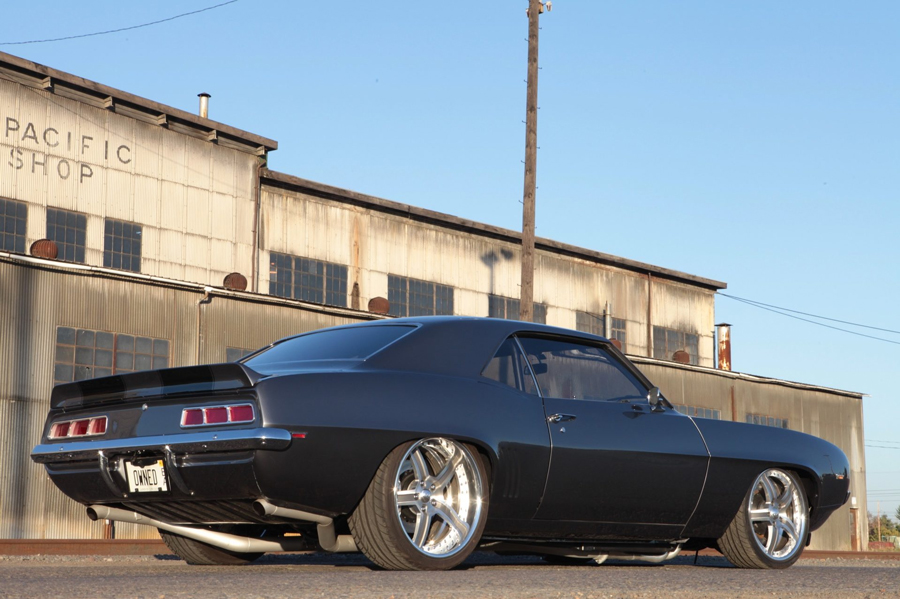
That heritage lives on in standout builds like a first-generation 1968 Chevrolet Camaro RS Pro Touring. Finished in Tuxedo Black, it contrasts sharply with a Torch Red interior accented by full custom diamond stitching. The look is dramatic, yet it respects the original lines. Under the hood, an upgraded LS3 fuel-injected engine brings modern power and reliability. It pairs with a 4L8E automatic transmission, delivering smooth shifts and easy drivability.
The “RS” badge, short for Rally Sport, denotes an appearance package that set certain early Camaros apart. Electronically controlled headlight covers sharpen the front end. Distinct rear lighting and additional trim complete the effect. Together, they underline the car’s presence without overwhelming its simplicity. In the Pro Touring tradition, the build blends classic aesthetics with contemporary performance and comfort. Therefore, it honors the past while inviting miles of present-day enjoyment.