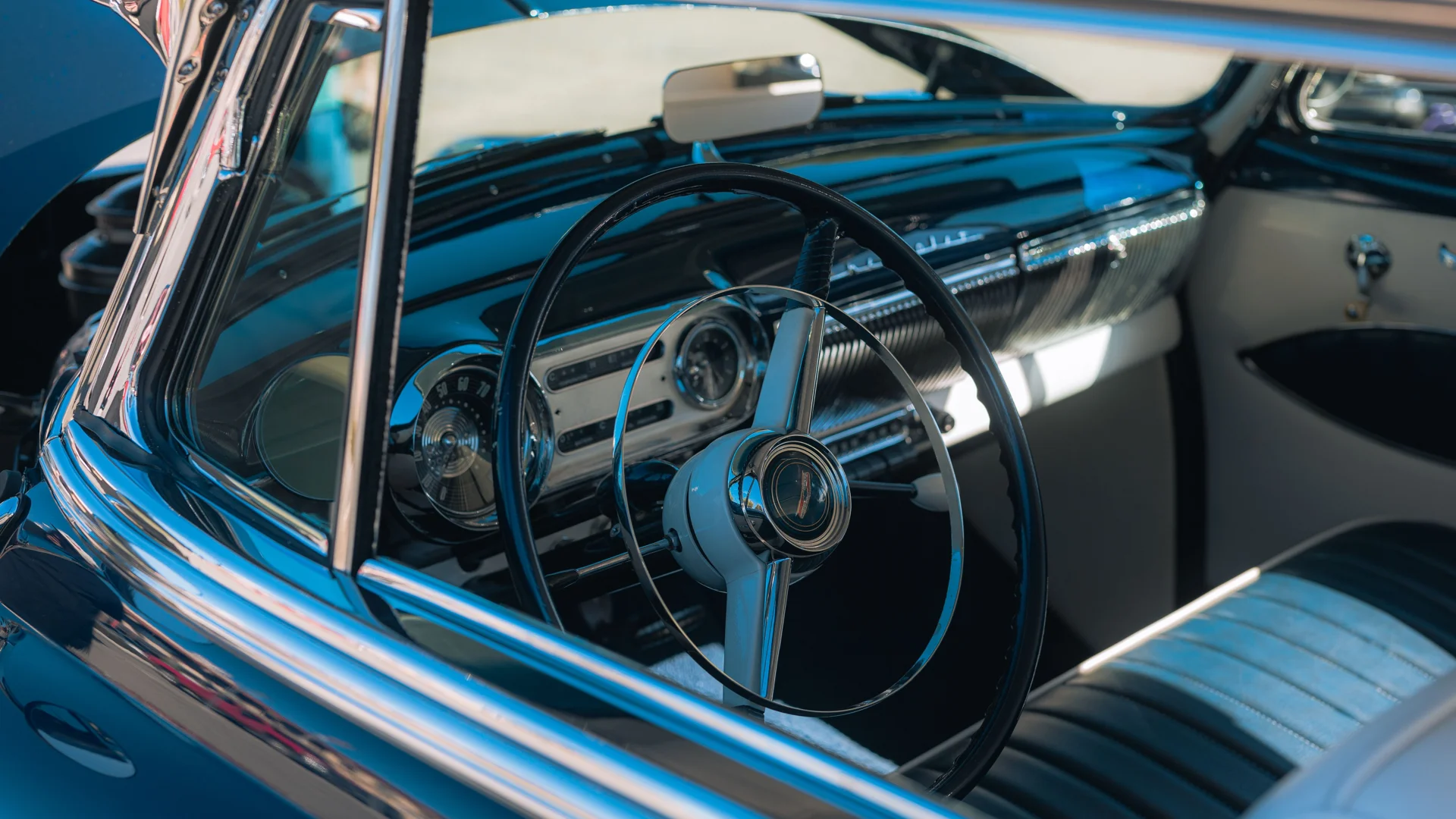
Illustrative period interior; the photograph does not show a verified radio conversion. Photo: Selvin Esteban / Pexels.
A bright touchscreen can feel out of place in a dashboard designed around chrome, painted metal and two tactile knobs. Yet wanting music from a phone does not mean abandoning the original radio’s appearance. The useful question is not which unit has the most features, but how much of the car you want to preserve—and what you actually need to hear on a journey.
Before buying anything, identify the radio and decide what “original” means to you. Keeping its face and controls is different from retaining its internal circuitry. A conversion can look period-correct while changing the device substantially. That may suit a regularly driven classic, but it deserves a conscious decision on a particularly original car.
Three routes to better listening
Restoration aims to repair the original equipment and retain its intended operation. It makes sense when authenticity matters more than connectivity. Instrument Specialties, for example, lists both stock rebuilds and conversions, rather than treating them as the same service. Restoring the radio does not automatically add Bluetooth or improve the reception available in your area.
An internal conversion keeps the case and visible controls but replaces or modifies the electronics. Modern reception and phone connectivity may be possible, depending on the components specified. Aurora Design offers receiver and Bluetooth/USB modules, as well as an FM add-on intended to preserve an existing AM radio. These are different approaches, not interchangeable promises for every old unit.
A separate, discreet system is another option: leave the period radio in place and use an independent audio installation. If reversibility is the priority, ask for removable brackets and a documented wiring plan before work starts. A hidden unit is not automatically reversible if installing it means cutting trim or altering the original loom.
Check compatibility before choosing features
Give the installer the car’s year, radio model and electrical-system details. Ask them to confirm voltage, earth polarity, available space, aerial connections and the condition of the wiring. A system designed for one installation should not be assumed suitable for another, particularly when a car retains an older electrical arrangement.
Speaker compatibility matters just as much as the head unit. Confirm the required impedance, wiring layout and power supply against the exact equipment’s instructions. Do not assume original speaker wiring can be reused unchanged. This is work for someone familiar with both classic-car electrics and the chosen audio system, not a reason to improvise connections behind a valuable dashboard.
Better sound is not just a bigger wattage figure
A headline power rating does not describe how a system will sound in your car. Ask how it was measured, what continuous output is available and which speakers it suits. Worn speakers, poor mounting and a noisy cabin can limit the result even when the electronics are new.
Start with the existing speaker locations and assess what can fit without cutting. Set a realistic goal: clear music and speech at comfortable volume, rather than trying to drown out the engine. For Bluetooth calls, microphone position deserves a practical test. For digital radio, confirm the receiver standard and aerial arrangement appropriate to the places where you drive; streaming from a phone is a separate service.
Put the restoration brief in writing
Ask which knobs, presets, illumination and tuning functions will remain usable, how new features are controlled, and what happens to removed parts. Request photographs, installation instructions, warranty details and a quote that separates cosmetic work from electronics and fitting. Confirm current availability and turnaround directly rather than relying on a generic estimate.
The best upgrade is the one you barely notice until you use it. A familiar dashboard, controls you can understand and a carefully installed system usually matter more than a long specification list. Preserve what makes the cabin special, then add only the functions that make your journeys better.
Technical references: Instrument Specialties — Radio Rebuilds & Conversions; Aurora Design — FMR, Bluetooth/USB & FMC.
Want stories like this in your inbox?
Subscribe for free to our selection of classic cars, stories and events.