
The Enduring Appeal of the 1967–72 Chevy K10
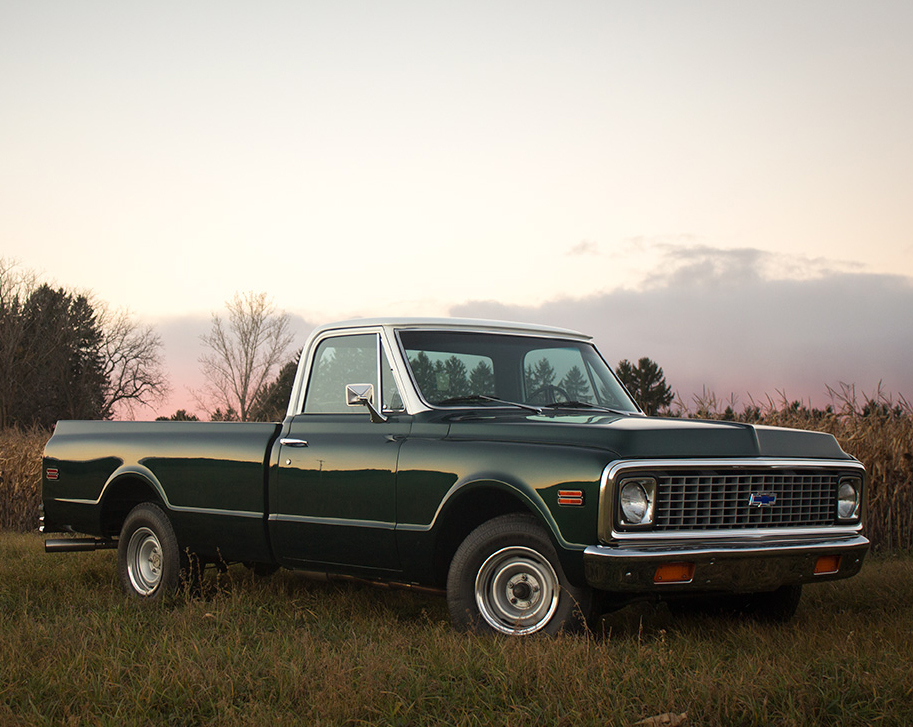
1967–72 Chevy K10 - Life in Classic
From Workhorse to Weekend Hero
Two-wheel-drive, half-ton pickups once ruled American roads. Yet in places where palm trees and snowplows rarely meet, four-wheel drive is now the default. It was not always like this. When Chevrolet launched its new “Action Line” trucks for 1967, four-wheel-drive models were niche tools for rough jobs and backcountry roads. The numbers tell the story. Chevrolet built roughly 210,000 two-wheel-drive C10s that year, but only about 3,761 K10s with four-wheel drive.
Momentum soon shifted. By 1972, the final year of this series, Chevrolet produced 312,979 two-wheel-drive half-tons and 26,643 four-wheel-drive versions. It also turned out 17,220 four-wheel-drive Blazers. Recreation helped drive demand. Campers, dirt bikes, and snowmobiles surged in popularity in the late 1960s and early 1970s. As a result, young buyers wanted trucks that could reach trails and tow toys with confidence.
Design That Bridged Utility and Style
Chevrolet rethought the light-truck formula in 1967. Designers softened sharp creases, rounded corners, and gave the cabin a more welcoming feel. The 1967–1968 trucks carried a lower, gently sloped hood and clean lines. In 1969, the look toughened up with a more upright hood and a bold grille framed in bright trim. That same year, the short-wheelbase Blazer arrived to challenge the Jeep CJ, Ford Bronco, and International Scout.
Chevrolet kept refining the face. For 1971, a new eggcrate grille appeared with the bow tie moved to the center, giving the trucks a contemporary look. The 1972 model year brought minor updates, yet the formula stayed consistent: a truck that balanced utility with style. Today, each visual era makes identification easy and adds to the model’s charm.
Why Enthusiasts Keep Coming Back
Modern drivers grew up with four-wheel-drive trucks in the driveway. Therefore, classic 4x4s feel familiar and desirable. Prices for 1967–72 K10s reflect that trend. Fifteen years ago, an excellent example might have sold for $10,000 to $12,000. Now, clean trucks often bring $30,000 to $40,000, and high-end builds command more.
Project trucks remain tempting. Parts support is excellent, and the trucks are straightforward to work on. However, rust repair can be extensive and expensive. As a result, a $10,000 project with serious bodywork needs may cost more than a finished driver. Weigh the numbers carefully, and consider paying more up front for a solid, unmodified truck. Moreover, stock examples often hold value well and drive beautifully on modern roads.