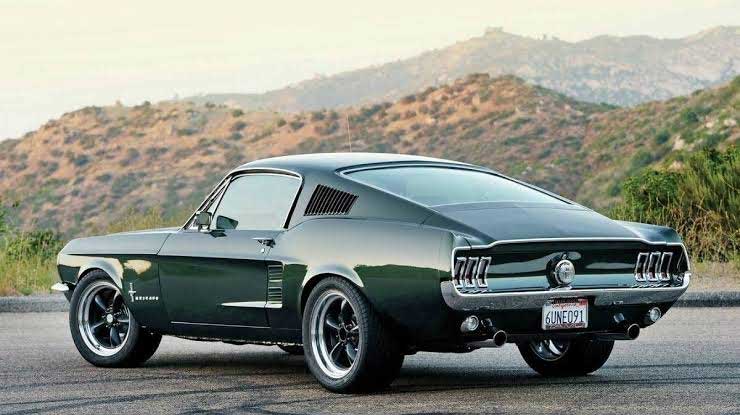
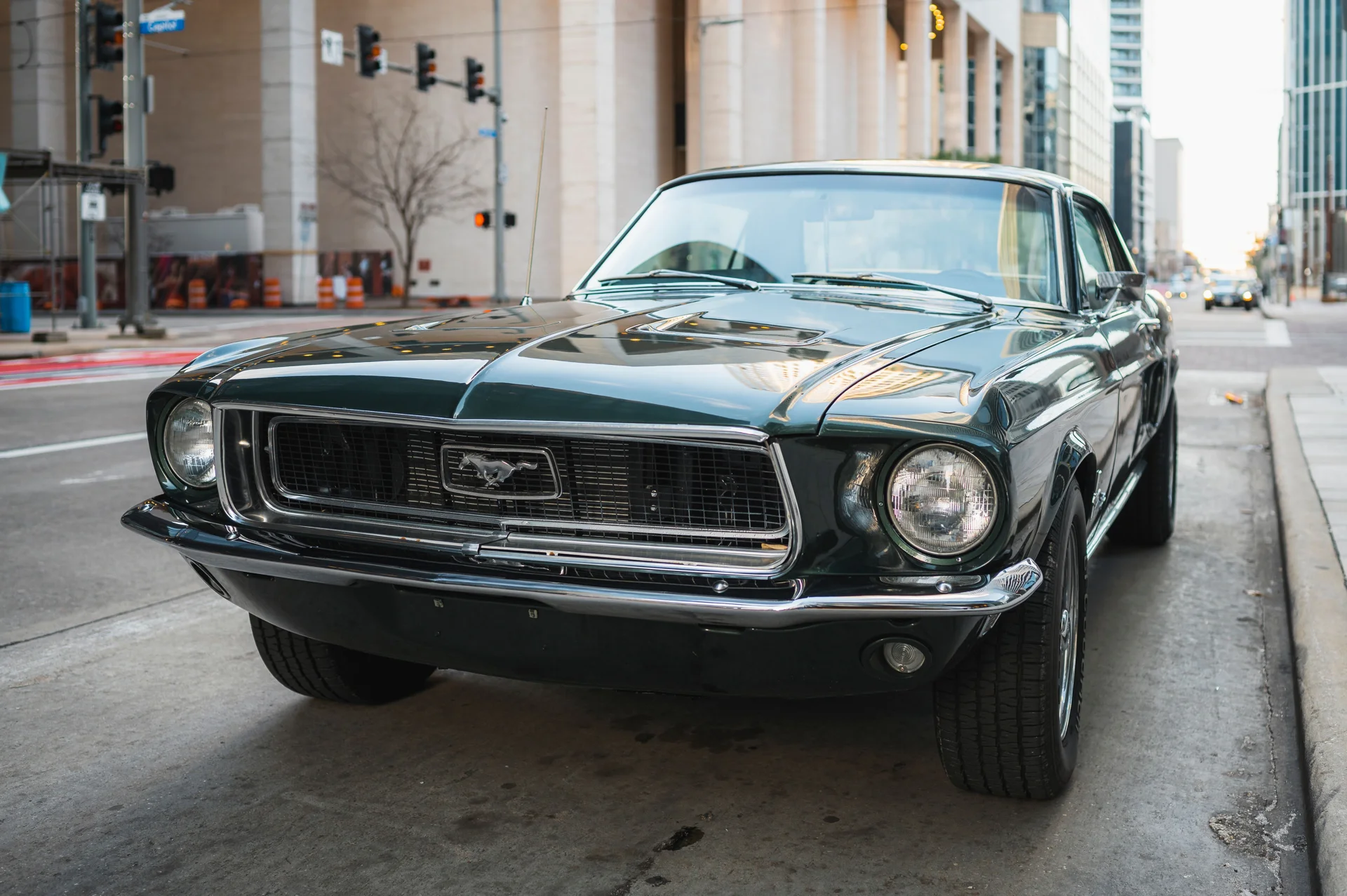
Illustrative photograph: a classic Mustang, not the car used in Bullitt. Photo: Juan Mendez / Pexels.
Some film cars announce themselves with gadgets. The Mustang in Bullitt does the opposite. Its appeal comes from a muscular shape, a restrained appearance and the sense that someone actually has to work to drive it. More than half a century after the 1968 film, that combination still explains why a green fastback can suggest Steve McQueen before anyone mentions his name.
The distinction matters: the original was a Ford Mustang GT fastback prepared for a film, not a factory “Bullitt” special edition sold in 1968. The production-car tributes came much later. Confusing the two makes an already compelling story less interesting, rather than more.
A character, not just a prop
According to the documentation presented by Mecum for the surviving hero car, two Highland Green 1968 Mustang fastbacks with the GT package and 390-cubic-inch V8 were used in the film. The hero car, chassis 8R02S125559, combined that engine with a four-speed manual gearbox.
Its visual identity was deliberately spare: a darkened grille, removed badges and Torq Thrust wheels. There is a lesson in that restraint. Without bright graphics explaining its intentions, the car looks purposeful rather than theatrical. It suits McQueen’s screen presence: watchful, economical and more convincing in motion than in a speech about performance.
Why the San Francisco chase still works
The pursuit involving the Mustang and a black Dodge Charger is remembered for more than speed. San Francisco’s changes of gradient make the road feel physical; the cars pitch, land and change direction in a landscape that refuses to remain flat. The camera brings the viewer close to the task of driving, while the engine sound gives the sequence its own rhythm.
Watching it now, the enduring attraction is the impression of weight and effort. The Mustang does not seem insulated from the road. That is also part of the pleasure of a classic car: steering, pedals, noise and visibility form a conversation with the driver. The film turns those sensations into drama without needing to explain them.
The original car’s story did not end on screen
Mecum’s history traces the hero Mustang through private ownership and the Kiernan family, who bought it in 1974. Its public reappearance at Detroit in 2018 put a real, documented vehicle back at the centre of a story often reduced to posters and replicas. It subsequently appeared at Mecum’s Kissimmee auction in January 2020.
The significance is not simply celebrity ownership or an auction result. Surviving film-related details make an object a witness to how a scene was made. A beautifully restored lookalike can recreate an atmosphere; it cannot acquire the same history by matching the paint.
Film car, tribute edition or replica?
Ford’s later Bullitt editions brought the association to new generations, with versions in 2001 and 2008 and a third revealed alongside the original in 2018. These are factory tributes, distinct from both the film cars and privately built replicas.
For an enthusiast, each offers a different appeal. An original production Mustang can be enjoyed on its own terms; a replica celebrates a look; a later Bullitt combines the reference with a newer car. When considering any example, verify its identity and documentation rather than treating green paint or a badge as proof of provenance.
The strongest part of the Bullitt legacy is therefore not a specification or a price. It is an idea of the car as something driven, not merely displayed. The film gave a familiar American fastback a personality that still travels far beyond its original audience.
Historical reference: Mecum — 1968 Ford Mustang GT “Bullitt”, Kissimmee 2020.
Want stories like this in your inbox?
Subscribe for free to our selection of classic cars, stories and events.