
Midwest Legend Ford Torino Twister Special Returns
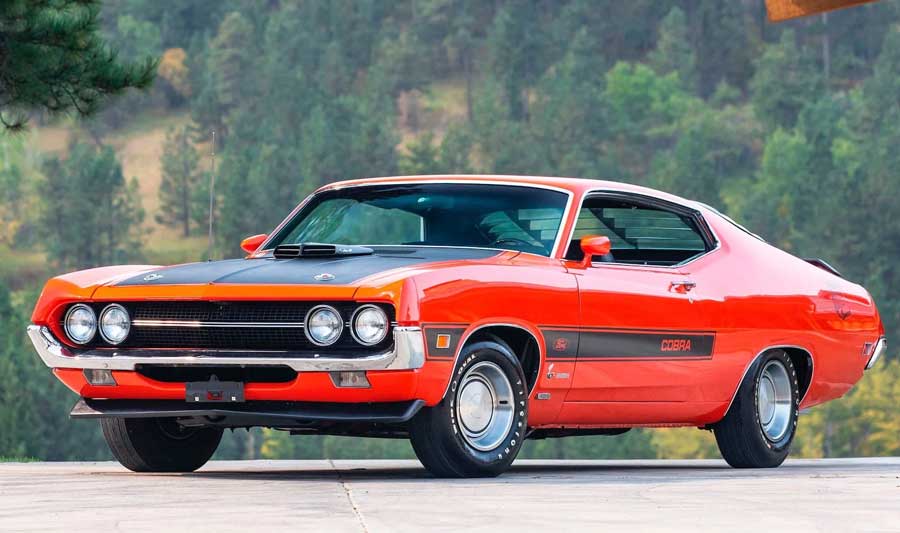
Ford Torino at Life in Classic
A Regional Legend Reborn
When people recall the golden age of American muscle, names like Mustang Mach 1 and Chevelle SS often lead the conversation. Yet a rarer storm brewed in the Midwest. The 1970 Ford Torino Twister Special emerged as a regional hero with a national mystique. Built for the Kansas City District Sales Office, only 90 examples left Ford’s Dearborn line. Consequently, survivors remain scarce, and complete cars are rarer still.
Today, collectors continue to chase this elusive prize. The Twister Special blends flamboyant looks with serious track hardware, which makes it more than a showroom special. Moreover, it reflects a unique dealer-led story that set it apart from mainstream performance models. Now, a highly documented example has surfaced for sale, giving enthusiasts a rare chance to evaluate the car up close. For fans of old-school torque and regional lore, that matters.
How the Twister Special Took Shape
The Twister idea started as a 1970 Mustang promotion. A high-performance racing group neared bankruptcy, and Ford needed dealers to absorb a block of special-order Mach 1s. Kansas City dealers agreed, but they wanted matching Torinos with equal flair. Therefore, Ford adapted the Twister identity to the sleek Torino Cobra SportsRoof.
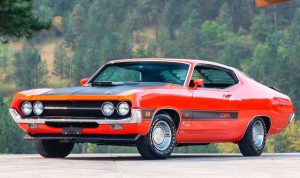
The package delivered a visual jolt. Every Torino Twister wore bright Vermillion paint set against bold black graphics, including a tornado logo on each rear quarter panel. A blacked-out grille and a flat black hood underscored its menace. Furthermore, hood twist latches added a direct nod to competition practice. The look did more than attract attention. It told onlookers exactly what kind of car approached. As a result, the Twister Special achieved instant regional fame, then grew into national myth.
Big-Block Muscle and Track-Bred Hardware
Under the hood, Ford installed its latest big-block answer: the 429-cubic-inch Cobra Jet V8. Supply pressure limited 428 engines at the time, so the 429 stepped in with fresh muscle. With functional Ram Air feeding a Rochester four-barrel carburetor, the engine was factory-rated at 360 to 370 horsepower. Torque swelled to a crushing 450 pound-feet. Therefore, straight-line thrust arrived in an instant.
Chassis hardware matched the promise. A heavy-duty competition suspension came standard, and a Traction-Lok rear differential kept power planted. Additionally, many cars were ordered without power steering or power brakes. Drivers felt the road, and the car felt them back. Consequently, the experience remained unfiltered and direct.
The Twister Special was never intended to be a refined grand tourer. Instead, it represented a period when American manufacturers placed raw performance, aggressive styling, and driving excitement above almost everything else. Its appeal came from that uncompromising character, which remains central to the American muscle car experience today.
What Makes the Torino Twister Special So Collectible?
Rarity alone does not make a classic car desirable. However, when limited production meets an unusual backstory and serious performance, collectors tend to pay attention.
The 1970 Ford Torino Twister Special brings all three elements together. Its connection to the Kansas City sales district gives it a distinctive place in Ford history. Unlike nationally marketed performance models, the Twister emerged from a regional promotional effort that developed an identity of its own.
Furthermore, the Torino Cobra SportsRoof already possessed one of the most recognizable silhouettes of its era. Its long hood, sweeping fastback roofline, and muscular proportions captured the confidence of American automotive design at the beginning of the 1970s.
The Twister graphics added another layer of personality. While many muscle cars relied on engine badges and racing stripes, Ford gave this regional edition a visual identity that enthusiasts could recognize immediately.
Today, that combination of history, design, and limited production makes an authentic Twister Special particularly interesting to collectors seeking something beyond the familiar Mustang, Camaro, or Chevelle.
Authenticity Matters: Documentation and Originality
When evaluating a rare muscle car, documentation becomes just as important as condition. This is especially true for limited-production editions whose distinctive appearance can be recreated during restoration.
A genuine Torino Twister Special should have evidence supporting its original configuration and connection to the Kansas City promotional program. Factory records, original paperwork, and a detailed ownership history can help establish authenticity.
For Ford collectors, a Marti Report can provide valuable information about a vehicle’s factory specifications, production details, and original equipment. However, buyers should also examine the car’s physical condition and compare its features with the available documentation.
Original body panels, correct drivetrain components, factory identification numbers, and period-correct details all contribute to a car’s historical integrity.
Nevertheless, originality does not always mean perfection. A carefully restored example can offer considerable appeal, particularly when the work respects factory specifications and preserves the vehicle’s character.
The most desirable cars often combine reliable documentation with thoughtful preservation or restoration. In the world of rare American muscle, knowing exactly what you are buying is essential.
The Torino in the Golden Age of American Muscle
The Torino Twister Special arrived at a fascinating moment in American automotive history.
By 1970, Detroit’s performance competition had reached extraordinary levels. Ford, Chevrolet, Dodge, and Plymouth were fighting for attention with increasingly powerful engines, dramatic bodywork, and aggressive marketing campaigns.
The showroom had become an extension of the racetrack. Manufacturers understood that racing success could influence sales, while distinctive performance packages helped build excitement among younger buyers.
Ford’s Torino played an important role in this environment. Its connection to NASCAR competition strengthened its performance image, while the Cobra versions brought big-block power to everyday roads.
Yet the golden age of muscle would not last indefinitely. Rising insurance costs, changing emissions requirements, and the fuel crises of the following decade gradually transformed the American performance market.
As a result, cars such as the 1970 Torino Twister Special represent a relatively brief period when horsepower, bold design, and regional creativity came together with few compromises.
That historical context adds meaning to the Twister’s rarity. It is not simply an unusual version of a familiar Ford. It represents a particular moment in American automotive culture that manufacturers would struggle to recreate.
A Different Kind of Classic Car Experience
Modern performance cars deliver extraordinary acceleration, precise handling, and sophisticated electronic assistance. However, the appeal of a classic American muscle car lies somewhere else.
Driving a big-block Torino demands a different relationship between driver and machine. The engine dominates the experience, while the steering, brakes, and suspension reflect the engineering priorities of another generation.
There is also something compelling about the car’s physical presence. The wide body, long hood, and distinctive fastback shape make the Torino unmistakably American.
Unlike a modern sports car designed around aerodynamic efficiency and electronic precision, the Twister celebrates mechanical character and visual drama.
For enthusiasts who enjoy historic automobiles, these differences are not necessarily disadvantages. Instead, they form part of the experience.
A weekend drive in a classic Torino is less about setting impressive lap times and more about understanding how performance once felt. The sound of a large-displacement V8, the mechanical feedback, and the sense of occasion turn even a short journey into something memorable.
This is precisely why classic muscle cars continue to attract enthusiasts who already own much faster modern vehicles.
The Lasting Appeal of the Twister Special
The 1970 Ford Torino Twister Special occupies a fascinating corner of American automotive history. Its limited production, regional origins, and unmistakable appearance distinguish it from more familiar muscle car legends.
For collectors, finding an authentic example offers an opportunity to preserve a particularly unusual chapter of Ford’s performance heritage. Meanwhile, for enthusiasts, the Twister remains a reminder of an era when manufacturers could turn a local marketing idea into something genuinely memorable.
The car’s story also demonstrates that automotive legends do not always emerge from major racing victories or nationwide advertising campaigns. Sometimes, they begin with a small group of dealers, a distinctive identity, and the right machine at the right moment.
More than half a century later, the Torino Twister Special still captures the imagination.
And perhaps that is its greatest achievement. What began as a regional promotion has become a lasting symbol of American muscle car individuality, proving that the most interesting classics are often those with a story few people know.