
Affordable British Sports Cars You Can Actually Buy
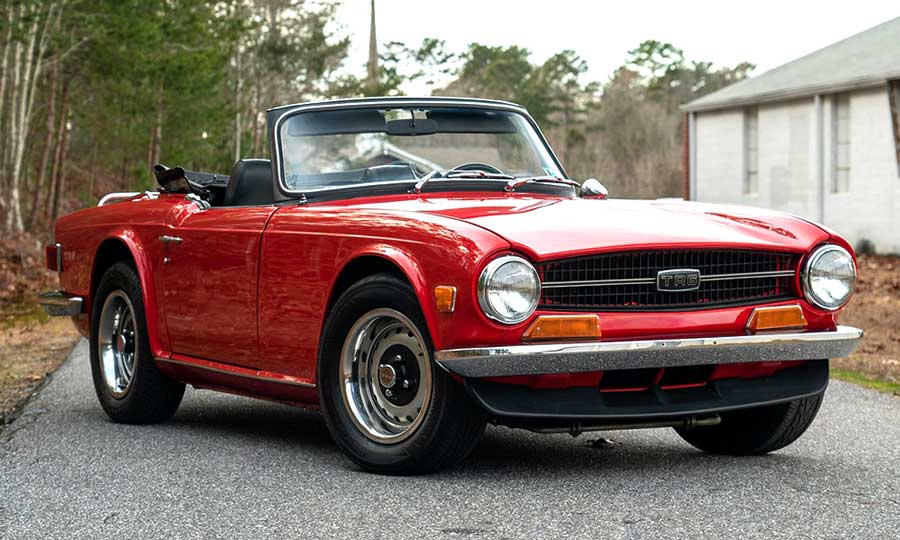
British classics you can buy right now - Life in Classic
The enduring appeal of British sports cars
For decades, British sports cars have anchored the collector scene. They are simple, light, and often open to the sky. More importantly, they invite community. Owners swap advice, share parts, and organize drives with ease. The cars reward gentle maintenance and deliver tactile feedback that modern machines rarely match.
Moreover, they look the part. Long hoods, curved fenders, and wire wheels still turn heads. However, the real magic happens behind the wheel. Steering feels alive, brakes ask for finesse, and engines sing when worked. Therefore, even a modestly powered roadster can make every back road special. As a result, enthusiasm for these classics remains strong.
Today, buyers can find honest, usable examples at prices that feel approachable again. Furthermore, recent sales show a clear path for first-time collectors. With so many clubs and specialists, support is close at hand. In short, the right British sports car still brings big smiles for relatively small money.
Market resets and fresh opportunities
Values for many classics peaked around 2014–2016. Since then, prices have eased, including for several beloved British models. Yet these cars still command real money and deserve respect. Importantly, the reset opened the door for new owners. Now, well-sorted drivers often sell in ranges that once seemed out of reach.
Additionally, character sets these cars apart. They will not win stoplight sprints against modern performance cars. Nevertheless, they deliver a purer connection to the road. Consequently, buyers who value feel over speed often find better joy per dollar here. Moreover, the market rewards documented maintenance and tasteful upgrades that improve reliability.
Therefore, shoppers can focus on condition, history, and usability. A strong mechanical baseline matters more than show paint. Still, originality and sympathetic restoration help value. In the end, the sweet spot is a clean, honest driver that starts readily, runs cool, and stops straight.
Spotlight: Austin-Healey 3000 and Lotus Elan
A 1962 Austin-Healey 3000 Mk II BT7 recently sold for $31,500 against a typical range of $27,000–$38,000. Notably, the car carried an older restoration and extensive recent work. The triple SU carburetors marked the brief Mark II setup, which adds interest. Additionally, fresh fuel system parts, cooling upgrades, and a generator rebuild supported the seller’s claim of careful sorting. In Colorado Red with black leather, it presented as a strong driver. Therefore, the price aligned with a well-prepared Big Healey powered by a robust 2.9-liter inline-six.
Meanwhile, a restored 1967 Lotus Elan S3 coupe also sold for $31,500, right in the $25,000–$38,000 band. The Elan’s fiberglass body over a steel backbone keeps weight low, and the Lotus twin-cam squeezes 105 hp from 1,558 cc. Moreover, the S3 fixed-head adds only about 80 pounds over the roadster. This car wore Carnival Red with a silver roof, a nod to Jim Clark’s Elan. Furthermore, sensible updates like an aluminum radiator, electronic ignition, and an alternator improved reliability. Thus, the sale underscored why the Elan inspired the Mazda Miata: light weight, quick reflexes, and huge charm.
Spotlight: Two ways into a Morgan Plus 4
For the analog purist, the Morgan Plus 4 remains a touchstone. A 1967 example, powered by a Triumph TR4 2,138-cc four rated at 105 hp, traded at $26,250. The car showed honest wear, some paint flaws, and signs of regular use. Even so, it drove well and fit squarely within the $23,000–$35,000 driver range. Additionally, it demonstrated how a cared-for Morgan can stay affordable without losing its essence.
By contrast, a 1962 Plus 4 in notably higher condition achieved $38,850, also market-correct at $30,000–$45,000. This car boasted a clean engine bay, a bright two-tone finish, and a documented history. Moreover, it received a new ash frame and factory-sourced interior during an earlier restoration, followed by a rolling refresh. Service records tallied roughly $48,000 in recent work. Therefore, the premium made sense. Buyers could see the difference in detail and presentation, and they paid accordingly.
Triumph and MG: Accessible Icons with Real Presence
A 1961 Triumph TR3A, refreshed after long-term ownership, sold for $21,000 within a $16,000–$25,000 range. Upgrades included TR6 front disc brakes, an aluminum radiator, and a modern thermostat. Furthermore, the seller addressed the fuel system and repaired several minor rust areas. Videos showed a car that started easily, idled smoothly, and drove with confidence. Consequently, the result reflected a well-prepared driver ready to enjoy rather than a project waiting for its next chapter.
MG enthusiasts found similar value. A 1967 MGB roadster changed hands for $16,800, comfortably within its estimated market range of roughly $13,500 to $21,000. Finished in an attractive period color with wire wheels and overdrive, it represented exactly the kind of car that continues to attract first-time collectors. Recent mechanical work, a tidy engine bay, and a presentable interior outweighed a few cosmetic imperfections. Rather than chasing concours perfection, buyers recognized it as an honest sports car built to be driven.
That has long been the MGB’s greatest strength. Produced in enormous numbers between 1962 and 1980, it enjoys one of the largest support networks in the collector world. Virtually every replacement part remains available, specialists are plentiful, and owners’ clubs exist throughout North America and Europe. Few classics offer such a low barrier to entry.
What Buyers Should Look For
Recent sales reveal a consistent pattern across the British sports car market. Documentation often matters more than flawless paint. Cars with detailed maintenance records, evidence of regular use, and thoughtful mechanical upgrades generally inspire greater buyer confidence than freshly restored examples with unknown histories.
Rust remains the single biggest concern. Buyers should carefully inspect floors, sills, chassis rails, suspension mounting points, and structural wood framing where applicable, particularly on Morgans. Mechanical components are usually straightforward and relatively inexpensive to rebuild, but corrosion can quickly turn an affordable purchase into an expensive restoration.
Tasteful upgrades also continue to receive positive market acceptance. Electronic ignition, aluminum radiators, improved cooling systems, alternators, and upgraded brakes all enhance reliability without diminishing the cars’ character. Most collectors view these improvements as practical rather than controversial, especially if the original components accompany the sale.
Ultimately, condition and usability continue to outweigh absolute originality for many buyers seeking a car they can enjoy regularly.
Driving Enjoyment Still Leads the Market
Perhaps the most encouraging takeaway from these recent transactions is that enthusiasm remains firmly tied to the driving experience. None of these cars offers overwhelming horsepower or modern refinement. Instead, they reward involvement.
The Austin-Healey delivers effortless torque and a muscular exhaust note. The Lotus Elan dances through corners with astonishing agility. Morgans combine vintage craftsmanship with remarkably direct steering. Triumphs provide rugged simplicity, while the MGB remains one of the friendliest classics ever built.
Each offers a distinct personality, yet all share the same philosophy: lightweight construction, mechanical honesty, and an emphasis on making every mile enjoyable.
That appeal has proved remarkably durable. While market values fluctuate, the experience behind the wheel changes very little.
A Healthy Market for Enthusiasts
The British sports car market today appears healthier than many expected a few years ago. Prices have moderated from their mid-2010s peaks, creating opportunities for buyers without signaling a collapse in demand. Quality cars continue to sell, rare models still command premiums, and well-maintained drivers remain highly sought after.
For newcomers, that makes this an excellent time to enter the hobby. Whether choosing the robust charm of an MGB, the elegance of an Austin-Healey 3000, the razor-sharp handling of a Lotus Elan, or the handcrafted character of a Morgan, buyers can still find rewarding classics without spending six figures.
Perhaps that explains why British sports cars continue to thrive generation after generation. They were never about outright speed or luxury. They were built to make ordinary roads feel extraordinary—and judging by today’s market, they still do exactly that.