
Five Eras of Porsche 935 Dominance
Porsche 935 at Life in Classic
Marking 50 Years of a Racing Phenomenon
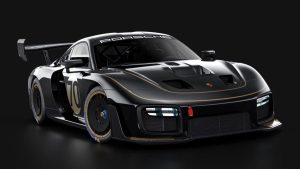
Fifty years after Porsche homologated the 935 in March 1976, the company is marking the anniversary with a five-part Porsche Heritage Moments series on YouTube. Hosted by Le Mans winner and World Endurance Champion Timo Bernhard together with legendary engineer Norbert Singer, the films revisit one of the most inventive and influential racing programs the brand ever built. For the first time, Porsche has assembled five major stages of the 935 story in one place: the original 1976 car, the 935/77, the 935/78 “Moby Dick,” the compact 935 “Baby,” and a 1977 test car later used in a cycling speed-record attempt.
That matters because the 935 was never just another fast 911 derivative. It became the machine that helped define the Group 5 era, a car that dominated the World Manufacturers’ Championship and shaped national and international racing from 1976 onward. Looking back at it now, what stands out is not simply the pace. It is the way Porsche kept interpreting the rules more cleverly, more aggressively, and often more elegantly than its rivals.
From 911 Turbo Roots to Group 5 Brilliance
The 935 began with the road-going 911 Turbo, the Type 930, but Group 5 regulations gave Porsche room to go far beyond a lightly modified production car. The rules required the basic identity of the 911 to remain visible, yet they also left enough space for radical rethinking in the areas that mattered most. Porsche widened the body, revised the aerodynamics, reworked the cooling, and steadily transformed the car into something far more specialized than its origins suggested.
Singer’s recollections from the first episode underline just how exacting that process was. The early 935 had to survive FIA scrutiny piece by piece, with every body panel and every interpretation of the regulations carefully defended. Even the cockpit was conceived around race-day practicality, including quick adjustment for different drivers in an era when pit-to-car radio was not yet part of the routine. That detail says a lot about the 935: it was sophisticated, but never detached from the hard realities of endurance racing.
The First Steps: 1976 and 1977
The first 935 established the basic formula. It looked dramatic, with swollen arches and a towering rear wing, but the visual aggression was tied to a clear engineering purpose. Porsche was learning how to make a turbocharged 911 not only quicker, but more stable and more durable over long distances. That combination of straight-line speed and race-long usability would become the real strength of the model.
By 1977, Porsche had already addressed one of the defining weaknesses of early turbo race cars: response. The 935/77 adopted twin turbochargers in place of a single large unit, improving drivability by cutting lag and making the power easier to manage. Singer also recalled changes to the bodywork and aerodynamics, including details as small as mirror placement and smoothing edges for better downforce. In other words, the 935 was evolving on every front at once. It was not a brute-force machine. It was becoming a highly resolved one.
The Courage to Go Smaller: 935 “Baby”
One of the most fascinating chapters in the 935 story is also one of the least obvious. The 935 “Baby” was not about maximum displacement or headline speed. It was about reduction. Porsche stripped the concept back for sprint racing, questioning every component and removing anything that did not serve the lap time. Singer described the approach as a relentless exercise in simplification, right down to drilling holes in the ignition key. The underbody was replaced by an aluminium frame, steel was removed where possible, and the result was a chassis that came in below the minimum weight limit.
Its 1.4-litre engine placed the car in the two-litre class, and that gave the “Baby” a very different character from the larger 935 variants. Bernhard describes it as calm below 5,000 rpm and suddenly much more demanding above that point. That change in temperament makes the little car especially interesting in retrospect. It was still unmistakably a 935, yet it showed that the platform could be adapted not only toward more power, but toward a completely different competitive logic.
Moby Dick and the Edge of the Rulebook
If the “Baby” represented discipline and restraint, the 935/78 “Moby Dick” represented the opposite extreme. When Singer saw the full potential of Group 5 in late 1977, he did not develop another mild variation of the 911. He pushed the concept to the edge of the regulations and produced a car designed above all for Le Mans. Its body broke decisively from the familiar 911 outline, chasing lower drag and greater high-speed efficiency with a stretched, unforgettable shape that justified its nickname.
Underneath that body was an equally important technical step. The 3.2-litre flat-six used twin turbocharging and introduced water-cooled four-valve cylinder heads on air-cooled cylinders. For sprint and World Championship races, output reached as much as 845 hp, while the Le Mans setup was deliberately toned down. Even so, the car reached 366 km/h on the Hunaudières straight, a figure that still gives the 935/78 its aura today. Its competition life was brief and limited to two cars, but its visual and technical impact far outlasted its race record.
Silverstone in 1978 provided a glimpse of what Porsche had created. In practice, the 935/78 was already markedly quicker than the rest of the field, and it went on to win the six-hour race by a commanding margin. That single result captured the essence of “Moby Dick”: not simply power, but the union of speed, low drag, and engineering daring. Singer later called it the crowning achievement of the entire 935 project, and it is hard to disagree.
The Prototype That Made Everything Possible
The fifth car in Porsche’s anniversary line-up may be the most revealing of all. The 1977 test car was not built for championship glory. It existed to think ahead. It raced only once at the Norisring, but its real value lay in development work, experimentation, and risk without consequence. Cars like that rarely become poster icons, yet they are often the ones that make the famous cars possible.
Its afterlife was even more unusual. Porsche later used the prototype in a speed-record attempt with French track cyclist Jean-Claude Rude, with the 935 acting as a pace car and targeting speeds beyond 240 km/h. That extraordinary detour says something essential about the model’s place in Porsche history. The 935 was not only a racing weapon. It was a mobile research platform, a machine that extended its usefulness beyond conventional competition.
Why the 935 Still Matters
The enduring significance of the 935 lies in the range of things it achieved at once. It was a works racer, a technical laboratory, and eventually a foundation for customer success. Porsche itself now describes customer racing as central to its motorsport identity, and the 935 became one of the clearest early proofs of that model. The development arc reached a peak with the works-run “Moby Dick,” but the broader legacy continued with customer teams, most famously when Kremer Racing took overall victory at Le Mans in 1979 with the 935 K3. That win made the 935 the first rear-engined race car ever to win the French classic outright.
Half a century on, that is why the 935 still feels larger than a single racing car. It was a mindset. The shape changed, the aerodynamics grew ever more radical, and the engines became more sophisticated, but the core idea remained constant: read the rules closely, solve the hard problems first, and never stop refining the car. Seen from that angle, the anniversary series is about more than nostalgia. It is a reminder that some of Porsche’s greatest racing achievements came not from staying within convention, but from redefining what convention allowed.