
The Loire Valley: A Region That Chooses Continuity Over Attention
Loire Valley at Life in Classic
The Loire Valley has never needed to reinvent itself. While other regions of France learned to perform for visitors, the Loire quietly refined a different proposition: a way of life rooted in continuity, scale, and restraint. It is not a destination that demands admiration. It is one that rewards familiarity.
People often associate the Loire Valley with châteaux, history, and pastoral landscapes—and all of that is true. Yet those elements alone do not explain why the region continues to attract the same kind of visitor: individuals who value permanence over novelty, rhythm over intensity, and depth over display.
The Loire Valley is not a place you conquer in a long weekend. It is a place that slowly adjusts your expectations.
Geography That Encourages Balance
Stretching along France’s longest river, the Loire Valley unfolds horizontally rather than vertically. The land is generous but never dramatic. Vineyards, fields, forests, and villages flow into one another without sharp transitions. Roads curve gently, often following paths established centuries ago.
This geography shapes daily life in subtle ways. Distances feel manageable. Time feels elastic. Nothing seems designed to impress at first glance, yet everything feels proportioned correctly.
As a result, life here resists extremes. There is no urgency to arrive early, no pressure to leave late. Meals take the time they need. Conversations unfold without agenda. Days organize themselves naturally around light, weather, and habit.
This balance is not accidental. It is cultivated.
A Region That Lives With Its History
The Loire Valley is rich in history, but it does not treat history as a performance. Châteaux coexist with farm buildings. Medieval towns function as modern communities. Old structures remain in use not because they are protected, but because they still work.
This practical relationship with the past defines the region’s character. Instead of freezing time, the Loire allows it to continue. Objects age. Buildings adapt. Traditions evolve quietly rather than disappearing or being staged for effect.
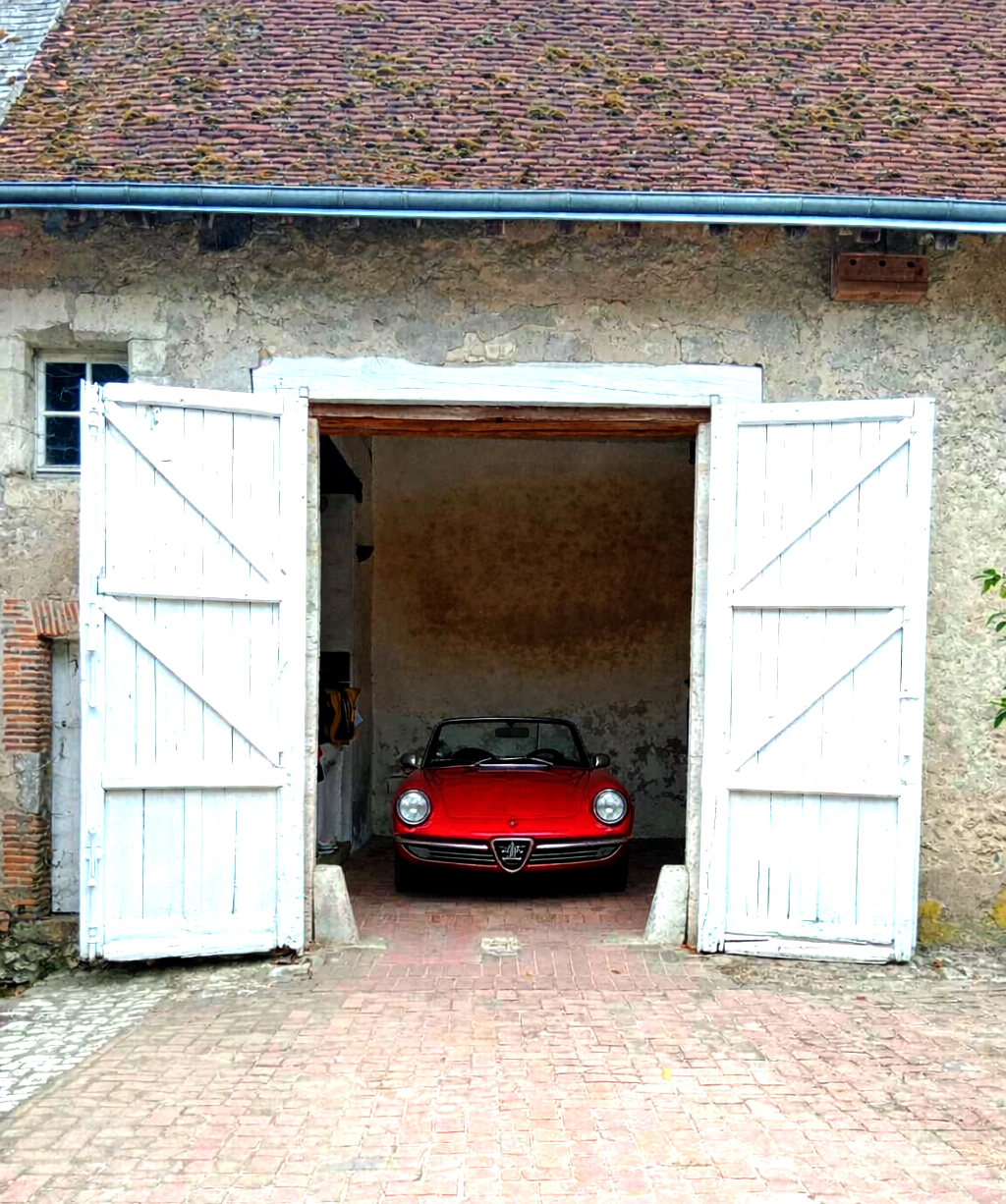
That same philosophy extends to lifestyle choices. Things are kept because they are meaningful, not because they are fashionable. A watch, a piece of furniture, or even a classic Alfa Romeo Spider is appreciated not as a statement, but as a companion—something used, maintained, and returned to rest when the day ends.
Luxury Without Display
Luxury in the Loire Valley operates on a different frequency. It is not loud, visible, or performative. Instead, it manifests as space, predictability, and discretion.
Homes tend to open inward. Gardens grow beyond strict boundaries. Roads remain refreshingly uncongested. Even wealth, when present, blends into the landscape rather than standing apart from it.
This discretion attracts a particular mindset. The Loire appeals to those who no longer need validation through visibility. People who choose the region often do so precisely because it allows them to live well without constantly signaling that fact.
Here, the greatest luxury is autonomy: the ability to structure life on one’s own terms.
Why the Loire Valley Feels Different
Many regions define themselves through contrast—coast versus inland, old versus new, tradition versus innovation. The Loire Valley avoids these binaries. It integrates them instead.
Modern life exists here, but it does not dominate. Technology serves convenience rather than speed. Progress happens without erasure. This creates a sense of coherence that is increasingly rare.
For visitors accustomed to destinations built around consumption, the Loire can feel understated at first. There are fewer highlights, fewer must-see moments. Over time, however, that absence becomes a strength. The region leaves space for interpretation.
You are not told what to admire. You discover it yourself.
Seasons as Structure, Not Spectacle
Unlike regions defined by a single peak season, the Loire Valley values the full calendar. Each season contributes something essential.
Spring brings renewal without excess. Summer offers warmth without urgency. Autumn settles into harvest and reflection. Winter turns life inward, toward workshops, kitchens, and long conversations.
Nothing here feels like an exception. Everything belongs.
This seasonal continuity reinforces a lifestyle that favors longevity. Objects remain relevant year-round. Roads invite driving when conditions feel right, not when schedules demand it. Life adjusts instead of accelerating.
The Appeal for Those Who Stay
The Loire Valley rarely captures attention in a single visit. Its appeal accumulates. People return because the region does not exhaust itself. There is always more time than expectation.
Those who eventually choose to stay often describe the decision as inevitable rather than dramatic. The region does not promise transformation. It offers alignment.
Life becomes quieter, but not smaller. Choices narrow, but meaning deepens. Focus improves.
This is not a place for reinvention. It is a place for refinement.
A State of Mind, Not a Statement
Ultimately, the Loire Valley is less about scenery than about attitude. It embodies a relationship with time that feels increasingly valuable: patient, continuous, unforced.
In a world that rewards immediacy and exposure, the Loire suggests another model. One where things are allowed to age. Where beauty does not require explanation. Where life unfolds at a pace that feels human.
That is why the region resonates so deeply with those who appreciate craftsmanship, heritage, and understatement. Not because it looks backward, but because it refuses to rush forward.
The Loire Valley does not ask to be admired. It asks to be lived with.
And for those who understand that distinction, it offers something rare: a life that feels complete without needing to announce itself.