
Voutilainen Retires Vingt-8, Debuts KV21 Era
Voutilainen KV21- Life in Classic
Farewell to the Vingt-8
Kari Voutilainen will close the book on his long-running Vingt-8 movement on December 31, 2025. After 17 years and countless variations, the platform that defined the modern Voutilainen aesthetic and feel is ending its production run. The final act is fittingly special: a compact moonphase called the 28MPR.
This change marks a turning point for a workshop that makes only around 60 movements a year and carries a decade-long wait list. The Vingt-8 was the brand’s first fully in-house calibre in 2008 and a watershed moment. It introduced Voutilainen’s large, adjustable balance and his signature dual-wheel natural escapement, seen in pieces from the 28Sport to the 217QRS. Now, as orders wind down, a new base, the KV21, steps in to shape the future.
The 28MPR: A Compact Moonphase Send-Off
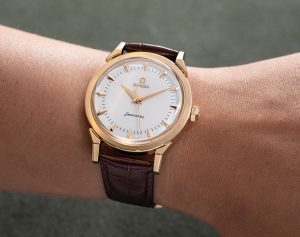
The 28MPR is the “Ultime VINGT-8,” and it plays to the brand’s strengths while trimming bulk. The case measures 37.5mm across and 12.6mm thick. A concave bezel softens perceived height, and straight lugs offer a crisp, modern stance. It reads smaller and cleaner on the wrist than many past iterations.
The dial is classic Voutilainen: four distinct hand-guilloché patterns, a power reserve at 12 o’clock, and a new moonphase disc rendered in deep blue Grand Feu enamel by Brodbeck Guillochage. The moonphase corrector is integrated into the crown, which keeps the case flanks clean and operation simple. Buyers can personalize colors and patterns, as usual for the atelier.
Production is tight: 15 pieces each in steel, titanium, and platinum, with the case, lugs, and crown made in-house. Pricing reflected the rarity and finishing: CHF 142,000 in steel or titanium and CHF 149,000 in platinum. If the order book is still open, it will close at year’s end 2025. Realistically, delivery sits far beyond that due to demand.
Inside the Finale: Craft and Mechanics
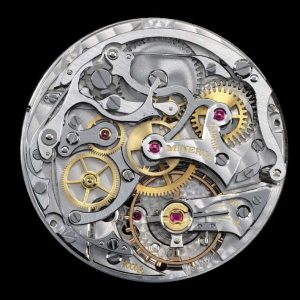
The 28MPR’s hand-wound movement carries 31 jewels and all the familiar Voutilainen signatures. German silver mainplates provide a warm, traditional base. Visible wheels are solid 18k gold, while other wheels use German silver. The two escape wheels, essential to the brand’s double direct-impulse escapement, are steel and sit low under the balance.
The balance is the oversized 13.5mm free-sprung design beating at 18,000 vph, with rose-gold timing weights. Voutilainen shapes the hairspring by hand with a Phillips terminal curve and a Grossmann inner curve. The result is resilient rate stability and long-term serviceability.
This architecture favors practicality over theatrics. Finishing is superb, yet never gratuitous. Bridges and wheels gleam where it matters. More importantly, the layout stays logical and repair-friendly. That approach has also meant the Vingt-8 base could grow thicker once complications arrived, as seen in collaborations like the LVKV-02 GMR 6. The 28MPR embraces that compromise, but does so with grace and clear purpose.
Enter the KV21: New Base, New Tonneau
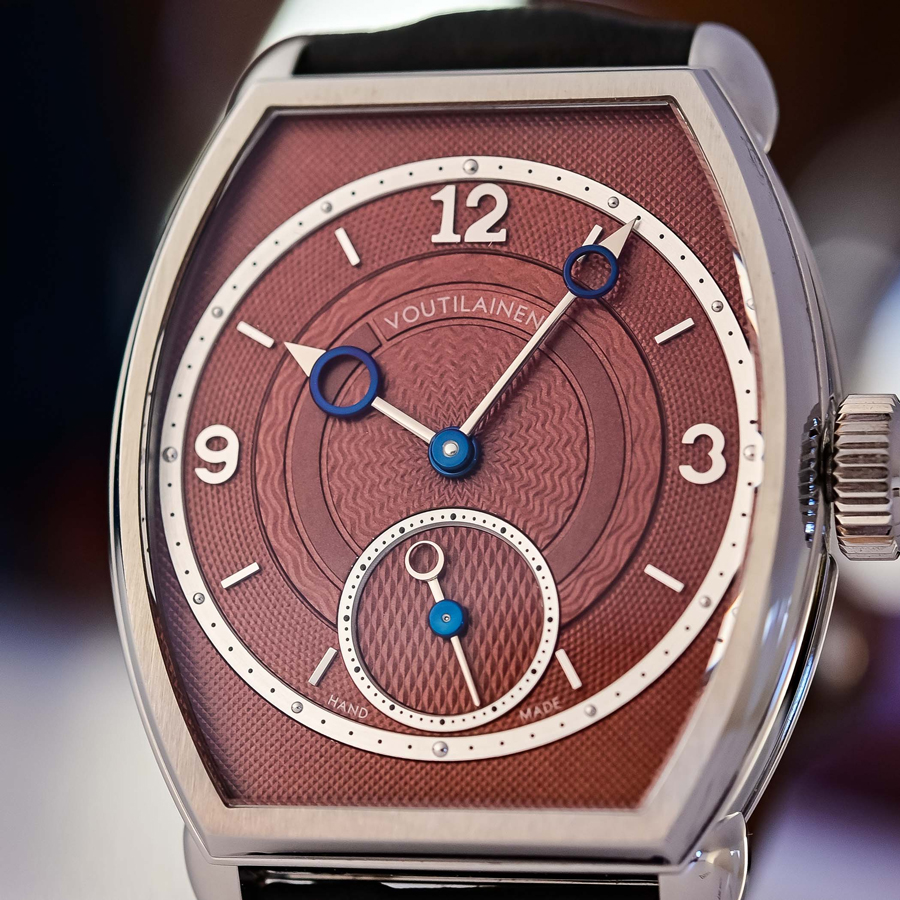
As one chapter closes, another opens. The KV21 is Voutilainen’s new hand-wound base, and it arrives in the brand’s first serially produced tonneau case. The movement takes cues from the KV20/KV20i architecture, yet it has been redesigned to favor dial-side complications without dramatically increasing thickness. Therefore, it sets the stage for more complex displays built with elegance and restraint.
On the wrist, the KV21 Tonneau feels compact: 39.5mm lug-to-lug and 35mm wide, with an 11.66mm thickness. If it were round, it would wear like a tidy 36mm watch. Teardrop lugs return here, preserving a house hallmark, while four large three-hole screws secure the caseback. The dial remains fully customizable, with intricate guilloché at the center.
Turn it over and the updates stand out. A bercé-polished single-arm balance bridge replaces the long two-arm support used on earlier calibres. The double direct-impulse escapement sits in clear view with its twin escape wheels grouped near the balance. The going train is more exposed as well, which improves visual clarity and aligns with the movement’s modular potential for dial-side work. Thanks to the direct-impulse design, the calibre can run a mainspring that is 30–40% weaker than a Swiss lever equivalent. As a result, wear is reduced and longevity improves.