
Pininfarina: A Century of Design Brilliance
Pininfarina - Italian Design at Life in Classic
Shaping Italian Style on a Global Stage
The Automobili Pininfarina legacy spans nearly a century, defined by beauty, elegance, and a relentless pursuit of innovation. From its origins in Turin to partnerships with the most storied automakers, the design house set the tone for what an automobile could look and feel like. Moreover, a new documentary titled “A Legend: Pininfarina” captures this journey with warmth and insight. It honors the craft, the family, and the brand that translated Italian style into a universal language. Today, that same creative pulse continues to guide Pininfarina across industries and eras.
Roots of the Automobili Pininfarina legacy
The story begins in 1930, when Battista “Pinin” Farina founded Carrozzeria Pinin Farina in Turin. He had trained in his brother’s workshop, yet he aimed higher from the start. He envisioned coachbuilt bodies that married grace with aerodynamic efficiency. That was forward-thinking at the time.
The first showcase was a special-bodied Lancia Dilambda in 1931. It signaled a new sensibility: refined lines, purposeful proportions, and a focus on the driver. Soon, discerning clients took notice. Consequently, Pinin Farina emerged as a name associated with taste and progress. The foundation was set for a long arc of innovation.
The Ferrari alliance and defining icons
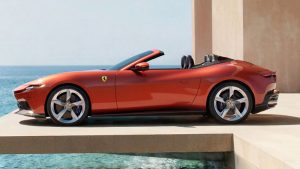
In 1951, a meeting in Tortona between Battista Pininfarina and Enzo Ferrari began one of the most enduring partnerships in automotive history. Over the next six decades, Pininfarina shaped the look of nearly every road-going Ferrari. The results were unforgettable. Think of the 250 GT Berlinetta Lusso, the 365 GTB/4 “Daytona,” the elegant 275 GTB, the mid-engine Dino 246 GTS, and the pop-culture phenomenon Testarossa. Each model blended power with proportion, and emotion with clarity.
Yet Pininfarina’s artistry stretched beyond Maranello. The studio’s groundbreaking 1947 Cisitalia 202 helped define the modern automotive form. Additionally, collaborations with Lancia, Alfa Romeo, Peugeot, and many others broadened its reach. The Alfa Romeo Giulietta Spider, produced from 1955 to 1965 across the 750 and 101 series, became a postwar symbol of carefree Italian motoring. Even today, collectors still seek pristine examples, including a 1958 Giulietta Spider Veloce and a 1990 Ferrari Testarossa that recently appeared on enthusiast marketplaces.
Beyond cars: design without borders
Pininfarina never confined itself to automobiles. As the company matured, it carried its human-centered design philosophy into new fields. Trains, yachts, industrial machinery, and architecture all benefited from the same attention to proportion and flow. Moreover, Automobili Pininfarina designed the Olympic torch for the 2006 Turin Winter Games, a symbol of movement and spirit. In every arena, the studio treated function and emotion as partners.
Under Mahindra Group ownership, the brand has accelerated into an electric future. Automobili Pininfarina debuted the Battista hypercar, a battery-electric tribute to the founder. It pairs astonishing performance—up to 1,900 horsepower—with quiet confidence and sustainable intent. Therefore, the company’s past and present connect in a cohesive vision: beauty that performs and technology that inspires.