
Classic MG TF Reborn as Electric Roadster
MG TF Electric - Life in Classic
From Idea to Blueprint
An MG TF with electric power now turns heads for all the right reasons. The project began as a vision to revive a classic with modern propulsion, while keeping its character intact. It also channels a car British Leyland once explored but never produced at scale. After years of research, planning, and parts hunting, the build moved from concept to reality.
The owner sourced a rare MG TF 1800 and mapped out a path for a full electric conversion alongside a careful restoration. Rather than outsource everything, he designed the layout himself and coordinated specialists to execute it. The result took about two and a half years. It demanded craft, persistence, and an eye for detail at every step.
Engineering the Electric Heart
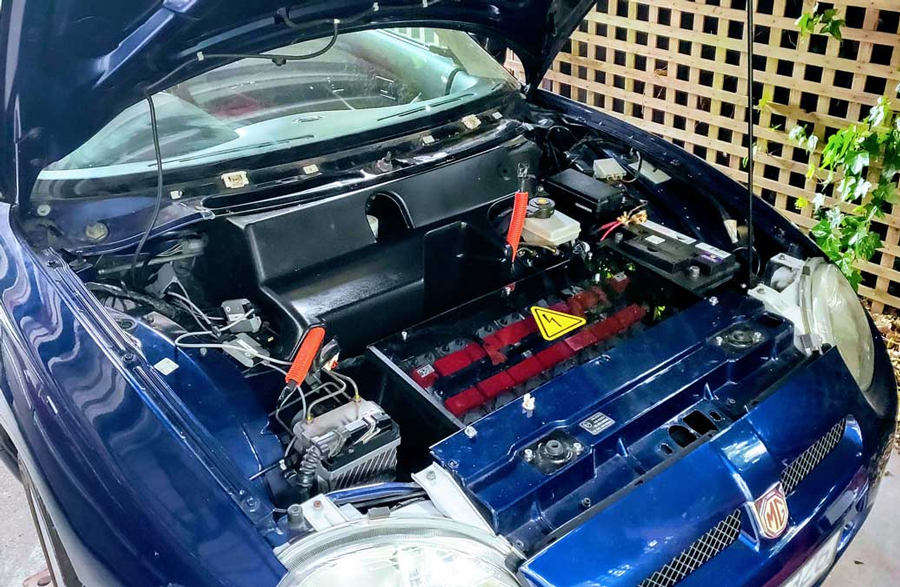
At the core sits a NetGain Hyper 9 motor and controller. The unit is rated at 96% efficiency and delivers about 120 horsepower while weighing only 120 pounds. Five Tesla Model S battery modules supply energy. Together they create a balanced, responsive powertrain with instant torque and a calm, confident feel.
Crucially, the conversion preserved the car’s original mass. The total weight matches the stock figure. However, the distribution improved, and the center of gravity dropped. Therefore, the car handles with more predictability than many expect from a 1950s design. It also accelerates briskly yet smoothly, which suits the TF’s light, nimble character.
Packaging, Balance, and Craft
Fitting everything within a compact British roadster required creativity. Several professionals warned the full component set would not fit. So the owner turned to “cardboard-aided design.” He measured, cut, and trial-fitted templates for every major component. Piece by piece, he refined the shapes until the layout worked, with just an eighth of an inch to spare.
Three battery modules now sit above the motor in the former engine bay. Two more tuck under the right seat and in the space once used by the fuel tank. Engine-turned conduits atop the front battery box carry coolant lines and echo the polished detailing of 1950s Jaguars and Astons. The visual language feels period-correct, even as the hardware is thoroughly modern.
On the Road and In the Cabin
Twisted Voltage, an EV specialist shop in Purcellville, Virginia, handled the complex wiring, programming, and system testing. The original four-speed transmission remains in place with an upgraded clutch. In daily driving, the car can run in third gear most of the time, and the clutch sees little use.
Performance is lively yet approachable. The steering and ride feel like a classic British sports car, but the response is more immediate. Regenerative braking aids control and adds efficiency. Meanwhile, LED lighting improves visibility. Custom Speedhut gauges deliver accurate data with vintage-inspired looks. A period-upgrade Butler mahogany steering wheel pairs with a Santos Rosewood dashboard for warmth and style. Three-point retractable seatbelts and heated seats add comfort and safety without disturbing the original vibe.
Conversations on the Curb
Since completion, the car has appeared at Cars and Coffees, farmers’ markets, and local gatherings. Crowds form quickly. Some people see a novelty at first. Others want technical insight into batteries, charging, and reliability. The owner fields questions all day and welcomes debate about the benefits and limits of EVs. These discussions often bridge enthusiasts and newcomers, which keeps the conversation lively and informative.
As a result, the car serves as a rolling ambassador for classic-electrics. It proves that heritage and innovation can coexist. Moreover, it shows that thoughtful engineering can enhance the original experience instead of replacing it. The project invites people to imagine more creative paths forward for beloved machines.
A Rare Heritage, Reimagined
The underlying car is an MG TF 1800, often known as the Victor tribute model. Only a few dozen exist. In the 1970s, a small shop in Victor, New York, developed a stronger chassis and accurate body panels. Their goal was practical: rescue rusty MGs by giving MGB engines and running gear a new home that looked like a 1954 TF. Front disc brakes and sturdier components improved performance and safety, while the body panels matched factory TF shapes so well that many parts were interchangeable.
The result felt authentic and drove better than the original TF 1500. Reportedly, the concept impressed British Leyland. A commemorative order was discussed for more than a thousand cars. Unfortunately, the tiny firm could not scale to meet that demand, and it closed soon after. Today, surviving TF 1800s are prized for combining classic form with robust MGB underpinnings. This electric build extends that story. It respects the period design, yet it embraces a quiet, efficient future. In doing so, it keeps a rare chapter of MG history alive and on the road.