
How Color Transforms a One-Off Rolls-Royce
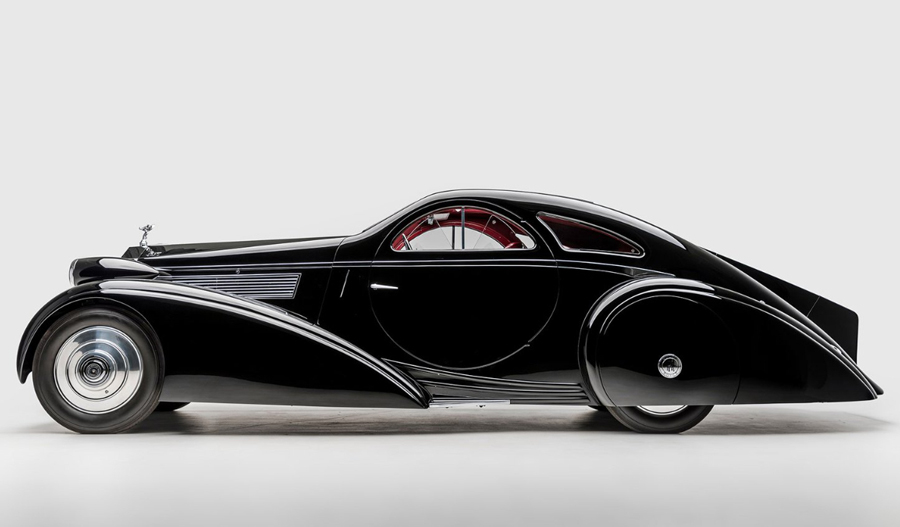
Rolls-Royce Phantom I known as the Round Door - Life in Classic
Color and the Life of Classics
Vintage cars tell stories beyond their badges and price tags. Over time, many have been modified, repainted, and reimagined, no matter how rare or prestigious they were when new. Even Rolls-Royce models have not escaped fresh paint and bold reinventions. Among them, few are as striking as the one-off Rolls-Royce Phantom I known as the Round Door, a machine whose identity has shifted as often as its hue.
Color does more than protect metal. It shapes mood, signals intent, and frames history. For this singular Rolls-Royce, paint has marked its chapters. Each finish has cast the car in a different role, from flamboyant spectacle to menacing grand tourer. Consequently, the Round Door stands as a vivid case study in how shade and sheen can transform a legend without changing a line of metal.
Today, the car resides in The Vault at the Petersen Automotive Museum. There, its black exterior and red leather interior give it an air of drama and authority. However, the gloss you see now is only the latest expression in a long, wandering life.
From 1925 Chassis to 1934 Dream
The Round Door carries two model years for good reason. The story begins in 1925 with a Rolls-Royce Phantom I chassis fitted with a Cabriolet body by Hooper & Co. After delivery, the car passed to the Raja of Nanpara in India. Then its journey took a dramatic turn. In 1934, a new owner sent the Phantom to Jonckheere in Belgium for a complete rebirth.
What emerged was a design unlike anything else on the road. The Jonckheere body featured a sloping radiator grille cover, dual sunroofs, semicircular fender skirts, and a louvered rear. Additionally, a side-hinged trunk wore a prominent central fin. Most unforgettable of all were the signature round doors, which gave the car both its nickname and its unmistakable presence.
Even today, those curves command attention. The proportions are grand yet purposeful, and the details look both theatrical and aerodynamic. As a result, the Round Door has remained a touchstone for custom coachwork and a reminder that the interwar era encouraged bold ideas carried out with precision.
A Globe-Trotting Survivor With Many Hues
Like many great cars, the Round Door did not stay in one place for long. Over decades, it changed hands across continents and gathered an aura of myth. Some once thought it belonged to the Duke of Windsor, though that claim remains unverified. What is certain is that the car experienced both celebration and neglect.
By the early 1950s, it surfaced in New Jersey in near-derelict condition. Then, a showman named Max Obie acquired the car and found a new way to draw crowds. He had it painted gold and charged one dollar to view it inside a special enclosure. The idea was simple but effective. Moreover, it proved that the Round Door could captivate audiences on novelty alone, regardless of provenance.
These chapters illustrate how a rare object can pass through hands that value it for different reasons. Sometimes it serves as fine art. Sometimes it acts as spectacle. Yet, through it all, the car survives and gathers more layers of meaning—along with new coats of paint.
The Surprise of an All-White Phantom
The Round Door’s color history did not end with gold. Evidence shows that in the 1980s the car wore an all-white finish. America’s Packard Museum hosts images from the Automobile Quarterly collection dated 1989. In those photographs, the Rolls-Royce appears in white with wide whitewall tires, its lines softened and its presence reimagined.
Archival discoveries like these change how we see well-known cars. They also demonstrate the value of museum collections and careful documentation. Furthermore, they remind us that even definitive histories evolve as new material emerges. The Round Door’s white phase feels almost cinematic—less sinister, more ethereal—yet still undeniably bold.
It is easy to assume the current black-over-red combination is original or permanent. However, the record shows that taste, fashion, and ownership each left their mark. Because of that, the car’s identity becomes richer, not muddled. Each finish highlights a different facet of the same sculpture in motion.
When Paint Sets the Mood
Paint does not change a chassis number or a coachbuilder’s signature. Still, it can shift our emotional response in an instant. In black with red leather, the Round Door channels a shadowy elegance. It looks like the refined villain’s choice in a spy thriller, a car with presence and menace to match its mass. In white, the same lines read like a hero’s vessel in a bright, utopian future. The forms do not change, yet the mood transforms.
This effect underscores why color matters so much in the classic world. It influences judging, public perception, and even value. Moreover, it guides restoration decisions that ripple through time. Choose one shade, and a car becomes dramatic sculpture. Choose another, and it turns into rolling architecture. Therefore, selecting a finish is never a trivial act, especially for a one-off.
With its dramatic contours and unmistakable doors, the Rolls-Royce Phantom I Round Door would likely look compelling in nearly any color. The black-over-red treatment emphasizes power and ceremony. The white finish suggests grace and fantasy. Both are valid readings of the same masterpiece. Ultimately, that is the power of color: it lets a storied car speak in many voices while its character remains intact.