
Jay Leno Salutes America’s Fearless Racing Heritage
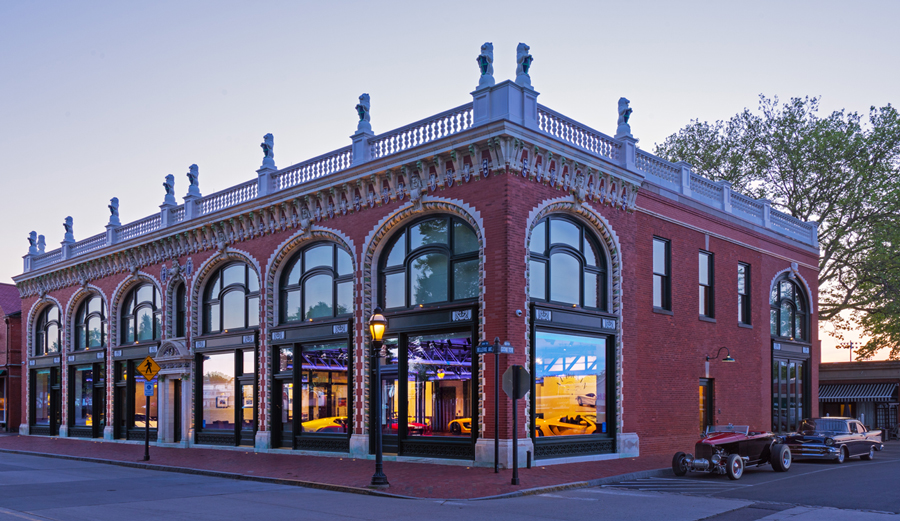
Audrain Museum collection at Life in Classic
Jay Leno has long been a champion of mechanical storytelling, and in a recent episode of Jay Leno’s Garage he turned the spotlight on a chapter of American racing that still thunders with energy decades later. The program becomes an affectionate yet clear-eyed salute to the inventiveness and nerve that defined U.S. motorsport through the 1950s and 1960s—a period when backyard ingenuity took on polished European pedigree and often came out ahead.
The featured cars are drawn from the Audrain Museum collection, and together they present a compelling snapshot of that audacious spirit. Leno, joined by appraiser and historian Donald Osborne, doesn’t just admire the metal; he explores the minds and moments that forged it. The result is part road test, part history lesson, and fully an ode to the people who built and raced these machines with more determination than resources.
First up is the 1959 Buick Old Yeller II, a famously rough-and-ready special that earned its scrappy reputation by beating more sophisticated machinery. Its plainspoken bodywork and workmanlike construction belie a giant-slaying heart. On American circuits, it regularly harried—and sometimes humbled—exotics from Ferrari and Maserati. The car’s legend was born not out of polish but out of pluck: clever engineering, robust American power, and the confidence to push where others hesitated. In motion, it conjures a time when speed was pursued with equal measures of courage and common sense, when the stopwatch cared little about prestige and everything about execution.
The program then rolls back the curtain on a very different expression of American racing: the 1955 Curtiss Craft Sprint Car. Stripped to essentials and bristling with purposeful menace, it embodies the tough, hands-on culture of dirt oval competition. The exposed-tube chassis is a gallery of practicality, every weld a reminder that form followed function, often within inches of danger. Under the hood, an Offenhauser four-cylinder—one of the most storied names in American power—delivers the kind of immediate, visceral thrust that defined early open-wheel battles. Drivers of the era needed bravery to match their skill; tracks were unforgiving, and the margin for error was razor-thin. This sprint car captures that tension: compact, raw, and built to wrestle victory out of chaos.
Completing the trio is the 1963 Shelby King Cobra, a masterclass in power-to-weight thinking that became a Shelby signature. Its recipe—pair a featherweight British Cooper chassis with a forthright Ford 289 cubic inch V8—was both simple and brilliant. The result was a car that accelerated with ferocity and danced with agility, an American answer to European road-racing finesse that valued aggression and balance in equal measure. The King Cobra helped define an era when the right combination of parts and philosophy could rewrite the competitive landscape, and when American teams were as likely to innovate in a garage as in a laboratory.
Throughout the episode, Leno and Osborne underscore a deeper theme: these cars are significant not only for lap times or trophies but for their human stories. They represent a culture where persistence filled the gap between ambition and budget. Owners, builders, and drivers worked with what they had—factory iron, home-machined parts, ideas scribbled on napkins—and then tested those ideas at full speed. That ethic feels resonant today, especially in a world where performance is too often measured by spec sheets rather than spirit.
The conversation also touches on the emotional dimension of collecting. Values matter, but provenance, personality, and provenance are what truly make enthusiasts’ hearts race. To own something like Old Yeller II or a Shelby King Cobra is to connect with a living lineage of risk-takers—people who experimented, failed, tried again, and sometimes surprised the world. It is an inheritance of grit as much as it is of metal.
Even viewed through a modern lens, these machines retain their power to captivate. They sound different—angrier, more alive. They move differently—less insulated, more communicative. And they ask different things of their drivers—judgment, restraint, nerve. In celebrating them, Leno isn’t just looking back; he’s reminding us that racing’s soul is found in the desire to push beyond the expected. The details of technology have changed, but the impulse that built these cars—the urge to innovate boldly and race bravely—remains timeless.
In the end, the episode is more than a guided tour of rare hardware. It is a tribute to an American moment when resourcefulness could outrun refinement, and when a small team with a big idea could stand wheel-to-wheel with the best in the world. The Audrain Museum’s trio offers an ideal lens for that story: a homebuilt hero that punched well above its weight, a sprint car that distilled competition to its essence, and a Shelby that proved power and lightness could be America’s most potent combination.