
Rare 1934 Lincoln Comes Home After 70 Years
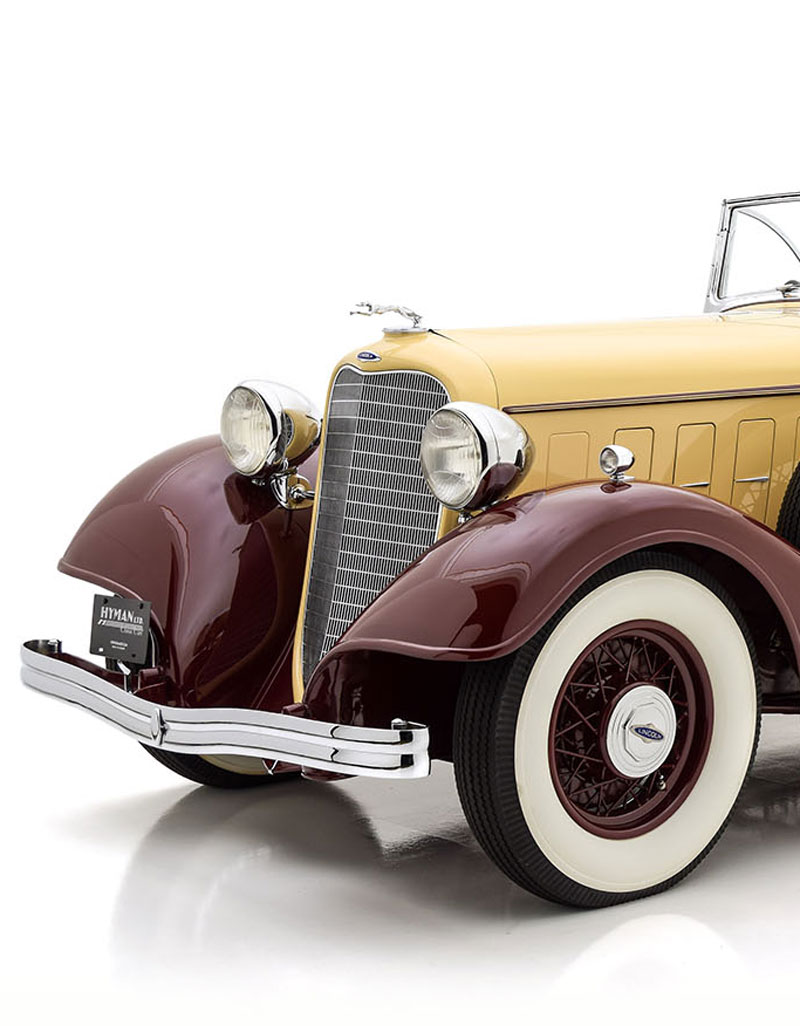
1934 lincoln kb at life in classic
The story of American cars is often a story of families—of craftspeople, caretakers, and those who see more than metal in a machine. Few tales capture that bond better than the journey of this 1934 Lincoln KB LeBaron convertible coupe, an ultra-rare survivor that left one family’s hands six decades ago and, against the odds, found its way back.
Built at the depths of the Great Depression, the KB represented Lincoln at its most ambitious. Coachbuilt by LeBaron on a majestic 145-inch wheelbase, this convertible coupe was one of just 45 produced in 1934; today, only three examples are known to exist. This very car was the 43rd built—a towering statement of style and engineering at a time when such extravagance was all but unthinkable.
The KB’s significance runs deeper than its scarcity. It marked Lincoln’s reinvention, a move away from the Model L of the 1920s into something more technically advanced and refined. The K line debuted in 1931, initially with a V8; by 1932, the flagship KB embraced a new L-head V12 that would power Lincoln’s grandest cars through the 1930s. For 1934, Lincoln introduced a 65-degree, 414-cubic-inch L-head V12, factory-rated at 150 hp—smooth, silent, and torquey. It’s worth remembering this engine has nothing to do with the later Lincoln-Zephyr V12; the KB’s powerplant is its own, larger-bore aristocrat. A three-speed manual, vacuum-assisted drum brakes, and leaf springs on both ends carried a curb weight around 5,300 pounds with serene composure.
Lincoln’s clientele in those years bought not just a car, but a bespoke experience. The company offered a broad catalog of coachwork from Lincoln’s own studios and elite partners such as Judkins, Willoughby, and, most prominently, LeBaron. Edsel Ford forged ties with LeBaron early on—co-founder Ray Dietrich moved the firm to Detroit in the 1920s—and the partnership flourished. Of 2,411 Lincolns built in 1934, few were as dramatic as a LeBaron-bodied KB convertible coupe.
This particular KB began life in Phoenix, delivered new to the Tovrea family, meatpacking magnates who built one of the city’s notable manor houses. Its second life started in 1957, when Phoenix landscaper and early Classic Car Club of America figure James Owen Rodgers discovered the Lincoln completely disassembled. He trucked it home in pieces—some scooped up with a shovel—and set to work. Parts were scarce in those days; he hammered a soup ladle into shape for a bumper-bolt cover and had the interior stitched locally using the remnants as patterns. He mowed lawns by day and wrenched by night, under a bare carport, often to midnight.
By 1963, the restoration was complete. Father and son—James and a young Jim—drove the freshly finished car through the desert night to Redondo Beach for a CCCA meet, where it took first in class, edging out Russ Jackson. It was, by their recollection, the 99th car the CCCA had judged to that date. And then, almost immediately, James sold it: $4,000 and a 1941 Cadillac from Tom Barrett. An ad soon after showed Barrett offering the Lincoln for $7,000—proof that even legends have market moments.
The KB journeyed on. After a brief California stop, it settled with Wisconsin collector Del Beyer for 50 years and even appeared in Beverly Rae Kimes’s 2001 book The Classic Era. When Beyer passed, the Lincoln surfaced on RM Sotheby’s website, crediting both Barrett and James Owen Rodgers in its provenance. It migrated briefly to Canada, then joined the all-Lincoln collection of Baltimore contractor John Fischer.