
Glashütte Masterpieces at Phillips New York
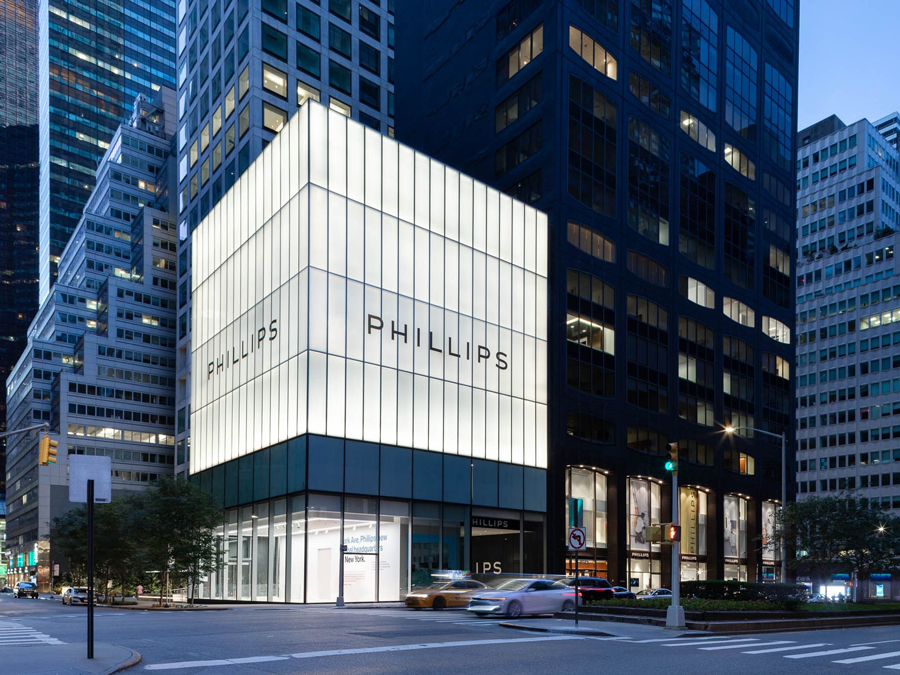
Phillips’ New York headquarters will host a rare gathering of German horological excellence
From December 3 to 5, Phillips’ New York headquarters will host a rare gathering of German horological excellence. The exhibition, curated by renowned scholar-collector Dr. Helmut Crott, marks a fitting moment in watchmaking history: 150 years since the death of Ferdinand-Adolph Lange, whose vision helped transform Glashütte from a quiet town into a global center for fine timekeeping. While the conversation around haute horlogerie often leans Swiss, this exhibition reminds visitors that the story of precision watchmaking has long been broader—and that Glashütte has consistently matched the best anywhere.
The showcase is part of a traveling exhibition organized by Phillips and drawn entirely from Dr. Crott’s personal holdings. It spans nearly two centuries of Glashütte craft and ingenuity, weaving together the legacy of A. Lange & Söhne with the work of inventive independents and influential contemporaries. Dr. Crott’s deep engagement with the region’s watchmaking is documented in an essay on Phillips’ website, where he traces a path that began with his early interest in specialized watch auctions and took a decisive turn after encountering a 1930s flying tourbillon pocket watch. From that moment, his focus on Glashütte’s most inspired creations only intensified.
Visitors can expect a thoughtfully assembled narrative told through metal, enamel, glass, and gear. Among the centerpieces is a 1921/1931 Bruno Reichert flying one-minute tourbillon pocket watch with power reserve (Up/Down) and a traditional chain-and-fusee transmission. The piece is distinguished by a tiny planetary gear hidden within the fusee—a clever solution that keeps power delivery constant while the watch is wound. Its influence resonated decades later: A. Lange & Söhne’s Tourbillon Pour le Mérite of the 1990s became the first wristwatch to use a chain-and-fusee system, and it too integrated a planetary gear within the fusee, a clear nod to the Glashütte innovations that came before.
Another highlight reaches further back in time: a circa 1820 pocket watch by Johan Christian Friedrich Gutkaes, marked as No. 9. Works like this illuminate the roots of Saxon watchmaking well before the industrial and aesthetic refinement that defined the late 19th and early 20th centuries. This early piece forms a prelude to the rich lineage on display.
From the realm of complications, a unique A. Lange & Söhne Grande and Petite Sonnerie pocket watch from around 1911 impresses on multiple fronts. The watch combines a minute repeater with both grand and small strike functions, but it is the choice of materials that catches the eye: mineral glass is used for both the dial and the caseback, an audacious call for the era that lays bare the mechanics within. The transparency turns a complex chiming mechanism into a live demonstration of craft.
Precision—measurable, repeatable, and pursued with scientific rigor—has always been a Glashütte hallmark. The exhibition underscores this with watches such as the A. Lange & Söhne Half-Second Chronometer Deckwatch No. 92307, outfitted with a Glashütte-style pivoted detent escapement and a power reserve indicator. Deck chronometers like this were tools as much as treasures, designed to deliver steadfast accuracy when it mattered most. Alongside it, a Hans Carl Conrad flying one-minute tourbillon represents the pursuit of stability through ingenious architecture, a refinement