
Mullin Collection Finds a Forever Home at Petersen
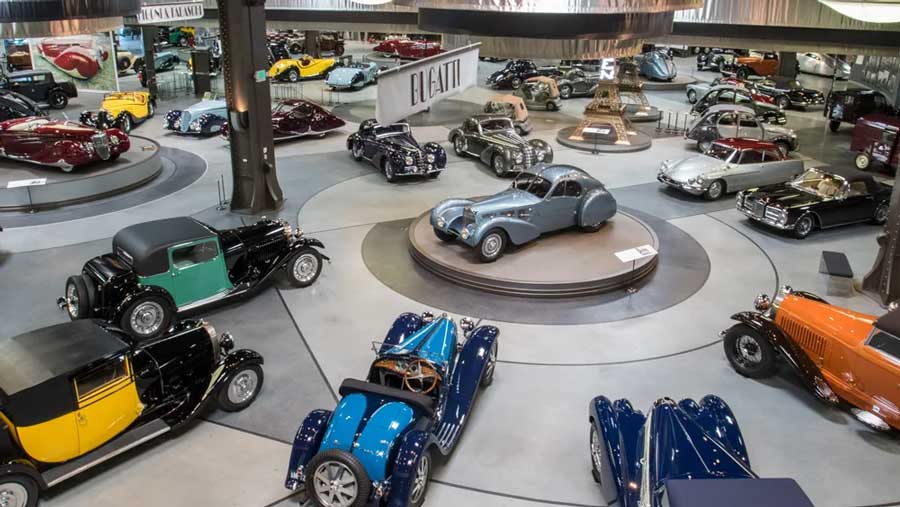
The mullin automotive collection at life in classic
A historic home for the Mullin Collection
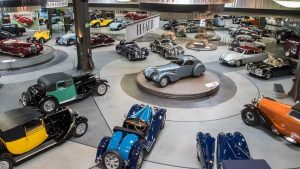
The Petersen Automotive Museum has become the permanent home of the celebrated Mullin Collection, a move that reassures enthusiasts worldwide. After the closure of the Mullin Automotive Museum in Oxnard, many feared these pre-war treasures would vanish into private vaults. Instead, the cars will remain accessible, interpreted, and preserved in Los Angeles. The collection is best known for its French Art Deco masterpieces, daring coachwork, and competition pedigree. Together, they tell a story of speed, style, and engineering courage from an era that shaped the modern automobile.
Moreover, the transition marks a milestone for cultural preservation. It strengthens the Petersen’s role as a guardian of automotive history. It also builds on the museum’s push to pair striking design with deep technical narratives. Therefore, visitors will not only see great cars. They will also discover why these machines mattered then and still matter today.
A gift that keeps cars in public view
Thanks to a landmark gift from the Mullin Family Foundation, the heart of the collection will stay in the public eye. The transfer aligns with the late Peter Mullin’s vision to celebrate design, engineering, and the French carrosserie tradition. He served on the Petersen’s board and helped guide its major redesign a decade ago. As a result, this new chapter honors his leadership while securing the future of cars he championed.
In practice, the partnership ensures display, scholarship, and careful maintenance under one roof. Researchers will gain steady access to period technology and provenance records. Furthermore, families and first-time visitors will meet the sculptural beauty that defined an age. The museum notes that the collection will be rotated to balance conservation with visibility. Photos courtesy of the Petersen Museum.
Delahaye masterpieces and pre-war performance
At center stage stands the 1937 Delahaye Type 145, known as the “Million Franc Delahaye.” Driven by René Dreyfus, it shattered expectations and challenged German dominance. Its success proved that ingenuity, balance, and reliability could outwit brute power. Even now, its purposeful stance and mechanical clarity feel modern.
Nearby, the 1939 Delahaye Type 165 V-12 Cabriolet commands attention. Debuted at the New York World’s Fair, it fused theatrical bodywork with sophisticated engineering. The long, enveloping fenders and low roofline promised speed even at rest. Meanwhile, its multi-carbureted V-12 delivered smooth, abundant power. Together, the 145 and 165 show how Delahaye bridged road and track, and how French designers wrapped advanced chassis with aerodynamic art. Consequently, they anchor the collection’s appeal to both aesthetes and engineers.
Avions Voisin and the art of innovation
Gabriel Voisin brought aviation thinking to the road, and the collection documents that leap. The 1935 Avions Voisin Type C25 Aérodyne highlights weight distribution, airflow, and a remarkable retractable roof. Operated by a dedicated pneumatic system, it anticipated later approaches to comfort and versatility. Additionally, its interior geometry and materials broadcast the crisp spirit of Art Deco.
Alongside it, the 1934 Voisin Type C27 Aerosport Coupé reconstruction and the 1934 Grand Sport Roadster extend the theme. They use sleeve-valve engines noted for quiet, refined delivery. Moreover, their sharp lines and inventive details show a maker unafraid of experimentation. In this light, Voisin’s work reads like an engineering manifesto. It insists that technical progress and visual daring can move in lockstep. Therefore, these cars feel radical even today.
Bugatti lineage and what comes next
No survey of pre-war France is complete without Bugatti. The Petersen’s Mullin Collection features a nimble Bugatti 1926 Type 37A, whose supercharged 1.5-liter overhead-cam four made a giant-killing racing tool. It delivered lively power in a compact package, and it rewarded precise driving. Consequently, it became a favorite in period competition.
Moving up the ladder, a 1931 Type 50S with Million-Guiet coachwork showcases the marque’s dual-overhead-cam straight-eight. Built to straddle grand touring
and competition use, it combined immense performance with genuine long-distance ability. Its proportions remain disciplined rather than flamboyant. Nevertheless, the car possesses the authority expected from one of Molsheim’s most advanced creations.
The story continues with the 1939/49 Bugatti Type 57SC Atalante and the 1951 Type 101C by Gangloff. These later machines reveal how Bugatti’s visual language survived political upheaval, war, and a rapidly changing marketplace. The Atalante remains compact, muscular, and unmistakably shaped by Jean Bugatti’s influence. By contrast, the Type 101C represents an attempt to carry the marque’s elegance into the post-war era. Together, they trace both the height of Bugatti’s pre-war confidence and its difficult search for a new direction.
Talbot-Lago, Hispano-Suiza, and the great coachbuilders
The collection reaches beyond its headline Bugattis, Delahayes, and Voisins. A 1937 Talbot-Lago T150-C-S “Teardrop” Coupé demonstrates why French coachbuilding became an art form in its own right. Its flowing body appears almost seamless, with the wheels, fenders, roof, and tail composed as a single sculptural gesture. Beneath that elegant shape sits a capable sporting chassis, proving once again that beauty and performance were not opposing ideas.
Hispano-Suiza contributes a different character. The 1922 H6B “Skiff Torpedo” reflects the luxury and craftsmanship of the early interwar period, while the 1937 K6 Break de Chasse brings an unusual sense of purpose. Designed as an elegant sporting estate, it combines formal proportions with the utility required for outdoor pursuits. As a result, it broadens the exhibition beyond conventional coupés, roadsters, and racing cars.
Peugeot also earns an important place. The 1937 402L Eclipse by Pourtout features a retractable metal roof, an idea that would become familiar decades later. Meanwhile, the 302DS Darl’Mat Cabriolet demonstrates how a mainstream manufacturer could create something genuinely exotic through collaboration with a skilled dealer and coachbuilder. These cars remind visitors that innovation did not belong only to the most expensive marques.
A first exhibition with a larger future
The Petersen introduced the collection through “A Legacy of Excellence: Masterpieces from the Mullin Collection,” which opened in the museum’s Vault on July 18, 2026. The intimate setting allows visitors to examine details that can disappear in a larger gallery, from intricate instruments and handmade trim to unusual mechanical solutions. The exhibition presents the vehicles as products of a period transformed by aviation, radio, cinema, and industrial design.
However, this display is only the beginning. A larger exhibition planned for 2028 is expected to bring together nearly 30 vehicles in the Petersen’s Mullin Family Gallery. That expanded presentation should offer a broader view of the collection and place individual cars within a richer cultural narrative. Rather than treating them as isolated trophies, the museum can explore the designers, engineers, coachbuilders, racers, and patrons who created the French automotive renaissance.
Preserving more than beautiful automobiles
Peter Mullin viewed the automobile as sculpture in motion. Yet his collection also demonstrated that design becomes more meaningful when connected to technology, craftsmanship, and social history. These cars reveal how manufacturers responded to new roads, new materials, changing ideas of luxury, and the growing cultural importance of speed.
Their arrival at the Petersen therefore represents more than a transfer of ownership. It preserves the surviving heart of a collection built with unusual focus and sensitivity. It also gives a new generation the opportunity to stand beside machines that once appeared at world fairs, competed on European circuits, and occupied the grandest concours lawns.
Most importantly, the cars remain visible. They can continue to educate, surprise, and inspire rather than disappearing behind closed doors. In Los Angeles, a city shaped by the automobile, the Mullin Collection has found an appropriate new home. Its masterpieces will keep telling their stories, and French Art Deco will continue to move, at least in spirit, for many years to come.