
Electric Mustang Tops Goodwood Hillclimb
Electric Mustang at Goodwood Hillclimb - Life in Classic
Electric Mustang sets a new Goodwood benchmark
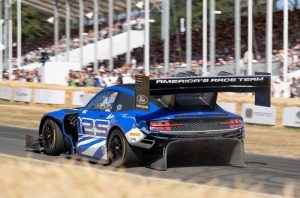
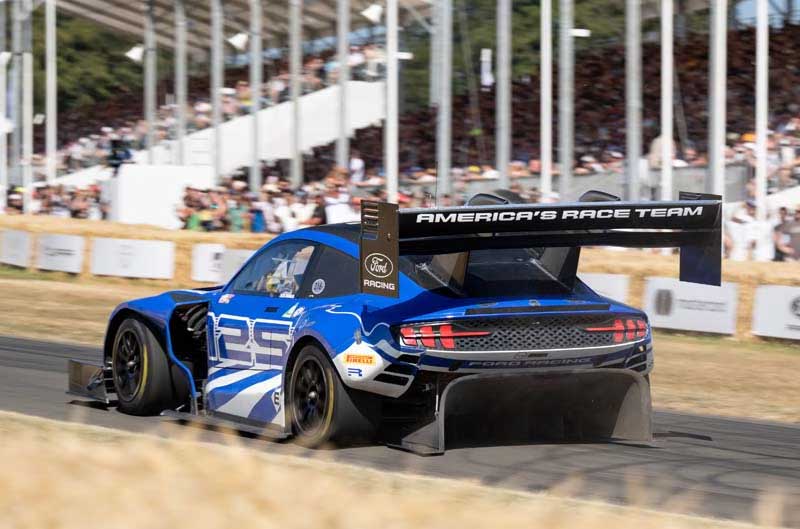
Ford’s all-electric Super Mustang Mach‑E seized the spotlight at the 2026 Goodwood Festival of Speed. Piloted by hillclimb specialist Romain Dumas, the 1.16-mile run stopped the clock at 41.97 seconds. As a result, the Timed Shoot-Out crown went to an EV that delivered near-silent speed and ruthless precision.
Moreover, the performance did more than nudge the record books. It reframed the conversation about where ultimate pace now comes from. In a field packed with roaring V8s, exotic hypercars, and hardcore race machines, the Super Mustang translated instant torque and flawless traction into a decisive win. Therefore, the biggest noise at the finish was not the exhaust note. It was the cheer from fans who had just watched a new reference lap unfold.
Yet the headline time told only part of the story. The way the car leapt off the line, braked into the kinks, and rocketed toward the flint wall revealed a package honed for one purpose: beating the clock.
The stopwatch tells the full story
Debate over engine sound versus outright pace has simmered for years. However, the numbers from Goodwood were unambiguous. The closest gas-powered challenger, a storied 1974 UOP Shadow DN4 Can‑Am car wielding an 8.1‑liter Chevrolet V8, finished third at 46.30 seconds. On this short sprint, a 4.33‑second gap feels like a lifetime.
Furthermore, the only machine that kept the pressure on was also electric. A Formula E Gen4 open‑wheel car took second at 42.46 seconds, still shy of Ford’s mark. Meanwhile, combustion contenders filled out the rest of the top five. A VW Polo RallyCross car posted 46.31 seconds, and the Subaru Brataroo 9500 Turbo clocked 46.77 seconds. Clearly, acceleration, grip, and control favored electricity on the day.
Even so, the paddock buzzed with reverence for the diversity of entrants. From vintage racers to cutting-edge prototypes, Goodwood again delivered a moving museum at full attack. Yet when the green flag fell, pure pace decided the order.
Inside the hillclimb weapon that made it happen
Under the skin, the Super Mustang is a focused demonstrator with one job: reach the line first. Three ultra‑high‑performance six‑phase motors send a combined 1,600 horsepower to all four wheels. Consequently, launch traction and mid‑corner exits come with breathtaking force. Additionally, a sophisticated torque management system helps Dumas meter power without drama.
Crucially, massive aerodynamic surfaces press the chassis into the tarmac. The extra downforce boosts confidence through the quick left‑right sweeps and over Goodwood’s notorious bumps. Moreover, a regenerative braking system capable of up to 710 kW harvests energy while delivering stout stopping power. Therefore, the car arrives at apexes calmer, straighter, and ready to fire out again.
Notably, the same driver and machine had already proven their formula at altitude. Only weeks earlier, Dumas guided this car to the overall win at the 14,115‑foot summit of the Pikes Peak International Hill Climb. That result, then, foreshadowed Goodwood’s outcome.
A streak forged by Ford Performance and STARD
This victory also extended a remarkable run for Ford’s collaboration with STARD. The partnership now holds three straight Timed Shoot-Out wins at Goodwood. In 2024, the radical SuperVan 4.2 set the pace. In 2025, the thunderous F‑150 Lightning SuperTruck kept the streak alive. Now, the Super Mustang elevates the trilogy with raw speed and composure.
Moreover, the team’s development cadence mirrors elite motorsport. Each project builds on the last, carrying forward learnings in aerodynamics, software, battery systems, and driveline control. As a result, the Super Mustang did not arrive as a one‑off stunt. It landed as an integrated program milestone with repeatable performance baked in.
Ultimately, the message was clear. Ford intends to keep the Mustang name at the sharp end of global competition, regardless of fuel type. And with Dumas extracting every fraction of a second, the plan looks well on course.
What the result means for purists and fans
For traditionalists, the weekend delivered a complex mix of emotions. The spectacle included the global dynamic debut of the Red Bull RB17 hypercar, with its naturally aspirated V10 providing the sort of mechanical theatre many enthusiasts feared was disappearing. Adrian Newey himself drove the RB17 on the hill, bringing one of his most ambitious designs to life in public for the first time. Elsewhere, the Shadow DN4 reminded spectators that a vast Chevrolet V8, minimal weight, and decades-old engineering can still produce astonishing speed.
Against that soundtrack, the Super Mustang Mach-E felt almost otherworldly. Its speed arrived without the rising engine note traditionally used to judge acceleration. Instead, tire noise, airflow, and the whine of its electric driveline accompanied the car through the estate. Some spectators will always prefer the sound and vibration of combustion. However, it was difficult to dismiss the precision of Dumas’ run.
Importantly, the result does not need to become another argument about which form of propulsion is superior. Goodwood works because radically different machines share the same narrow strip of asphalt. A 1970s Can-Am car, a modern Formula E single-seater, and an experimental electric Mustang can compete within seconds of one another. Each approaches the challenge with different technology, character, and purpose.
A shoot-out victory, not the outright record
Although Ford established the fastest time of the 2026 weekend, the outright Goodwood hillclimb record still belongs to the McMurtry Spéirling. Max Chilton completed the course in 39.08 seconds in 2022, using the car’s remarkable fan-assisted aerodynamic system to generate grip even at low speeds. Therefore, Dumas’ 41.97-second effort should be understood as a dominant Timed Shoot-Out victory rather than a new all-time course record.
That distinction does little to diminish the achievement. The Ford was developed for Pikes Peak, where it faced 156 corners, changing temperatures, reduced air density, and a finish line more than 14,000 feet above sea level. Only weeks later, the team adapted the same basic machine for Goodwood’s brief and unforgiving sprint. The ability to succeed in both environments demonstrates the versatility of its electric powertrain, aerodynamic package, and control software.
Lessons beyond the hill
The Super Mustang Mach-E will never become a production model in its present form. Its extreme bodywork, competition battery, and enormous aerodynamic load belong to the world of prototypes. Nevertheless, the program gives Ford engineers a severe testing environment for regenerative braking, thermal management, motor control, and energy deployment.
Ford says that lessons from the demonstrator are feeding into future electric and hybrid development. That may be the project’s most important contribution. Motorsport has always accelerated progress by exposing components to conditions that road cars rarely experience. Electric competition now performs the same role once played by endurance racing, rallying, and early grand prix machinery.
A Mustang for a changing era
The Mustang name has never represented only one technical formula. Over six decades, it has appeared on economical coupés, enormous muscle cars, road racers, turbocharged four-cylinders, and sophisticated modern grand tourers. The Super Mustang Mach-E pushes that history into unfamiliar territory, but its mission remains recognizable: deliver speed, attract attention, and compete for victory.
At Goodwood, it achieved all three. The V8s still provided the theatre, the historic cars supplied the nostalgia, and the RB17 offered a glimpse of combustion engineering at its most exotic. Yet when the stopwatch settled, Ford’s electric demonstrator stood at the top.
That contrast captured the modern Festival of Speed perfectly. The past was celebrated without being frozen, while new technology was judged on performance rather than convention. The Super Mustang Mach-E did not silence the old guard. Instead, it joined the conversation and moved the benchmark forward.