
Why MG Midget 1500s Are Smart Buys Now
MG Midget at Life in Classic
Small MG, Big Appeal
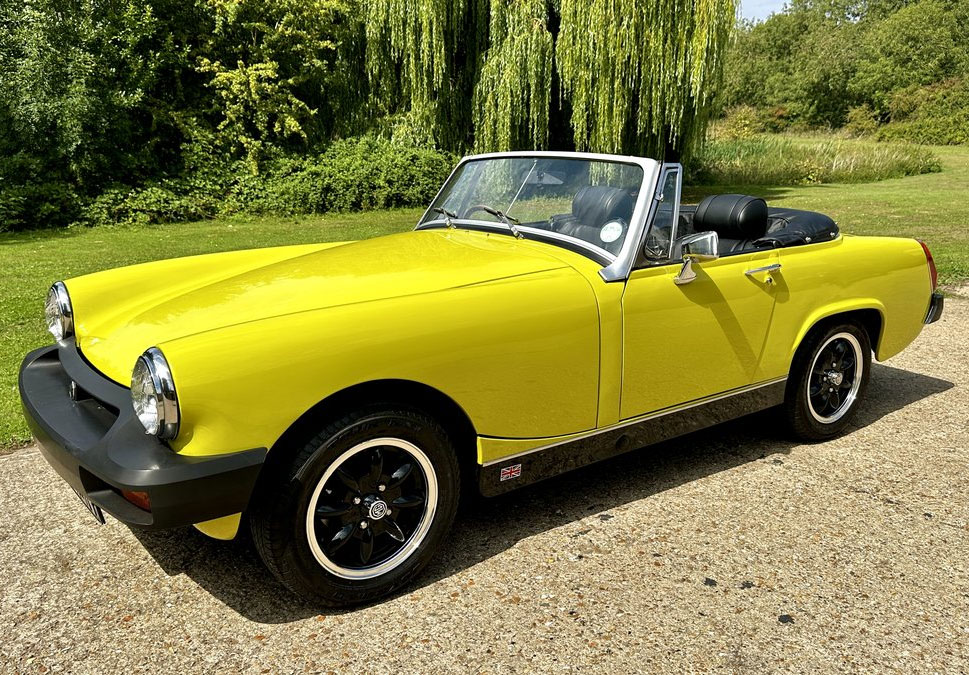
The MG Midget often lives in the MGB’s shadow, yet it deserves a brighter spotlight. Its name dates back to the M Type of 1928, and the final series—known as the 1500s—delivers an inviting route into classic British sports car ownership. These cars are compact, lively, and charming. More importantly, they remain within reach for many enthusiasts.
While some collectors chase headline cars, the Midget rewards those who value feel and simplicity. It is small enough to make every mile engaging. Moreover, the 1500s combine friendly running costs with wide parts support. As a result, they offer a classic roadster experience without the premium that the bigger MG commands. For new and returning hobbyists alike, that is a compelling mix.
From Sprite Twin to Emissions-Era Survivor
The Midget arrived in 1961 as a twin to the second-generation Austin-Healey Sprite. MG built it alongside the MGA and, later, the MGB for 18 years. For the U.S. market, the 1975 update brought notable changes. Power came from Triumph’s 1,493-cc four-cylinder, fed by a single Zenith carburetor and rated at 55.5 horsepower and 73 lb-ft of torque. The engine, already proven in the Spitfire, helped MG meet stricter emissions rules.
Federal safety standards also reshaped the car. Five-mph “rubber” bumpers—molded polyurethane over a steel core—added mass, as did other updates. Even so, the Midget kept its tidy footprint. It rode on an 80-inch wheelbase and stretched 141 inches long, with a curb weight of about 1,775 pounds. Despite the era’s constraints, it stayed fun, flickable, and honest. MG even advertised it as “America’s lowest-priced true sports car.”
Pricing reflected the times. In 1975, a new Midget listed for $3,625. Inflation nudged that to $3,949 in 1976, $4,150 in 1977, and $4,495 in 1978. By its final U.S. year, 1979, the MSRP reached $5,200, while an MGB cost $6,550. The Midget remained the budget-friendly option throughout.