
How the Mini Conquered Monte Carlo
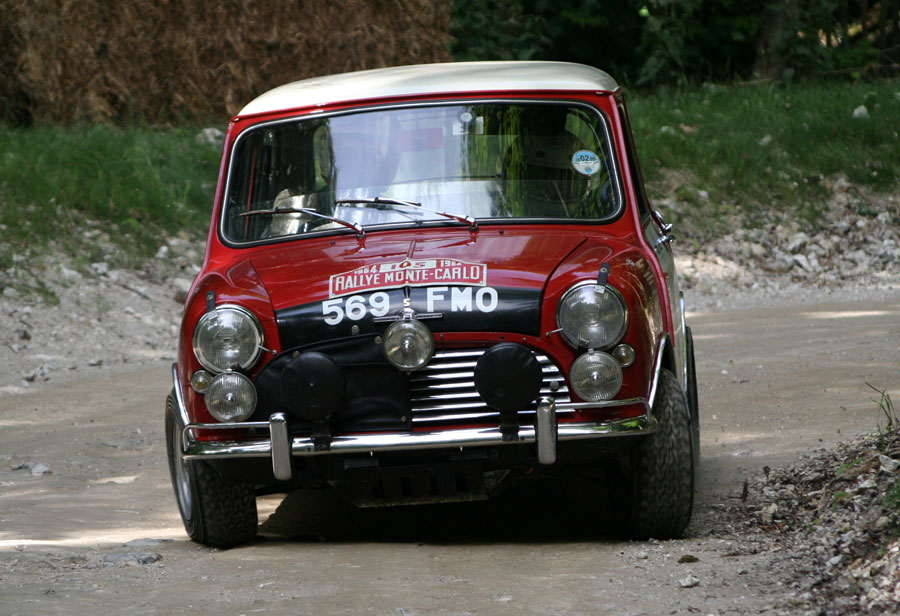
Classic Mini at Montecarlo - Life in Classic
In motorsport history, there are victories — and then there are moments that permanently change how the sport understands itself. The Mini’s triumphs at the Monte Carlo Rally belong firmly in the second category.
Between 1964 and 1967, a small British car repeatedly outperformed machines with twice the engine size, far greater power, and vastly superior budgets. It did not win by chance, and it did not win once. It won by exposing a fundamental misunderstanding of what performance really means.
This is how the Mini conquered Monte Carlo — and why it still matters today.
Monte Carlo: The Most Unforgiving Rally of Its Time
To understand the magnitude of the Mini’s achievement, one must first understand what the Monte Carlo Rally represented in the 1960s.
Unlike modern rallies with standardized stages, Monte Carlo was a test of endurance, adaptability, and strategy. Competitors started from different European cities — including London, Paris, Athens, and Warsaw — converging on Monaco over thousands of kilometers of public roads in winter conditions.
Snow, ice, dry tarmac, fog, and night driving were all part of a single event. Cars had to be fast, reliable, predictable, and easy to repair under pressure. Power alone was useless.
The Mini Cooper: Small Car, Serious Weapon
The turning point came when John Cooper recognized the Mini’s latent potential. Cooper, already successful in Formula One and sports car racing, understood that the Mini’s layout offered advantages no rear-wheel-drive rival could match on slippery roads.
The Mini Cooper introduced several critical elements: front-wheel drive, which provided superior traction on snow and ice; a short wheelbase and minimal overhangs, which improved agility; extremely low weight, at around 620 kilograms; and precise steering with predictable handling.
The Cooper S variant further increased displacement to 1071 cc, later expanded to 1275 cc, improving torque without compromising balance. In Monte Carlo conditions, this combination was devastatingly effective.
1964: The Shock Victory
The first major breakthrough came in 1964. Driven by Paddy Hopkirk and co-driver Henry Liddon, the Mini Cooper S delivered an outstandingly consistent performance.
While faster cars struggled for grip or succumbed to mechanical failures, the Mini maintained pace and control. Hopkirk’s victory was not symbolic. It was decisive.
For the first time, a car of such modest size had beaten the European rally elite on their own terms. The motorsport establishment took notice, though many dismissed it as an anomaly.
1965: Confirmation, Not Luck
In 1965, the Mini returned — and won again. This time, Timo Mäkinen dominated the event, famously completing the rally without incurring a single penalty point.
The Mini’s ability to maintain speed on icy Alpine roads was unmatched. By now, the narrative had changed. The Mini was no longer a curiosity. It was a threat.
Rival teams began to understand that traction, balance, and weight distribution mattered more than outright horsepower in real-world rallying.
1966: Controversy and the Rules Problem
The 1966 Monte Carlo Rally remains one of the most controversial events in motorsport history.
Mini Coopers finished first, second, and third on the road. However, all three were disqualified due to a technical interpretation of headlamp regulations, a ruling widely perceived as politically motivated.
The official victory was awarded to a Citroën DS. Public reaction was immediate and fierce. Newspapers across Europe criticized the decision, and fans saw it as punishment for a car that had embarrassed larger manufacturers too often.
Ironically, the controversy only strengthened the Mini’s legend.
1967: The Final Word
In 1967, the Mini returned one last time to settle the matter definitively. Driven by Rauno Aaltonen, the Mini Cooper S claimed victory beyond dispute.
Aaltonen’s extraordinary control on ice earned him the nickname “The Flying Finn,” and the Mini’s dominance was unquestionable. Four wins in four years, with only politics interrupting the sequence, left no room for doubt.
The Mini had not won Monte Carlo by accident. It had mastered it.
Why the Mini Was Unbeatable in Monte Carlo Conditions
The Mini’s success was rooted in fundamentals, not tricks. Front-wheel drive maximized traction where rear-wheel-drive cars struggled. Low mass reduced inertia and braking distances. Compact dimensions allowed precise placement on narrow mountain roads. Mechanical simplicity improved reliability over long, punishing distances.
The Mini was perfectly aligned with the demands of Monte Carlo long before anyone realized it.
A Victory That Redefined Rallying
After the Mini’s success, rally car development changed permanently. Manufacturers began prioritizing weight reduction, traction over raw power, handling predictability, and driver confidence.
The Mini did not just win rallies. It changed how rallies were won.
More Than a Trophy Cabinet
The Mini’s Monte Carlo victories transcended motorsport. They validated the idea that intelligence beats excess, that thoughtful design can outperform brute force, and that underdogs, properly engineered and expertly driven, can rewrite hierarchies.
For the Mini, Monte Carlo was not a chapter. It was a declaration.
The Legacy Still Drives On
Today, the classic Mini’s Monte Carlo story remains one of motorsport’s purest narratives. No artificial drama, no marketing exaggeration — just facts that still astonish.
In the frozen mountain passes above Monaco, the smallest car on the entry list proved that performance is contextual, not absolute. The Mini conquered Monte Carlo by understanding the road better than anyone else.
And in doing so, it earned its place in history forever.